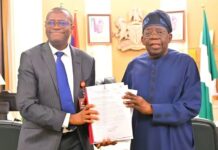
November 14, (THEWILL) — The National Council on Privatisation (NCP) has approved a request by the Bureau of Public Enterprises (BPE) to deepen its engagement with Transcorp Power Consortium toward executing the Performance Agreements (PAs) for the sale of Afam Power Plc and Afam III Fast Power Ltd.
The approval followed a detailed memorandum presented by the BPE Director-General, Ayodeji Gbeleyi, during the Council’s third meeting held at the Presidential Villa, Abuja.
According to the BPE, the agreements will regularise all outstanding obligations and secure the commercial viability of the Afam power plants under the new ownership structure.

Gbeleyi noted that although Transcorp Power Consortium has taken full possession of the Afam assets, executing the PAs remains essential to establish measurable performance indicators.
These include targets for boosting operational capacity, improving reliability, and enhancing overall output from the critical power installations.
He explained that PAs are a standard requirement within Nigeria’s post-acquisition framework for privatised power assets and serve as binding commitments to guide investor performance.
Once executed, the BPE will begin mandatory post-privatisation monitoring to ensure full compliance with all stipulated obligations.
Vice-President Kashim Shettima, who chairs the NCP, used the meeting to call for a fundamental shift in Nigeria’s privatisation philosophy.
He stressed the need to move beyond mere asset sales to a model that prioritises asset optimisation capable of powering Nigeria’s aspiration for a trillion-dollar economy.
Shettima disclosed that the Federal Government had completed the sale of the Afam Power plant, generating N53.9 billion in privatisation proceeds. He cautioned, however, that asset disposal without strategic planning would not deliver the economic transformation the country seeks.
Describing the NCP as the “economic compass” that must guide national investment decisions, he warned that ignoring this compass would render Nigeria’s economic projections theoretical and disconnected from real-life impact.
“Our aspiration to build a trillion-dollar economy demands discipline, vision, and absolute adherence to the compass produced by this Council. Without such guidance, our economic projections would amount to nothing more than an exercise in theory formation,” Shettima said.
He urged the Council to focus on unlocking Nigeria’s dormant assets—including underutilised land, idle real estate, and untapped intellectual property—which he described as reservoirs of wealth capable of driving national development.
To actualise these goals, the Vice-President directed the NCP to explore modern models such as long-term concessions, asset-backed securitisation, and core investor sales tied to strict performance benchmarks.
He also emphasised zero tolerance for transaction ambiguities that could trigger litigation or undermine investor confidence.
Gbeleyi further disclosed that the Council reviewed the BPE’s performance ahead of 2025, noting major structural reforms, including the unbundling of the Transmission Company of Nigeria into the Nigerian Independent System Operator and the Transmission Service Provider—an initiative the government believes will enhance efficiency in the power sector.
With the execution of the Afam PAs now underway, Gbeleyi said Nigeria is better positioned to consolidate one of its most significant power sector transactions in recent years while setting a new benchmark for transparency, accountability, and investor performance in the country’s privatisation drive.

Felix Ifijeh is a journalist with years of professional reporting experience. Known for his keen news sense, compelling storytelling and commitment to accurate, impactful reporting, he has built a reputation for turning leads into clear, engaging, and well-structured reports that resonate with readers. His work reflects deep newsroom experience and a commitment to accurate, impactful journalism.