
-
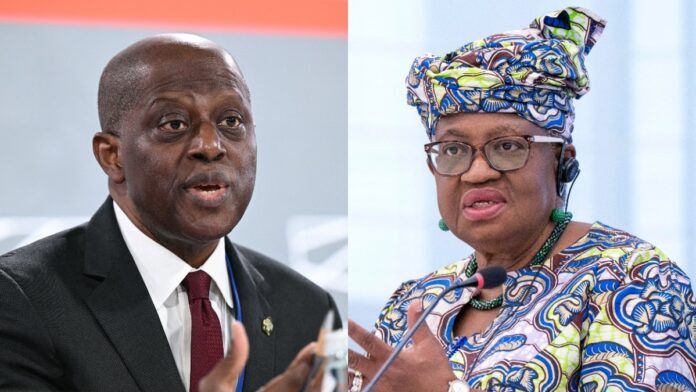
The WTO’s Director-General, Dr Ngozi Okonjo-Iweala, says Africa has a rare opportunity to benefit from global supply-chain diversification driven by geopolitical tensions.
-
She urged countries to move beyond exporting raw materials and develop regional value chains.
-
Okonjo-Iweala also called for reforms to the WTO to strengthen the global trading system.
-
Meanwhile, CBN Governor Yemi Cardoso said Nigeria’s economic reforms are restoring investor confidence and improving macroeconomic stability.
July 30, (THEWILL) — Director-General of the World Trade Organization (WTO), Dr Ngozi Okonjo-Iweala, has urged African countries to take advantage of shifting global supply chains by moving beyond the export of raw materials, warning that the continent could miss a rare opportunity created by geopolitical realignments if it fails to build regional value chains and strengthen industrial capacity.
Speaking at the 7th Africa Emerging Markets Forum in Abuja, on Wednesday, July 29, 2026, Okonjo-Iweala argued that the world was not witnessing the end of globalisation but rather its evolution into what she described as “competitive interdependence”, where countries continue trading while seeking to reduce strategic vulnerabilities.
“The time to seize this opportunity is now,” she said, referring to growing efforts by multinational companies to diversify supply chains for critical minerals and green technologies. “If we miss this opportunity, I am afraid we will have missed a lot.”

She said Africa should leverage its vast reserves of critical minerals by developing regional processing industries instead of continuing an “extract-and-export” model that has historically delivered limited economic benefits.
Okonjo-Iweala cited examples including Morocco’s production of electric vehicle components and efforts by countries such as Zambia, the Democratic Republic of Congo, Mozambique, Angola and Nigeria to add value to critical mineral resources. However, she said these initiatives required greater regional coordination to avoid fragmented bilateral arrangements.
WTO Chief Pushes Global Trade Reforms
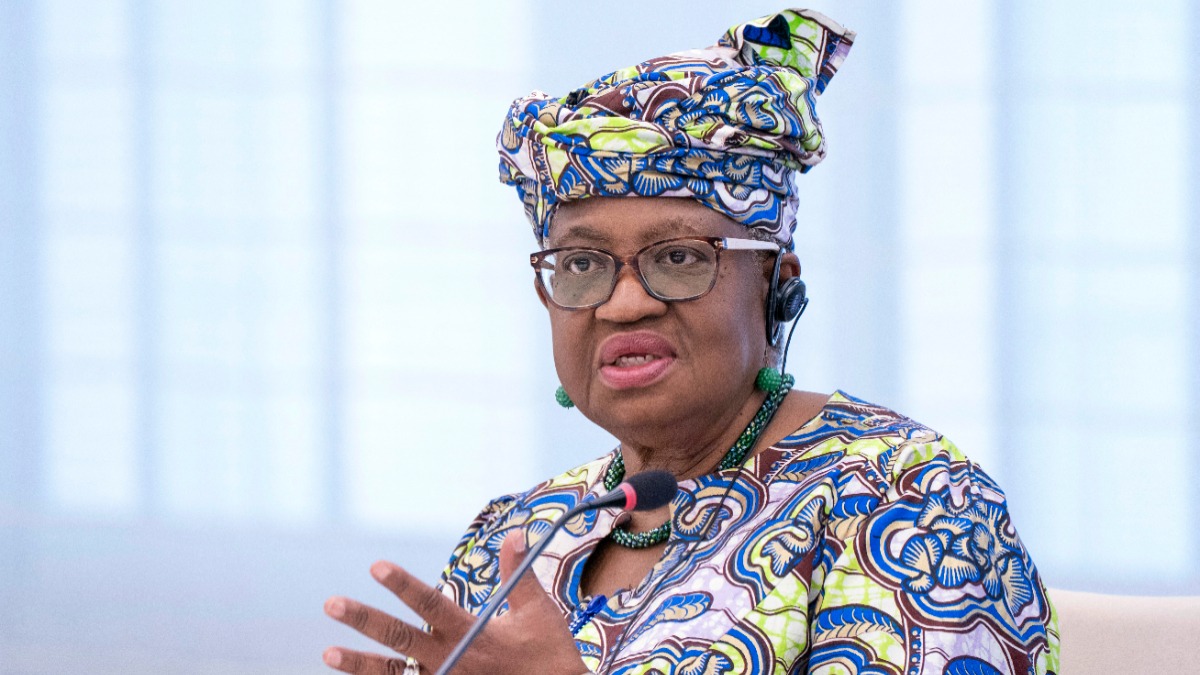
Negotiations on WTO reform are now under way following the organisation’s recent ministerial conference, with members reviewing issues including decision-making procedures, transparency requirements and subsidy rules.
“The reform process offers a path for members to strengthen what is still working well at the WTO… but even more importantly, it is an opportunity to repair what is not working well,” she said.
Despite growing geopolitical tensions and trade disputes, Okonjo-Iweala argued that predictions of widespread global trade fragmentation had so far failed to materialise.
According to the WTO chief, the value of global goods and services trade reached a record $34.65 trillion in 2025, representing a 7% increase from the previous year, while merchandise trade volumes grew by 4.6%.
She added that approximately 72% of global goods trade continues to take place under the WTO’s most-favoured-nation rules, with another 16% conducted under bilateral and regional agreements built upon the WTO framework.
“The world is not becoming less interdependent,” she said. “What we are seeing is not the end of globalisation, but its transformation from cooperative to competitive interdependence.”
Okonjo-Iweala acknowledged that the global economy faced mounting pressures from shifting economic power, widening inequality, rapid technological change, climate change and demographic trends. However, she argued that these challenges reinforced rather than weakened the case for a rules-based international trading system.
She also warned against excessive dependence on a small number of countries for strategic products, including critical minerals, semiconductors and digital services, saying broader diversification would make global supply chains more resilient.
Cardoso Touts Nigeria’s Reform Gains
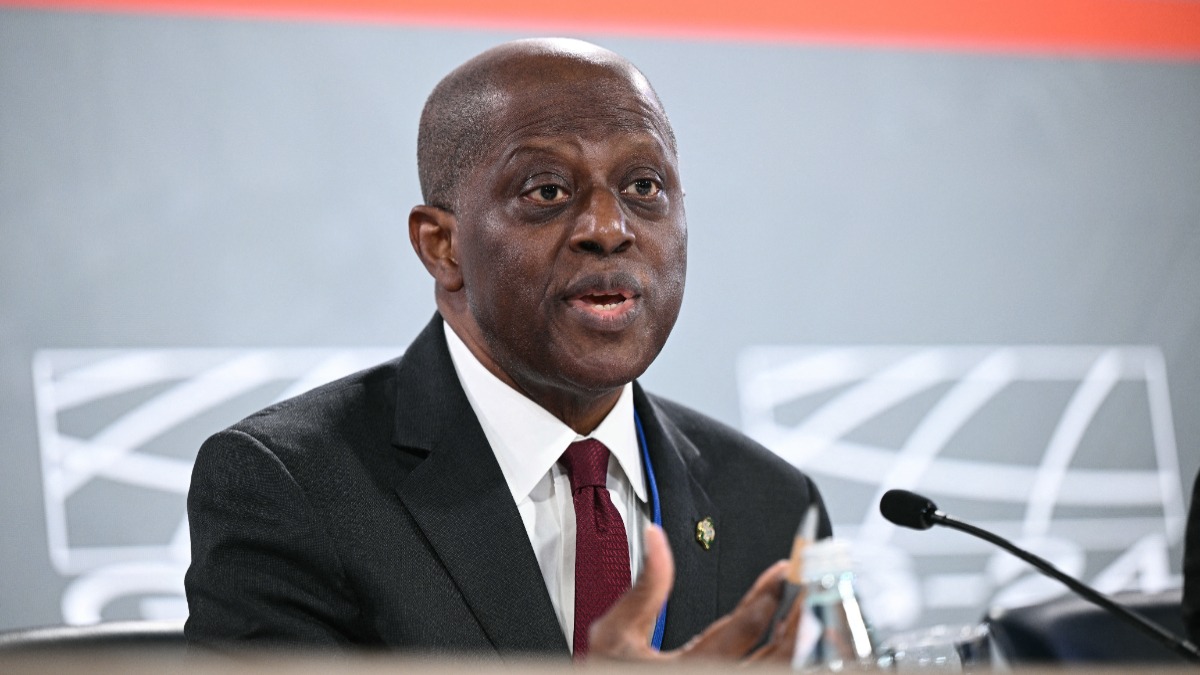
Cardoso said the era of abundant global capital had ended, making institutional credibility and macroeconomic stability increasingly important for attracting investment.
Reflecting on Nigeria’s recent economic reforms, he said the Central Bank had unified the exchange rate, restored market-based price discovery, ended monetary financing of fiscal deficits and tightened monetary policy to restore confidence.
“Credibility is built intentionally, one right decision after another, and strengthened through consistent action,” Cardoso said.
He added that inflation had moderated from previous highs, external buffers had improved and the banking sector had become better capitalised, arguing that these reforms had strengthened Nigeria’s resilience to external shocks.
Cardoso also urged African countries to mobilise domestic savings, pension funds and diaspora capital to finance development while preparing young people for an economy increasingly shaped by artificial intelligence.
Both speakers emphasised that Africa’s long-term competitiveness would depend on stable macroeconomic policies, stronger regional integration under the African Continental Free Trade Area, improved infrastructure and investment in higher-value industries capable of competing in global markets.

Segun Adeyemi serves as the Associate Editor of THEWILL Newspaper, leveraging more than ten years of editorial expertise and a proven track record in mainstream journalism.
