
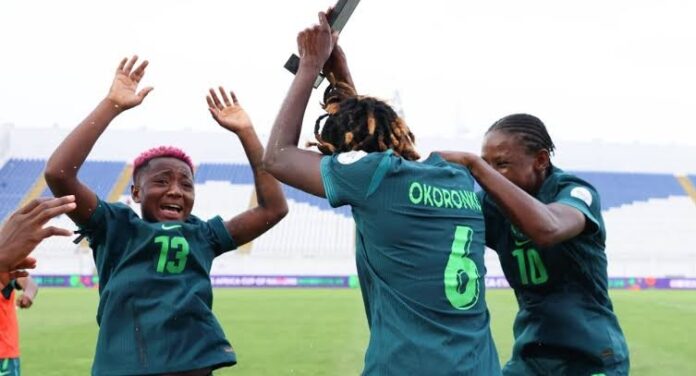
July 07, (THEWILL) — The Super Falcons of Nigeria have long been the standard-bearers of women’s football in Africa, with a record nine Women’s Africa Cup of Nations (WAFCON) titles to their name. Their commanding 3-0 victory over Tunisia in the opening match of the 2025 WAFCON, played at Stade Larbi Zaouli in Casablanca, Morocco, has reignited hopes of a historic 10th title.
However, the landscape of African women’s football has shifted dramatically, with teams like South Africa’s Banyana Banyana, Morocco’s Atlas Lionesses, and Equatorial Guinea’s Nzalang Femenino emerging as formidable challengers. Under the guidance of head coach Justin Madugu and with the recent return of fitness coach Per Karlsson, the Super Falcons are determined to reclaim their dominance. The question however remains what are the prospects for achieving “Mission X”, the Nigeria Football Federation’s (NFF) campaign to secure a 10th WAFCON crown, while confronting the very realistic challenges posed by a more competitive field.
There is no gainsaying the fact that Nigeria’s dominance in African women’s football is unmatched, with 48 wins in 61 matches across 12 WAFCON editions since 1998. The ladies claimed the first serial set of titles and added more in 2014, 2016, and 2018, defeating South Africa in a penalty shootout in the latter. Players like Perpetua Nkwocha, a four-time African Women’s Footballer of the Year, and Mercy Akide defined an era of supremacy, with Nigeria losing only five matches to African opponents in their first 20 years. Their 1999 FIFA Women’s World Cup quarter-final appearance and consistent qualification for every edition of the tournament further cement their legacy. Yet, recent tournaments have exposed vulnerabilities. In 2008 and 2012, Equatorial Guinea claimed the title, and in 2022, Nigeria suffered their joint-worst finish, placing fourth after losses to South Africa, Morocco, and Zambia. These results signal a closing gap between Nigeria and their rivals, making the 2025 campaign a critical test of their ability to adapt.

The current squad, led by interim-turned-permanent head coach Justin Madugu since November 2023, blends experience with youth. Key players include Asisat Oshoala, a six-time African Women’s Footballer of the Year, captain Rasheedat Ajibade, and goalkeeper Chiamaka Nnadozie, named CAF Goalkeeper of the Year in 2023 and 2024. Veterans like Osinachi Ohale, with over a decade of national team experience, and Francisca Ordega, a four-time WAFCON winner, provide stability, while newcomers like Miracle Usani and Shukurat Oladipo bring fresh energy. The return of Per Karlsson as fitness coach, reinstated by the NFF, has bolstered the team’s physical preparation, evident in their high-energy performance against Tunisia. Goals from Oshoala, Rinsola Babajide, and Chinwendu Ihezuo in that match demonstrated Nigeria’s attacking potential, but the team’s ability to maintain this form against stronger opponents remains uncertain.
Madugu, a CAF A and B licensed coach with an academic background in sports psychology and management, brings continuity from his time as assistant to former coach Randy Waldrum. His approach emphasises respect for all opponents, a stance he reiterated before the Tunisia match: “There are no minnows in African football. We will not take any team lightly.” This mindset reflects the growing competitiveness of the tournament, where qualifiers have shown that underdogs can upset favourites. Nigeria’s group stage opponents, Algeria, Botswana, and Tunisia, are considered manageable, but Madugu’s caution suggests a strategic focus on preparation and adaptability. The team’s recent friendlies, including a 2-0 win over Cameroon, a 3-1 victory against Ghana, and a goalless draw against Portugal, indicate a squad in good form, with only one loss in their last five matches, a friendly against France.
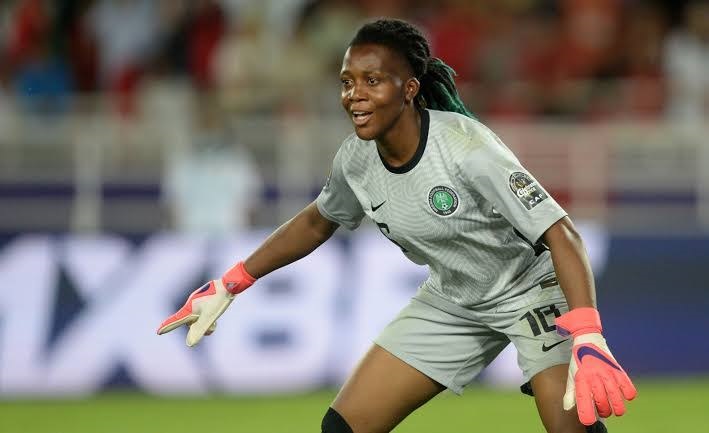
The 3-0 win over Tunisia on Sunday is evidence of Nigeria’s strengths but also highlighted areas for improvement. Nnadozie’s goalkeeping ensured a clean sheet, reinforcing the team’s defensive solidity, which has conceded just six goals in 14 matches since the 2023 World Cup. Ohale’s leadership at centre-back and Ashleigh Plumptre’s versatility, capable of playing left-back or midfield, provide defensive flexibility. However, the left-back position remains a concern, with Miracle Usani struggling in the Portugal friendly. Offensively, Nigeria’s attack, led by Oshoala and Ajibade, has been less consistent, scoring three or more goals only four times in those 14 matches. Madugu must find the right tactical balance to maximise scoring opportunities, especially in knockout stages where precision is critical.
South Africa’s Banyana Banyana pose the greatest threat to Nigeria’s ambitions. As defending champions, having won in 2022, they have grown in confidence and tactical sophistication. Players like Jermaine Seoposenwe, stepping up in the absence of Thembi Kgatlana, have made South Africa a formidable force. Their victory over Nigeria in the 2022 group stage and subsequent Olympic qualifier clashes underscore the intensity of this rivalry. Morocco, hosting the 2025 tournament, are another significant challenge. Their 2022 semi-final win over Nigeria, albeit against a nine-player Falcons side, and investments in women’s football have elevated their status. Players like Ghizlane Mssoudy, named the best player in Morocco’s top flight, add flair and goal-scoring threat. Equatorial Guinea, with their physical style and history of upsetting Nigeria in 2008 and 2012, remain a dark horse, while Zambia’s emergence, led by players like Barbra Banda, adds further complexity.
Madugu’s tactical acumen will be crucial in navigating these challenges. His experience as Waldrum’s assistant during multiple WAFCON campaigns and his success in guiding Nigeria through qualifiers, including a 7-1 aggregate win over Cape Verde, suggest he understands the demands of tournament football. Karlsson’s fitness expertise should ensure the team maintains energy levels through gruelling knockout matches, a factor that proved decisive in past triumphs. However, Nigeria’s historical dominance does not guarantee success. Ajibade admitted to BBC Sport Africa that the team has had limited time to bond, a concern given the absence of nearly half the 2022 squad, including former captain Desire Oparanozie. Injuries or lack of match fitness could disrupt team chemistry, and Madugu’s decision to exclude players like Monday Gift in favour of youth indicates a transitional phase.
Off the pitch, Nigeria’s preparations have been hampered by administrative issues. Unpaid bonuses, poor travel arrangements, and inconsistent training camps have long plagued the Super Falcons, with Nnadozie highlighting the mental toll of these challenges. The NFF’s “Mission X” campaign, launched to rally fans and players, aims to unify support, but resolving these logistical problems will be critical to maintaining focus. Nigerian fans, passionate and vocal, expect nothing less than victory, This emotional investment, coupled with the cultural significance of a 10th title, places immense pressure on Madugu’s squad.
The path to the title is fraught with challenges, but Nigeria has the tools to succeed. A potential semi-final clash with South Africa or a final against Morocco could define their campaign. If Madugu can optimise his attacking options, leveraging Oshoala’s experience and Ajibade’s dynamism, while maintaining defensive solidity through Nnadozie and Ohale, the Super Falcons could overcome their rivals. Plumptre’s versatility, in her return to the lineup, and Karlsson’s fitness regime could prove decisive in tight matches, particularly in extra time or penalties, where Nigeria excelled in 2018. However, any tactical misstep or failure to convert chances could see them falter, as in 2022.
The Super Falcons’ 3-0 victory over Tunisia has set a positive tone, but the road to a 10th WAFCON title is their toughest yet. Madugu’s leadership, combined with the team’s talent and the NFF’s renewed focus, offers hope of success. For millions of Nigerians, a 10th title would be a moment of national unity and pride, reinforcing the Super Falcons’ legacy as Africa’s football queens. The team’s journey in Morocco will test whether they can rise above the competition or face another setback in their storied history.

Jude Obafemi is a versatile senior Correspondent at THEWILL Newspapers, excelling in sourcing, researching, and delivering sports news stories for both print and digital publications.
