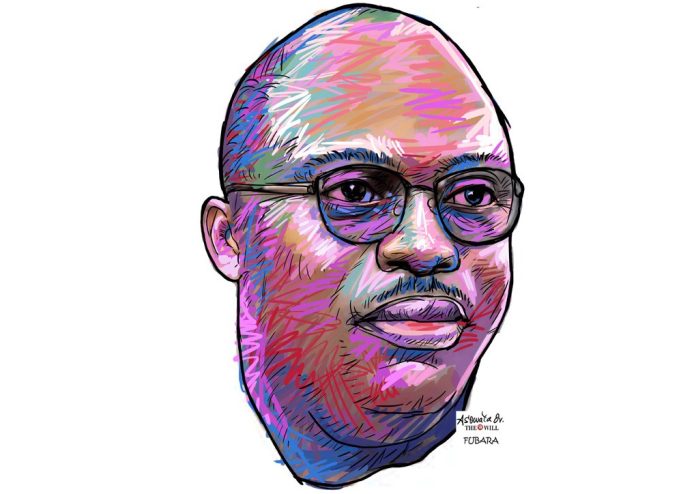
March 09, (THEWILL) – Governor Siminalayi Fubara’s promise to conduct a fresh local government election in Rivers State, in obedience to the recent Supreme Court ruling, has ignited a fresh controversy in the oil-rich state rather than calm frayed nerves. Indeed, the apex court made two judgements on the state over a week ago. The first one was on the conduct of the Local Government Election in the state on October 5, last year, which was won by the All People’s Party, APP. The second was to uphold a lower court ruling stopping federal allocations to the state.
On the October 5, 2024, local government election in Rivers State, a five-member panel of justices of the appellate court led by Justice Jamilu Tukur, declared the election invalid, null and void.
It held that the poll was conducted in gross violation of section 150 of the Electoral Act 2022.

A Federal High Court in Abuja had on September 30, 2024, stopped the Independent National Electoral Commission, INEC, from releasing the Voter Register to the Rivers State Independent Electoral Commission, RSIEC, for the purpose of conducting the October 5, 2024 local government elections in the state.
The Special Panel of the Court of Appeal, Abuja, had in November, 2024, validated the council poll after it nullified the judgement delivered by Justice Peter Lifu of the Federal High Court in Abuja, which barred, INEC, from releasing the voter register to the RSIEC for the conduct of the local government election.
On stopping federal allocations to the state, the court upheld the order of Justice Joyce Abdulmalik of the Federal High Court, which barred the Central Bank of Nigeria (CBN) and the Accountant-General of the Federation from releasing statutory monthly allocations to Rivers State.
Justice Abdulmalik had in a ruling on October 30, declared the presentation of the 2024 budget by Governor Siminalaye Fubara before a four-member Rivers House of Assembly as an affront to the constitutional provision. The court had declared that the receipt and disbursement of monthly allocations since January 2024 by Governor Fubara, was a breach of the Constitution and an aberration.
It restrained the CBN, the Accountant-General of the Federation, Zenith Bank and Access Bank from further allowing Fubara to access money from the Consolidated revenue account.
While the Special Panel of the Court of Appeal, Abuja, set-aside the order, saying that the Federal High Court lacked jurisdiction over the matter, it affirmed that issues related to state revenue should not be handled by federal courts.
Ruling in an appeal challenging the decision on Friday, a five-member panel of the apex court led by Justice Emmanuel Agim, set aside the ruling of the Appeal Court, which vacated the High Court order.
Justice Agim held that contrary to the verdict of the appellate court, the Federal High Court had the requisite jurisdiction to entertain the suit the Amaewhule-led 27 lawmakers filed to challenge the continued withdrawal and expenditure of funds belonging to the state without the approval of the State Assembly.
The government, according to Commissioner for Information, Joe Johnson, said it would take action on the second ruling after it had secured and studied the Certified True Copy of the judgement. The reason for this pause in action is because there is a pending case at the Appeal Court on the defection of 27-lawmakers from the Peoples Democratic Party, PDP, to the All Progressives Congress, APC. This unresolved defection has created a lacuna in the apex court ruling, which stakeholders see as legal and therefore one aspect of the solution to the crisis; while the other is political. That is why the pending case on defection at the appellate court ruling is being eagerly awaited.
Even so, a few days after Fubara ordered the local governments disbanded and the Chairman of the State Electoral Commission, retired Justice Adolphus Enebeli, held a meeting with political parties in the state and fixed August 9 for the conduct of a fresh poll, another round of crisis started.
Offended by that action, the Speaker of the House of Assembly, Martins Amaewhule issued a 48-hour ultimatum to Justice Enebeli and his commissioners to appear before it. The Assembly had to extend the ultimatum to March 10, 2025 following the failure of the RSIEC team to appear before it.
In fact, Justice Enebeli’s lawyers did not help matters when it had to write the Speaker, Amaewhule, notifying him of the Assembly’s wrong choice of words and their autocracy in issuing an ultimatum in a democracy.
They said in their letter to the Speaker, “We respectfully suggest that both yourself and other legislators of the Rivers State House of Assembly undergo a re-orientation training workshop wherein you will be acquainted with the scope and ambits of your powers as a legislature as prescribed by the Nigerian Constitution. Our organisation offers to deliver any such training workshop at no cost to the Rivers State House of Assembly.”
Meanwhile, there are growing calls from the opposition for the impeachment of Governor Fubara, but it appears the Assembly is divided over the matter, particularly its pro-Wike faction. Following stern warnings from the Ijaw Youths Council, IJC, militant group, the Niger Delta Rescue Movement, threatened to attack oil installations in response to the ongoing political crisis and the alleged withholding of the state’s federal allocation.
The group also issued a warning to non-indigenes in the state, urging them to leave for their safety, as they claimed hostilities were imminent.
Tension within the Assembly boiled over during a recent plenary session in which a proposal to extend a 48-hour ultimatum issued to the governor to get the required response. The lawmakers had issued two ultimatums to the governor to represent the 2025 budget and also to sack its commissioners, both of which were cleared by the five-man Assembly led by Victor Oko-Jumbo.
The ensuing division among them deepened when one lawmaker’s attempt to push for immediate impeachment proceedings was met with strong resistance, particularly from his colleagues representing the Ijaw ethnic group, who vehemently opposed the move. This sparked a heated argument among the lawmakers.
As a result, many of the lawmakers are said to be reading some other motive into the intentions of their senior colleagues. Some even suspect that the impeachment bid was not merely an attempt to remove Governor Fubara, but rather part of a larger political strategy to bolster the governorship ambitions of Martin Amaewhule, an Ikwerre son from Obio/Akpor.
For this reason, lawmakers of Ijaw descent have been subtly condemning the impeachment move, which they think is part of the plan by the apparently winning group in the ongoing supremacy battle between Wike and the governor to gain power and control.
Meanwhile, the governor has responded to the Assembly’s orders. In a letter written to the Speaker through the Secretary to the State Government, Dr Tammy Danagogo,on February 6, 2025, the governor stated that neither he nor his deputy had seen or received any letter indicating a 48-hour ultimatum issued by the lawmakers loyal to Wike.
In response to threats by the militant group, the Police Command in Rivers State has vowed to crack down on any threats to national security, insisting that no group has the monopoly of violence.
The Commissioner of Police, Olugbenga Adepoju, assured residents that security forces were prepared to contain any disruptions, warning that law enforcement would not tolerate attempts to destabilise the state.
Adepoju dismissed the threats by the militants or others, saying the police were equal to the task.
He stated, “You see, we are taking this thing one step at a time. Nobody has a monopoly of violence. If fire is coming from heaven, it will not consume only one person. Definitely everybody will be consumed.
“So, nobody can threaten anybody. We are handling the situation the way we should and we are ready for anything that is going to come.
“All eyes are on Rivers State now. I don’t think there is any problem here really, but we will not allow anybody to heat the polity.
“You cannot fight the government and the governor himself has been handling the situation very maturely and well. So nothing will happen. The man on the ground (governor) is peaceful and God is on the throne and we are equal to the task.”

Felix Ifijeh is a journalist with years of professional reporting experience. Known for his keen news sense, compelling storytelling and commitment to accurate, impactful reporting, he has built a reputation for turning leads into clear, engaging, and well-structured reports that resonate with readers. His work reflects deep newsroom experience and a commitment to accurate, impactful journalism.