
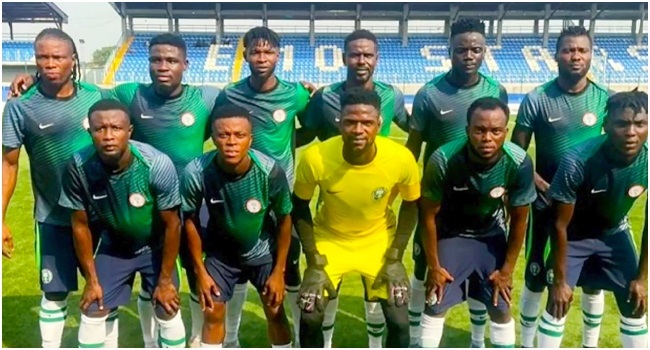
August 17, (THEWILL) — Nigeria’s hopes of advancing in the 2025 African Nations Championship came to a halt on Tuesday, following a 4-0 defeat to Sudan in Amaan Stadium, Zanzibar City. Having already lost their opening game to Senegal, the home-based Eagles required a positive result to keep the campaign alive, but the heavy loss sealed their exit from the competition at the group stage. The fixture had been billed as a crucial test for both the players and the technical crew, who entered the tie under pressure to salvage some pride after the opening setback. Instead, the team collapsed against a sharper Sudanese side, confirming their elimination and raising serious questions over how a country of Nigeria’s football standing could crash out in such fashion.
The match began with Nigeria trying to set a quick tempo and to load set-plays, and there was an early sense that gain could come from pressure on Sudan’s goalkeeper Mohamed Abooja. That plan briefly looked like it had worked when Anthony Ijoma put the ball in the net midway through the first half, only for a VAR review to rule the finish offside. The next few minutes flipped the tie. Abdel Raouf Yagoub struck a post, the rebound hit defender Leonard Ngenge and rolled in for an own goal, and the lift Sudan took from that moment set the tone for the evening. Minutes later Ngenge’s handball conceded a penalty that captain Walieldin Khdir converted with power. From the key call on the offside to the rapid two-goal swing, the turning points before half-time were clear and brutal.
Eric Chelle reacted during the interval, changed personnel and tried to alter the rhythm, but Sudan stayed calm and clinical on transitions. Abdelrazig Omer got his name on the score sheet for the first time early in the second half after pressure down the right unsettled Nigeria’s back line, and again seven minutes later after another clean break into the box. Abooja then made a couple of tidy saves that helped his team see out their lead as Sudan managed the final third of the match with calm passing and sound spacing, leaving Nigeria to chase openings from distance. It was a clear example of one team setting traps and finishing moves while the other ran out of ideas in the final third.

Performance levels can be read through simple themes. Sudan were organised without the ball, worked in packs in midfield, and chose their moments to step on. Their wide players protected full-backs first and attacked later, which meant they were not dragged out by early Nigerian crosses. In possession they were direct without being crude, breaking forward with passes into feet and runners beyond the ball. The result was a side that looked in control of the spaces that matter. Nigeria’s issue was not effort. It was structure. The press was broken too easily down the sides, support around the ball was slow after first contact, and the box entries that did arrive lacked precision.
It is worth underlining that the opening goal changed more than the scoreline. Before that moment Nigeria’s plan to crowd the box on corners and free-kicks had drawn a few half-chances, and Sikiru Alimi twice went close either side of the disallowed Ijoma effort. Conceding in the way they did, followed by the penalty, sapped belief and forced charging forward at a pace that suited Sudan’s counter-attacks. That emotional drop alongside tactical looseness is a common pattern when the first key episode goes against you, and it was repeated here.
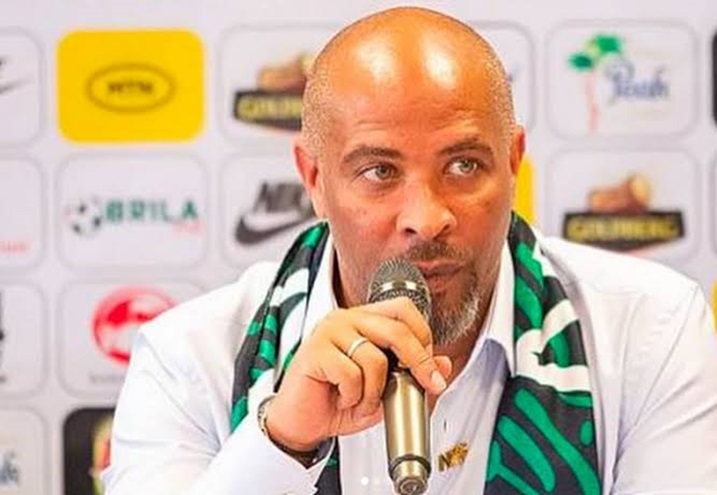
Chelle accepted responsibility afterward, calling it the worst game he had overseen and admitting the team had lost focus and ambition on the night. Those remarks matter because they speak to decision-making as much as technique. His point that there remains a final match to play was also correct, but the coach did not dress up the scale of the result. The opposing coach Kwesi Appiah took a different tack, saying Nigeria were not a poor side and that better coaching detail could lift them, a line that both praised his players’ work and offered a cool appraisal of the gap he saw.
Nigeria’s elimination was confirmed immediately. With four teams in the group and only two advancing, two defeats leave a maximum of three points, which cannot catch Sudan or Senegal after their draw earlier in the day. The standings at full-time read Sudan four points, Senegal four, Congo two, Nigeria zero. That sequence is not only arithmetic. It reflects the reality that the group’s tempo is being set by teams that can sit in shape and then break at speed. It is also the consequence of failing to turn first-half territorial pressure into anything cleaner.
The venue and schedule context help illustrate the wider picture. As aforementioned, the tie took place at Amaan Stadium in Zanzibar, a ground that favours teams who are calm without the ball given the quick surface and lively atmosphere. Both Nigeria’s matches to date were played there, with Congo to come in Dar es Salaam at Benjamin Mkapa National Stadium on August 19. That change of scene is not trivial; a bigger pitch can stretch a game or make a press harder to sustain. Whether it changes anything material for a side already out is another matter, but it does offer a different test for players looking to end a bruising week on a better note.
The numbers that describe the game are simple but telling. Two matches, no goals scored, five conceded. One big call against, and then two soft concessions before the break against Sudan, followed by a pair of clean finishes when the game had already tilted. Those facts leave little room for alibis. They also open up fair questions about selection balance, ball progression through midfield, and the lack of threat from wide areas. The use of early crosses without a steady stream of second balls made it easier for Sudan to keep their shape. The late shots from range told their own story.
There is also a larger point about preparation for a short tournament. CHAN rewards teams with clear patterns rather than a roll-call of names. Sudan looked like a side drilled in distances and roles, with players who knew when to press and when to drop. Nigeria looked like a side still learning connections in real time. That is not a comment about talent. It is about time on the grass together and about building a game plan that survives rough moments. Appiah’s note that Nigeria have pieces worth building on is a reminder that short-term pain can still sharpen longer-term work if decision-makers act on the evidence.
What, then, should the team take from this match beyond the scoreline? First, the most decisive moments came in a tight window: the ruled-out goal, the own goal, and the penalty. Second, Sudan used that swing to relax into their game and pick Nigeria apart in transition. Third, Nigeria’s fixes were too late and did not change the pass options for the man on the ball. Fourth, both coaches were honest afterward, which strips away easy excuses and puts focus back on coaching detail, team structure, and training time. None of this requires loaded language. It only requires clarity about what happened over 90 minutes in Zanzibar.
The immediate stakes are modest. Nigeria will meet Congo on August 19 with progression already gone. The aim should be simple: restore order in defence, move the ball through midfield in fewer touches, and create clear chances rather than hopeful shots. If that sounds basic, that is the point. Good tournament sides often rebuild by restoring basics first. For the staff, selection for that match can also be a live audit of who has handled this week and who still plays with calm decisions under heat. That is valuable information even when a tournament is ending.
For fans of the game back home in Nigeria, who are looking beyond the tournament, the lesson is not complicated. Nigeria’s domestic talent base is broad, and there were passages in both matches when the team looked competitive. The issue is how often those passages can be turned into chances, how risks are shared across the pitch, and how the side deals with a negative shock. Those are coaching and preparation problems before they are anything else. They require a consistent tactical plan, time together, and accountability on and off the ball. Chelle’s straight remarks after full-time showed awareness of that reality. What happens next will tell whether awareness becomes change.

Jude Obafemi is a versatile senior Correspondent at THEWILL Newspapers, excelling in sourcing, researching, and delivering sports news stories for both print and digital publications.
