
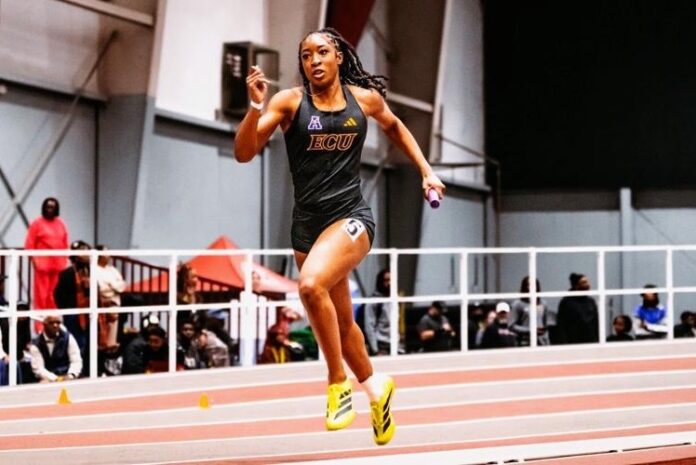
April 05, (THEWILL) — Nigeria’s track and field programme will arrive at the 2026 Commonwealth Games in Glasgow carrying a contradiction at its core. For every elite sprinter who has chosen to compete under a different flag, a diaspora athlete has pledged allegiance to the green and white. The result is a team in flux, shaped less by deliberate policy than by the accumulated consequences of mismanagement, and the questions it raises extend well beyond medal tallies.
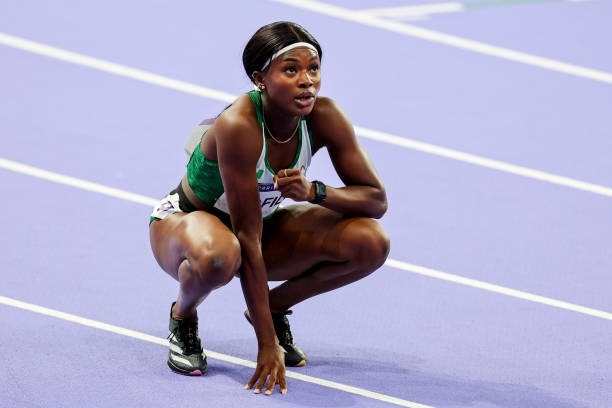
The departure of Favour Ofili encapsulates the crisis with unusual clarity. Widely regarded as the fastest woman in Nigerian history and the national record holder in the 200 metres, Ofili announced in late 2025 that she would switch her international allegiance to Turkey. Her reasons were specific and well-documented. At the Tokyo 2020 Olympics, she and several other Nigerian athletes were barred from competition after officials failed to satisfy anti-doping compliance requirements, a collective administrative failure that cost athletes their moments on the world stage. Four years later, in Paris, she qualified for the 100 metres but was omitted from the entry list because officials had not submitted her name. She did compete in the 200 metres, reaching the final and finishing sixth, which only underlined how much had been squandered by that earlier error.
Ofili has said her decision was not financially motivated but was a direct response to negligence she experienced repeatedly under the Athletics Federation of Nigeria and the Nigerian Olympic Committee. The National Sports Commission moved to block the transfer, arguing that World Athletics regulations require a waiting period and that training grants it had paid her imposed additional obligations. Under current rules, she becomes eligible to compete for Turkey in 2027, with the commission insisting the effective date should be September 2028. The bureaucratic dispute over timelines is almost beside the point: a proven performer has concluded that Nigeria’s system cannot be trusted, and no regulation will easily repair that.

She is not alone in that conclusion. Favour Ashe, one of the fastest men Nigeria has produced, with a personal best of 9.94 seconds for the 100 metres, completed his switch to Qatar in February 2026. He pointed to poor treatment from administrators and the absence of standard track facilities in Nigeria as the driving factors, and he warned that further departures were likely. Emmanuel Bamidele, the 2023 NCAA 400 metres champion, had already moved to the United Arab Emirates in August 2025. These cases are not isolated incidents. The avid follower of Nigerian athletics would find earlier chapters in the careers of Francis Obikwelu and Gloria Alozie, who followed comparable paths to European representation. The current wave suggests the structural causes remain essentially unchanged.
The scale of the problem was laid bare during a training camp in Asaba in March 2026. Athletes preparing for the Commonwealth Games protested publicly after six weeks in camp, citing unpaid allowances, inadequate food, and poor accommodation. Videos circulated online in which competitors described receiving as little as N75,000 or N100,000, which they argued failed to cover even their basic transport home. While the Athletics Federation of Nigeria (AFN) and the National Sports Commission initially labeled the outcry as unfair, they later clarified that the total entitlement was N175,000 per athlete. Officials maintained that the footage captured a temporary administrative delay in processing the full balance rather than a sustained failure of the welfare system. This adds another layer of damage to an already strained relationship.
Against this backdrop, a parallel movement is under way. The National Sports Commission established a Diaspora Discovery Athletes Committee to identify and recruit athletes of Nigerian parentage based abroad, and around 50 such competitors will take part in the 2026 National Intermediate Games in Lagos, competing as a 38th state in a first for the programme. The results are already visible. Jami Schlueter, born in the United Kingdom to a German father and a Nigerian mother, became eligible in November 2025 and promptly broke the national heptathlon record. Divine Oladipo, a shot put and discus specialist who had represented Great Britain, won a national title after switching allegiance and is expected to contend for medals in Glasgow. Kelly Ufodioma and Jessica Oji, both American-born, have committed their international futures to Nigeria and bring with them the benefits of university athletics systems that simply do not exist in comparable form at home.
Chioma Onyekwere offers perhaps the clearest illustration of what diaspora recruitment can deliver. Born in the United States and trained in high-quality facilities throughout her career, she won gold in the discus at the 2022 Commonwealth Games in Birmingham, where Nigeria claimed 12 medals in athletics overall. Her success is genuine and her contribution to the programme has been real. Yet her presence in the team does nothing to address the conditions that persuaded Ofili, Ashe and Bamidele to leave.
That is the central tension, and one that officials have been slow to acknowledge directly. The federation and commission present the diaspora influx as a mechanism for strengthening the team. Critics, including former athletes and observers quoted across recent reports, argue that it also functions as a way of papering over structural failures. A national team that can still field competitive squads at major championships faces less obvious pressure to fix the domestic infrastructure from which its homegrown talent emerges, and then departs.
The games in Glasgow, running from July 23 to August 2, will reveal how well these two groups cohere under competition conditions. Relay events are particularly sensitive to the challenge, depending as they do on coordination between athletes often based in different countries and training environments. Individual times may look promising on paper; whether they translate into collective performance is a separate question.
What the games will not resolve is the underlying dynamic. Athletes of Nigerian origin continue to be produced in significant numbers, through domestic trials, the pipeline of college scholarships to the United States, and the Nigerian communities spread across Britain, America and the Gulf. Where they ultimately compete is answered not by patriotism alone but by the reliability of the system supposed to support them. Until registration errors, unpaid allowances and poor camp conditions become exceptions rather than recurring features of Nigerian athletics, talent will keep moving outward and the possibility exists that the diaspora will move in to fill the space. Glasgow has become a staging post on a longer journey that Nigeria’s athletics administrators have yet to chart with any conviction.

Jude Obafemi is a versatile senior Correspondent at THEWILL Newspapers, excelling in sourcing, researching, and delivering sports news stories for both print and digital publications.
