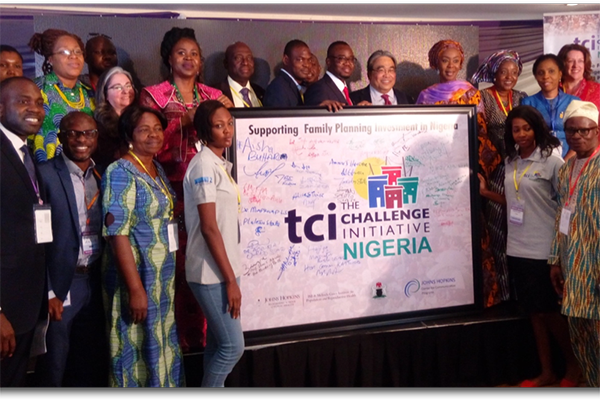
March 21, (THEWILL) – The Challenge Initiative (TCI), Nigeria, has stressed the need to highlight the role of family planning in advancing women’s rights and empowerment, saying that access to family planning services enables women to participate in the workforce, and contribute meaningfully to the growth of the society.
The Challenge Initiative Nigeria is a Non Governmental Organisation (NGO), involved with scaling up high-impact family planning and reproductive health interventions, focusing on building resilient health systems and fostering self-reliance in state governments.
In a release by TCI to collaborate the theme of the 2025 International Women’s Day (IWD) (Accelerate Action), it is noted that childbirth spacing significantly reduces maternal and infant mortality rates, promoting healthier families and stronger communities.

Endorsed by Dr Taiwo Johnson, the Country lead at The Challenge Initiative Nigeria and made available to journalists in Uyo, the release asserts that “by allowing women to make informed choices about their reproductive health, FP/Childbirth Spacing ensures better health outcomes, improved economic opportunities, and enhanced quality of life for families and communities.
“The 2025 theme, ‘Accelerate Action’, calls for rapid advancements in gender equality. It focuses on recognising strategies and tools that drive women’s progress in education, employment, and leadership.
“At DevComs we strongly support the theme of the 2025 IWD through accelerating Women’s Access to Family planning, which is more than just a health intervention but a catalyst for gender equality, economic empowerment, and sustainable development “, the release explained.
The Communication/Knowledge Management Officer of TCI, Suliyat Eletu, noted that the NGO has been supporting the government of Nigeria since 2017, in providing technical support to 22 States across the country for a sustainable local response to the needs of women and families.
Managed by The Johns Hopkins Centre for Communication Programmes (CCP), TCI’s Nigeria hub has proven to work high-impact family planning approaches and provides guidance to self-selected states, local government areas (LGAs), and partners willing to invest in family planning.
It says new states, cities, and partners ask for technical and financial coaching and mentoring to implement successful family planning programming to match their investments.
“FP/Childbirth Spacing is a cornerstone for achieving multiple Sustainable Development Goals (SDGs), particularly those focused on women’s health, economic growth, and gender equality:
“SDG 3 (Good Health and Well-being): FP reduces unintended pregnancies, lowers maternal and child mortality, and ensures better health outcomes for women and infants.
“SDG 4 (Quality Education): When women and girls have access to FP, they are more likely to complete their education and pursue economic opportunities.
“SDG 5 (Gender Equality): FP empowers women by giving them control over their reproductive choices, promoting equality in decision-making within families and communities.
“SDG 8 (Decent Work and Economic Growth): Women who can plan their families are more likely to participate in the workforce and contribute to economic development.
“SDG 10 (Reduced Inequalities): Expanding FP services ensures that vulnerable populations, including those in rural and conflict-affected areas, have access to essential reproductive healthcare.
“SDG 13 (Climate Action): Managing population growth through FP helps reduce environmental pressures and supports sustainable resource management”. It explained.
The release complained that despite significant efforts, challenges continue to hinder FP accessibility in Nigeria, saying such hindrances include cultural and religious resistance to modern contraceptives, stock-outs of FP commodities due to supply chain disruptions, inadequate funding and policy gaps limiting service expansion.
Others include misconceptions and myths discouraging contraceptive use, limited male involvement in FP decision-making, poor healthcare access, especially in rural and conflict-affected areas and weak logistics management systems affecting FP commodity availability.
The release reasons that to sustain the gains of FP for the future, the country must ensure continued progress, by: institutionalising FP training in medical and nursing schools, strengthening FP commodity security through improved supply chains.
It called for integrating FP into Universal Health Coverage (UHC) programmes and fostering community ownership through collaboration with CSOs and traditional leaders, as well as expanding government commitment to FP budgeting and funding.