
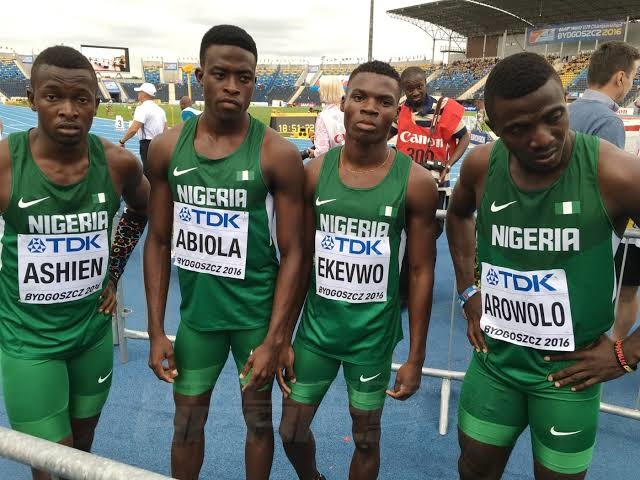
May 12, (THEWILL) – The news broke with a sting of disappointment: Team Nigeria, a recognisable force in global athletics, would not compete at the 2025 World Athletics Relays in Guangzhou, China, due to visa delays by the Chinese Embassy. Days later, a glimmer of hope emerged when the embassy approved the visas, but the approval came too late for any meaningful participation.
The Nigerian contingent faced a frantic race against time to reach the event, which began on May 10, the day their visas arrived from the embassy. This saga, rooted in bureaucratic tangles and diplomatic friction, is a window into the monumental challenges African athletes face in international competitions even as it underscores Nigeria’s determination to overcome them.
The World Athletics Relays, billed for May 10 and 11 at the Guangdong Olympic Stadium in Guangzhou, mark the 7th edition of this biennial event and the first time China has hosted it. The competition features six relay events: men’s and women’s 4x100m and 4x400m, mixed 4x400m, and the newly introduced mixed 4x100m. With 730 athletes from 43 nations competing, the Relays serve as a critical qualifier for the 2025 World Athletics Championships in Tokyo, where the top 14 teams in each event (except the mixed 4x100m) earn automatic spots.

Nigeria planned to field a 17-athlete squad in four events: men’s 4x100m, women’s 4x100m, mixed 4x100m, and mixed 4x400m. The team, announced by the Athletics Federation of Nigeria (AFN) in April, included world-class sprinters like Tobi Amusan, the 100m hurdles world record holder, and Favour Ofili, a Paris 2024 Olympics 200m finalist. Their absence would dim the event’s competitive shine and jeopardise Nigeria’s path to Tokyo.
Nigeria’s visa troubles began months before the event. According to the AFN, the federation started the application process in February 2025, submitting documentation for athletes and officials based in Nigeria and abroad, particularly the United States. By late April, the National Sports Commission (NSC) sent a letter to the Chinese Embassy requesting assistance, but delays persisted. On May 2, an NSC official revealed that no visas had been issued for either home-based or US-based athletes, citing the Chinese organisers’ insistence on processing only a World Athletics-approved participant list, a departure from protocols at the 2025 World Indoor Championships in Nanjing.
The embassy’s requirements, such as police reports, bank statements and a poorly communicated “Verification Letter of Invitation”, proved inconsistent and burdensome. The AFN, led by President Tonobok Okowa, condemned the process, alleging “excessive and discriminatory” demands that suggested deliberate obstruction.
The crisis deepened as the May 5 departure date passed without resolution. By May 7, seven US-based athletes faced outright visa denials, attributed by the NSC to China’s “hard policies against the USA.” The following day, reports surfaced that Nigeria had withdrawn from the Relays, with the AFN stating that the delays made participation “logistically impossible.” Okowa called the situation a “diplomatic failure,” noting that athletes had submitted all required documents in good faith.
The Federation highlighted the severe consequences: months of wasted training, significant financial losses, lost qualification opportunities, and profound psychological strain on athletes eager to represent Nigeria. The statement detailed frustrations with the Chinese authorities, from incorrect invitation letters to changing application portals twice.
On May 9, a last-minute breakthrough offered hope. The Chinese Embassy approved visas for the Nigerian contingent, but the timing, on the eve of the Relays, left little room for travel coordination. All passports were with the AFN’s performance director in Los Angeles and the team faced a 24-hour journey to Guangzhou. The effort was described as a “logistical sprint,” with athletes potentially competing just hours after landing. Despite the visa issuances, the AFN announced Nigeria’s withdrawal on May 10, stating that the late issuance rendered “meaningful participation” impossible.
The decision to pull out completely reflected the reality that relay teams require all members present for effective baton exchanges, a challenge unmet with scattered athletes and officials.
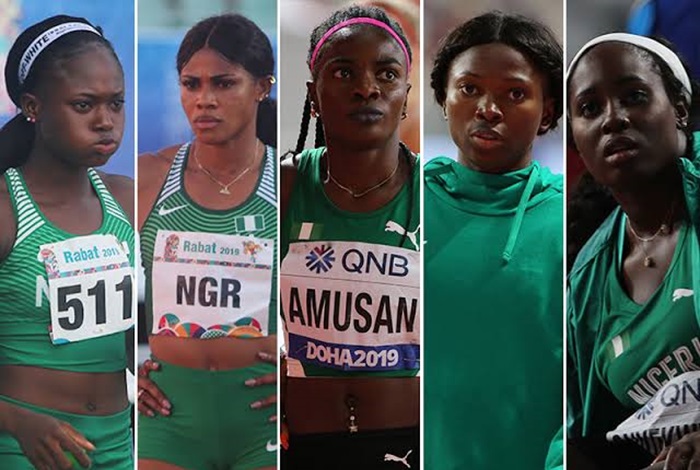
The human toll of this ordeal cannot be overstated. Tobi Amusan, a national icon, was set to lead the women’s 4x100m team alongside Rosemary Chukwuma, Justina Eyakpobeyan, Success Umukoro, Jennifer Chukwuka Obi and Favour Ofili. Ofili, who earned $25,000 at the Grand Slam Track in Miami earlier in 2025, had threatened to boycott the Relays over unresolved issues from the Paris 2024 Olympics, where administrative errors excluded her from the 100m race.
Yet, frustration around the entire activation and visa application protocols mirror a broader sentiment among Nigerian athletes, who face recurring bureaucratic barriers. The men’s 4x100m team, featuring Udodi Onwuzurike, Favour Ashe, and Alaba Akintola, and the mixed relay squads, including veterans Chidi Okezie and Patience Okon-George, carried Nigeria’s hopes for Tokyo qualification. The AFN’s statement lamented the “devastating psychological effects” on these athletes, who had trained rigorously only to be sidelined by factors beyond their control.
The Chinese Embassy responded on May 10, with Cultural Counsellor Yang Jianxin that the delays stemmed from a “misunderstanding over visa processing timelines.” Yang emphasised that no visas were denied and both sides had tried their best, but the “total time was just too short.” The embassy scheduled a meeting with the NSC to prevent future issues, expressing regret over the missed opportunity for Nigerian athletes. World Athletics, however, distanced itself from blame, stating that all countries were informed of visa requirements and deadlines, and the local organising committee had been “extremely collaborative.” The AFN countered that the process was neither fair nor transparent, petitioning World Athletics for a qualification exemption to the World Championships, citing administrative failures by both the hosts and the governing body.
This incident exposes deeper systemic issues in global athletics. Nigeria’s withdrawal follows a pattern of visa-related challenges, including a reduced team at the 2025 World Indoor Championships in Nanjing and a partial absence at the 2021 World Relays. The AFN’s call for World Athletics to prioritise “athlete-friendly” host nations resonates with other affected countries, like the Dominican Republic, which also faced visa denials. The NSC’s claim that US-based athletes were targeted due to China’s policies against the USA suggests geopolitical tensions may have influenced the process, though Yang’s statement avoids such implications.
The AFN’s late application timing, possibly delayed by Nigeria’s Labour Day celebrations from May 1 – 5, also drew scrutiny, raising questions about internal coordination. These factors, external barriers and domestic lapses, combined to thwart Nigeria’s participation.
The broader implications are sobering. Nigeria’s absence from the Relays diminishes their chances of early qualification for the 2025 World Championships, a critical step toward the 2028 Los Angeles Olympics. The financial losses, estimated in the tens of thousands of dollars for travel and training, strain an already underfunded sports system. Psychologically, the repeated setbacks risk eroding athletes’ trust in the AFN and international bodies. Yet, Nigeria’s response reflects determination. The AFN’s petition for alternative qualification routes and the NSC’s engagement with the Chinese Embassy signal proactive steps to address the fallout. Okowa’s demand for compensation and revised host selection criteria challenges World Athletics to ensure equitable access, particularly for African nations.
The story of Team Nigeria’s visa ordeal is one of frustration but also of resolve. The athletes, from Amusan’s world-class sprinting to Ofili’s rising star, embody Nigeria’s potential to compete at the highest levels. Their exclusion from Guangzhou is a loss not only for Nigeria but for the global athletics community, which thrives on diverse competition. The Chinese Embassy’s commitment to dialogue and the AFN’s advocacy for reform offer hope for smoother processes in the future.
For now, Nigeria’s sprinters must regroup, their sights set on alternative paths to Tokyo. The world awaits their return to the track, where their speed and spirit will once again inspire.

Jude Obafemi is a versatile senior Correspondent at THEWILL Newspapers, excelling in sourcing, researching, and delivering sports news stories for both print and digital publications.
