May 08, (THEWILL) — Maritime education institutions from West and Central Africa have resolved to harmonise training curricula and pursue mutual recognition of seafarers’ certificates in a major regional move to improve global competitiveness and employment opportunities for cadets across the subregion.
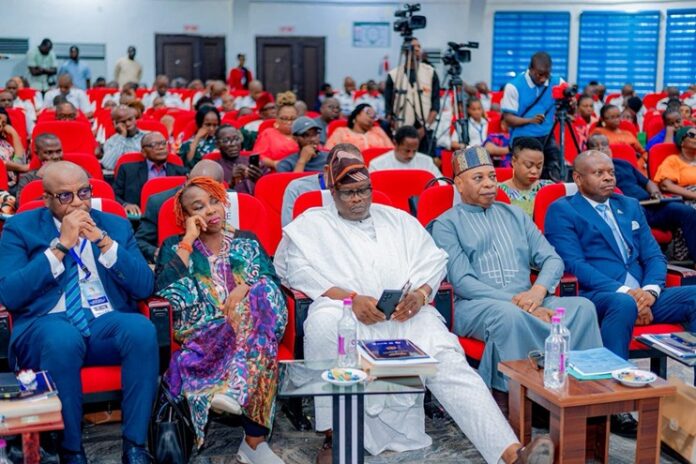
The resolution formed the high point of the inaugural exchange visit of Maritime Education and Training Institutions (METIs) within member states of the Maritime Organisation of West and Central Africa (MOWCA), held from May 4 to May 8, 2026, at the Maritime Academy of Nigeria (MAN), Oron, Akwa Ibom State.
The meeting brought together representatives of the Federal Ministry of Marine and Blue Economy, the Nigerian Maritime Administration and Safety Agency (NIMASA), and key maritime training institutions within the subregion.

In a communiqué issued at the end of the meeting, the participating institutions agreed to establish a unified framework for strategic partnership and cooperation among the Maritime Academy of Nigeria, the Regional Maritime University (RMU), Accra, Ghana, and the Académie Régionale des Sciences et Techniques de la Mer (ARSTM), Abidjan, Côte d’Ivoire.
The institutions further resolved to sign a Memorandum of Understanding after a third exchange visit to formalise collaboration in areas, including curriculum harmonisation, faculty and student exchange programmes, joint research initiatives, shared training facilities and bilingual education.
On curriculum development, the institutions agreed to accelerate the harmonisation of maritime training curricula in line with international standards and updates under the Revised African Maritime Transport Charter, 2010.
A tripartite committee coordinated by MOWCA is expected to drive the process, which stakeholders said would pave the way for mutual recognition of Certificates of Competency (CoC) and Certificates of Proficiency (CoP) across member states.
The communiqué noted that the recognition of seafarers’ certificates would ease employment opportunities for maritime professionals within the subregion and align with the International Convention on Standards of Training, Certification and Watchkeeping for Seafarers (STCW), 1978, as amended.
The institutions also identified the shortage of sea-time berths for cadets as a major challenge affecting maritime training in West and Central Africa.
While commending MOWCA for engaging international shipping lines to provide sea-time opportunities for cadets, the institutions advocated the establishment of a regional trading and training vessel to support practical maritime education.
On infrastructure collaboration, the participating schools agreed to share training resources, including simulators, workshops, library facilities and e-library platforms to strengthen capacity development.
The communiqué also endorsed the establishment of a MOWCA-coordinated faculty and student exchange framework to facilitate sabbaticals, academic exchanges and regional capacity-building programmes.
The institutions further resolved to deepen joint research efforts and seek increased funding support from member states, maritime administrations and donor organisations for research, curriculum development and training initiatives.
Recognising the multilingual nature of the region, the schools stressed the importance of integrating English and French language training into their curricula to improve communication, certification recognition and international employability of seafarers.
The Maritime Academy of Nigeria was commended for hosting the inaugural exchange visit, while other maritime institutions within the MOWCA subregion were encouraged to host future editions.