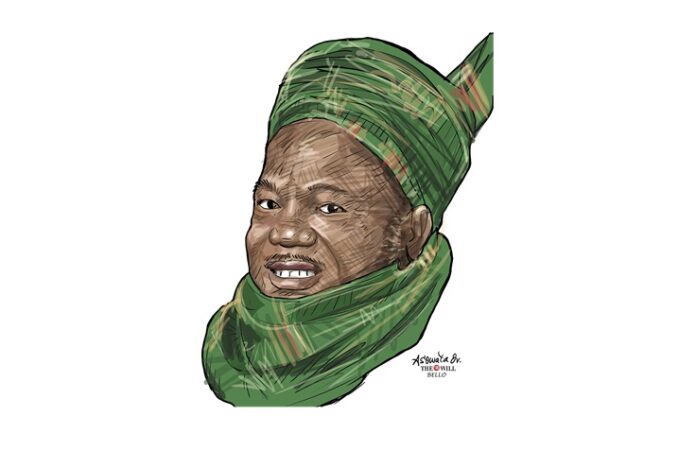
January 18, (THEWILL) — Coming around the time political parties would be gearing to conduct their primaries for the 2027 general election, the 60th anniversary celebration of the late Premier of Northern Nigeria and the Sardauna of Sokoto, Sir Ahmadu Bello in April 2026 promises to be more than just a gathering of who is who in the North.
Already all the political, professional and occupational organisations of note have planned to make the event a big deal. They include the Arewa Consultative Forum, ACF, Northern Elders Forum, NEF, Sir Ahmadu Bello Memorial Foundation, Arewa House, Centre for Democratic Research and Training, CEDDART, Arewa Research and Democratic Progressives, A.R.D.P., Arewa Defence League, Miyetti Allah Cattle Breeders Association, MACBAN, and other allied groups.
During the week-long celebration of the annual event with a Memorial Day observation that often coincides with the Armed Forces Day celebration on January 15, the Sardauna was murdered by military adventurers in politics during the first coup plot in 1966, Chairman of Rebuild Arewa Initiative for Development, Alhaji Balarabe Rufai reportedly hinted that the April event may be used by the North to make a pronouncement on its choice presidential candidate for the 2027 poll.

Recall that the forum’s National Publicity Secretary, Prof. T. A. Muhammad-Baba, said last week that would follow the 2023 pattern not to endorse any candidate but instead invite them for an interview on their plans for the region and the country as a whole.
“Just like in the 2023 presidential election, the forum will invite all the aspirants or candidates to come and explain how each aspirant will tackle insecurity and poverty, among other issues affecting the northern region, if elected president in 2027 ,” he said, adding that the forum would prepare a position paper on the region and present to the eventual winner of the poll, for implementation.
He noted that the then is candidate of the opposition Peoples Democratic Party, PDP, ex- Vice President Atiku Abubakar, and his counterpart of the New Nigeria Peoples Party (NNPP), Dr Rabiu Musa Kwankwaso, did not come to address the forum in 2023 despite the forum’s invitations. President Bola Ahmed Tinubu, then candidate of the All Progressives Congress, APC, and his Labour Party, LP, counterpart, Peter Obi, attended the forum’s 2023 interactive session.
But all that position may change in April during the 50th anniversary of the Sardauna’s assassination, sources say. The proposed April event, themed, “Sixty Years Without the Sardauna, “ would attract speakers from Reverend Hassan Mathew Kukah, to Pastor Yohanna Buru, Sheikh Ahmed Gumi and Dr Yusuf Usman and other reputable speakers who would critically examine the region’s future on the 60th anniversary of the Premier of the region.
Already, there is ongoing lamentation about the region’s woes. Speaking at a press conference with journalists last week Thursday on behalf of the organisers, Chairman of Board of Trustees of ACF, Bashir M. Dalhatu, said the conference, scheduled for the first week of April 2026, seeks to go beyond nostalgia to critically examine the region’s past, present and future.
“Today is exactly sixty years since Sir Ahmadu Bello, Sardaunan Sokoto, and some of his colleagues were murdered by rogue elements of the Nigerian military. Those tragic events plunged the country into crises, including a 30-month civil war and the loss of hundreds of thousands of lives,” Dalhatu said, adding that while January 15 is commemorated as Armed Forces Remembrance Day, it is equally important for Nigerians—particularly Northerners—to reflect on historical turning points that shaped the nation and the region.
He described the Sardauna as a towering symbol of visionary, disciplined and inclusive leadership, noting that his commitment to good governance, integrity and the welfare of the people set standards that remain unmatched. “The Sardauna’s vision gave birth to world-class institutions such as Ahmadu Bello University, Zaria and laid foundations for massive investments in education, healthcare, infrastructure, agriculture, and economic development across the region,” he said.
He lamented that more than 70 percent of Northerners today are under 60 and are yet to experience the kind of leadership that unified the region, expanded opportunities and protected the poor.
According to Dalhatu, the North now faces fragmentation, high governance costs, inter-communal conflicts, insecurity, poor leadership standards and millions of out-of-school children and Almajirai. The conference aims to bring together leaders, elders, intellectuals, traditional and religious figures, entrepreneurs, women and youths to critically assess the region’s strengths and weaknesses, explore constructive solutions and identify assets that can be harnessed for development.
Dalhatu said the summit will draw on research and informed analyses to produce actionable strategies to improve security, economic growth, social cohesion, and governance in Northern Nigeria. “The ultimate goal is to rekindle the spirit of hard work, peaceful coexistence, respect for shared values, and responsible leadership that defined the era of the Sardauna, while reaffirming the North’s role as a key stakeholder in Nigeria’s democratic development.
He said the expected outcome of the confab includes informed observations and recommendations for rebuilding a North of farmers, teachers, entrepreneurs and young people who need support to grow with strong, wholesome values.
“We have vast volumes of valuable, informed research that will be distilled into actionable strategies to improve our security, economy and coexistence. We will seek to rediscover the linkages between our past and our future, and we are convinced that the conference will provide the region with an opportunity to begin a productive reversal of its fortunes. Sardauna and his colleagues sound like legends to millions of Northerners today, largely because the North looks back in vain for successors capable of sustaining their remarkable records.
“Our young people today only hear of excellent schools and hospitals that were built with public funds, while millions of them are Almajirai with very limited opportunities to become productive adults. The old Northern Region is now divided into 19 states.”
Amos Okioma is a Correspondent at THEWILL