
March 01, (THEWILL) — A 19-point document leaked from what should have been a confidential negotiation has placed Nigerian football under an unusually sharp light. Eric Chelle, the Franco-Malian coach appointed to manage the Super Eagles in early 2025, submitted the proposal to the Nigeria Football Federation in January, setting out the conditions under which he would extend his contract beyond its current expiry in January 2027. The resulting public debate has centred almost entirely on one figure, a requested monthly salary of $130,000, yet that figure, striking as it is, obscures the full significance of what Chelle has put on the table. His proposal reads less as a salary negotiation than a structural audit of how Nigerian football operates and the federation’s response will say as much about the organisation’s capacity for reform as it will about its budget.
The financial request represents a considerable leap. Chelle currently earns approximately $50,000 to $55,000 a month, a figure broadly consistent with the packages offered to his predecessors. Gernot Rohr, who spent several years rebuilding the squad, worked within a similar range. José Peseiro, who guided the Super Eagles to the final of the 2023 Africa Cup of Nations, received around $70,000 per month before his departure. Chelle’s proposal effectively doubles that established benchmark. Evaluating it fairly, however, requires understanding the model he is working within. In many African national team setups, the head coach receives a consolidated fee from which he personally funds his backroom staff, rather than the federation managing those salaries directly. Chelle has confirmed publicly that his requested figure is intended to cover an assistant coach, a physical trainer, a goalkeeper coach and a personal assistant, individuals whose wages currently come out of his own pocket under the existing arrangement. Understood in those terms, the $130,000 functions closer to a departmental budget compressed into a single line item than a straightforward personal salary.
Whether that framing is persuasive depends partly on one’s assessment of Chelle’s record. His tenure has delivered a third-place finish at the 2025 Africa Cup of Nations in Morocco, a result the federation has since cited as justification for pursuing his retention despite the team’s initial performance targets not having been fully met. The broader context, however, is sobering. Nigeria has now failed to qualify for consecutive World Cups, with the campaign for the 2026 tournament in the United States, Canada and Mexico ending without the Super Eagles securing a place. That successive failure lends the contract negotiations a sharper edge. Critics, including a number of former players and prominent commentators, have argued that this record does not provide Chelle with the leverage to justify such a significant financial demand. Supporters counter that continuity in coaching has a value that aggregate results do not easily capture, and that the stabilising effect of Chelle’s tenure compares favourably with the turbulence that defined the period leading up to his appointment.

The logistical provisions in the proposal have drawn considerable public commentary, not all of it measured. Chelle has requested a private vehicle with a driver and security detail, a residence in a protected area with a 24-hour electricity supply, a furnished office equipped with a projector and reliable internet access, and business class flights for himself and his wife, with economy class for his two children. Taken individually and without context, these items lend themselves to caricature. Placed against the operational realities of working in Nigeria, they are rather more comprehensible. Power outages remain a commonplace disruption. Security considerations for high-profile public figures are legitimate. The demand for a functioning office with stable connectivity is hardly an affectation, given that a national team coach must review footage, analyse opposition data and monitor players across domestic and foreign leagues on a continuous basis. Several of Chelle’s predecessors have spoken on record about logistical failures, delayed allowances and substandard facilities as persistent distractions. By demanding that these provisions be written into his contract rather than left to goodwill, Chelle is attempting to legislate against a pattern of institutional negligence.
The demand for guaranteed salary payments on or before the 30th of each month carries a similar logic. On the surface, it reads as an unremarkable administrative preference. In the context of the NFF’s history, the significance runs considerably deeper. Both Rohr and Peseiro experienced extended periods without pay while fulfilling their duties, a recurring failure that has damaged the federation’s credibility with successive appointments. Chelle’s insistence on contractualising this obligation is a direct challenge to the organisation to manage its cash flow responsibly and to treat its coaching staff as a financial priority rather than a discretionary expense.
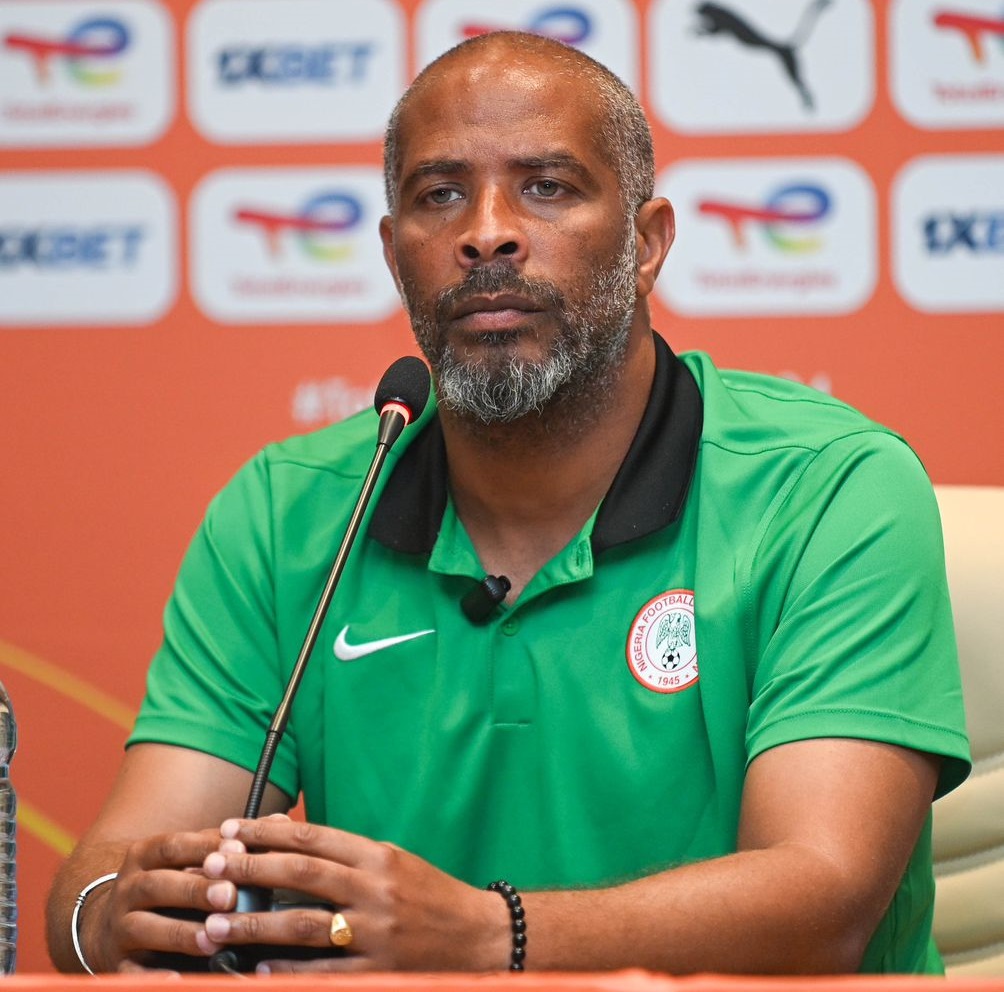
The technical autonomy demands are, in many respects, the most consequential section of the document. Chelle has reportedly sought complete control over squad selection, explicitly excluding the federation and the National Sports Commission from any involvement in the process. He has also requested authority over the scheduling of friendly matches, comprehensive scouting access across both domestic and foreign leagues, and the institutionalisation of coordinated development pathways linking the senior team with the under-23, under-20 and under-17 squads through monthly meetings with all national team coaches. Each of these conditions targets a specific, well-documented dysfunction. Allegations of external interference in squad selection, attributed variously to agents, federation officials and political interests, have circulated in Nigerian football for years and are widely held to have contributed to inconsistencies in performance. The tendency to arrange friendlies against lower-ranked opposition primarily for the appearance fees they generate has long been identified as a tactical handicap, leaving the team underprepared for competitive fixtures. The scouting provisions address an equally persistent problem: the absence of any structured talent identification system beyond reliance on player agents recommending their own clients.
Whether these structural demands represent a genuine reform agenda or an opportunistic consolidation of personal power is a question that divides observers. Those sceptical of Chelle’s motives point to the breadth of the 19 points and the timing of their submission, against the backdrop of a second consecutive World Cup absence, as evidence of a coach seeking maximum leverage from a federation reluctant to destabilise the setup ahead of the next continental championship. Supporters argue that Chelle is the first coach in recent memory willing to demand the professional conditions that are standard in comparable football nations and that, if honoured, his proposals would leave the federation’s operational framework meaningfully improved regardless of how his tenure ultimately concludes.
The federation’s financial position frames all of this in hard arithmetic. The NFF operates on an annual budget estimated at between $10 million and $15 million, reliant on government subventions and FIFA grants that are irregular in timing and tied to specific calendar cycles. Accepting the full package, including an expanded technical team, could push total monthly coaching expenditure beyond $200,000, consuming a substantial portion of available resources and potentially crowding out funding for grassroots development and women’s football. Officials, including General Secretary Mohammed Sanusi, have indicated a willingness to raise Chelle’s salary to somewhere between $80,000 and $100,000, while noting that provisions for accommodation and transport already exist in some form. The gap between offer and demand is real but not necessarily terminal. Reports suggest further talks are expected in Abuja, and a compromise around the $100,000 mark with partial movement on governance provisions represents a credible middle ground.
With the 2026 World Cup now proceeding without the Super Eagles, the commercial argument for investing in the coaching setup shifts its focus toward the next Africa Cup of Nations and the longer cycle of rebuilding credibility on the continental stage. Qualification and strong performances in those competitions would generate increased sponsorship revenue and broadcasting income, a return on investment that could, in principle, justify a more ambitious outlay on coaching infrastructure. The federation must weigh that prospective value against present financial constraints and the reality that Nigeria’s absence from the world stage has already weakened its negotiating position with commercial partners.
What the leak of the document has confirmed, whatever its source, is that the negotiation touches on questions the NFF cannot easily sidestep. Chelle has itemised the deficiencies in the current setup and attached specific costs to addressing them. For a federation overseeing a second successive World Cup absence, the pressure to demonstrate a credible path forward has rarely been greater. The federation must now determine, in concrete terms rather than policy aspirations, what standard of professional environment it is prepared to sustain for the management of its most valuable sporting asset. The answer, whenever it comes, will define the terms of this relationship for years beyond the contract currently under discussion.

Jude Obafemi is a versatile senior Correspondent at THEWILL Newspapers, excelling in sourcing, researching, and delivering sports news stories for both print and digital publications.