January 23, (THEWILL) – Africa’s biggest and best football competition, the TotalEnergies 2021 Africa Cup of Nations, finally ended a goal drought that characterised the first round matches. After an initial spell of goalless draws, Cameroon again brought another and more exciting dimension to the tournament as they kicked off the second round of matches with a five-goal thriller, four of which they put past Ethiopia.
It was another double for Cameroon captain, Vincent Aboubakar, and a first for Karl Toko Ekambi, both of whom feasted on the generosity of the Ethiopian defence at the Olembe Stadium in Yaounde to make it two wins from two for their team. That single game was but a harbinger of the goals that would come. THEWILL recalls that Match Day One fixtures saw only 12 goals scored in 12 games, with nine games ending in goalless draws. However, AFCON, which had reached a total of 12 1-0 wins and overtaken the 11 witnessed in the group stages of the 2019 event, was going to get the goals it demonstrated that it needed.
In the 12 group games played on Match Day Two, 29 goals had gone in, which was a significant improvement over the previous 12 in Match Day One ties, even if it fell only slightly below the tally recorded during the 32nd edition of the tournament. Yet, as Match Day Three games were concluded in some groups, some teams still failed to live up to expectation and were knocked out.

The Black Stars of Ghana, four-time African champions and one of the regular favourites to clinch another continental title, were among the teams that fell by the wayside. An underwhelming and disjointed team display in Cameroon saw the cup contenders unable to qualify for even a measly third slot in a group with teams from Morocco, Gabon and debutants Comoros. Ghana were so disappointingly poor that the Milovan Rajevac-led team finished rock bottom and summarily crashed out, unable to make even the third-place slot in the new format of the 24-team Tournament.
Ghana’s opening 1-nil defeat to Morocco was followed by an even worse and niggly 1-1 draw with Gabon, which ended with Ghana’s Benjamin Tetteh punching an opponent in the face before the referee could intervene. Tetteh was later handed a three-match suspension for his behaviour. The Black Stars were therefore expected to raise the bar of their performance against the newcomers, given their reputation on the continent and in the competition. Yet, it was the Comoros celebrating after the final whistle.
Obviously, the red card handed out to influential star, Andre Ayew, did not help Ghana’s resolute attempt to stay in the competition, but Ben Nabouhane had put the Islands ahead early on before the Black Stars were reduced to 10 men after Ayew was sent off.
When the Black Stars admirably rallied back to tie the match at 2-2, Ahmed Mogni extended the lead for the Comoros, scoring his second goal in the 85th minute to send Ghana out of the group stage for the first time since 2006. It was by far one of the biggest upsets in the history of the African Cup of Nations competition. Not only did the Comoros score for the first time in the finals to earn their first maximum points, they took the scalp of one of the most respected teams, which had secured a place in the playoffs for the Qatar 2022 FIFA World Cup ahead of the commencement of AFCON.
Despite losing their first two games in Cameroon, the Comoros, the 132nd-ranked team in world football, now have a chance to advance to the knockout stages as one of four best-ranked third-placed teams. The tiny island nation, which has a population of just under 1 million and seems to be better known for its military coup d’etats than football, had only won its first Nations Cup or World Cup qualifier at the 20th attempt in 2016. With a roster strengthened by some Diasporan players, many of whom play in the lower levels in France, they valiantly battled for their chance and overcame one of the continent’s football giants. They were overjoyed with their three points and looked forward to the outcomes of the last round of matches in the remaining three groups to see if their surprise victory would keep them in the tournament.
On the other hand, Ghanaian fans at Garoua’s Roumde Adjia Stadium were astonished when the final whistle blew, leaving them to ponder a rollercoaster second half that halted their hope for a first Nations Cup title since 1982. The circumstances of the Black Stars’ departure will only put more pressure on coach Rajevac, who took over for a second time in September.
In 2010, the Serb led the Black Stars to a Nations Cup final and the World Cup quarter-finals. In 2014, he led the West Africans to Africa’s World Cup play-offs. Yet, since his return, it has been a bumpy ride. Ghana barely finished ahead of South Africa in their Qatar 2022 qualifying group and made it via goal difference. As an unseeded team for the play-off draw, they will have to contend against one of Senegal, Morocco, Tunisia, Algeria or Nigeria for a place in Qatar. It is another uphill task that will prove even more daunting after their disappointing AFCON display.
Defending champions and tournament favourites, Algeria, have put an unimpressive performance similar to that of Ghana. The dire straits that the Desert Foxes have found themselves was made obvious in the words of coach Djamel Belmadi, whose honest assessment of his team’s situation as succinctly summarised as “a tough situation.”
In Match Day One, Algeria’s inability to overcome the brilliance of Sierra Leone goalkeeper, Mohamed Kamara, earned the 22-year-old a performance boost, while two goals they put in against Equatorial Guinea were called out for offside in Match Day Two. For the second straight fixture, the Algerians were unable to find a way past another goalkeeper, this time Jesus Owonu, who made two saves from Youcef Belaili to give his side the opportunity to win. As a result, Algeria’s 35-match unbeaten run, which began in October 2018, came to a screeching halt against a team ranked 114th in the world.
After Match Day Two, the team’s ability to stay in the competition was all but gone, especially when the prospect of facing Ivory Coast remained on the horizon. They needed all the maximum points on offer and the favourable outcomes of other matches to make further progress in the competition, but it was out of their hands after the initial draw and the loss that followed. Even with talented players, such as Manchester City’s Riyad Mahrez, who was expected to shine as brilliantly as he was doing for City in the English Premier League, Algeria were without goals to celebrate at the end of Match Day Two.
The fact that Ivory Coast finished their second round of games on top of the group on four points, Equatorial Guinea on three and Sierra Leone on two points meant that by the end of Match Day Two, all four sides were still battling to qualify and each team was not willing to give as much as an inch to the other.
After Egypt did it in 2010, no country has successfully defended the Nations Cup, and Algeria’s performance in sub-Saharan Africa will once again be questioned. Two of their players cited the tropical environment as a factor in their opening stalemate, but what could be said of their loss to Equatorial Guinea even when the Desert Foxes dominated possession. The best they could muster were disallowed goals and frustration with themselves as the game progressed. By the time the defensively stout Ivorians put two past them in the first half of their Match Day Three encounter, with Franck Kessie and Ibrahim Sangare on the scoresheet, there was even more pressure on the defending champions than there was after their opening goalless draw against Sierra Leone. As with Ghana, a strong contender was disappointing the bookies and performing far below expectation. After Nicholas Pepe scored in the second half, Algeria managed to get their first AFCON goal, which was not enough to save the FIFA Arab Cup champions an embarrassing exit from Cameroon after the 4-1 loss.
These disappointments aside, there was a special and historic occasion at AFCON in the past week. The CAF-organised competition chalked off a milestone when Salima Mukansanga of Rwanda became the first female referee to officiate an AFCON match. On Tuesday, she oversaw the Group B match between Guinea and Zimbabwe in Yaounde’s Ahmadou Ahidjo Stadium.
Mukansanga had already made history on January 10 when she served as a fourth official in a game between Guinea and Malawi at Bafoussam. The 35-year-old was part of an all-female lineup, which was also the tournament’s first-ever all-female squad, featuring Carine Atemzabong (Cameroon), Fatiha Jermoumi (Morocco), and Bouchra Karboubi (Morocco), the VAR referee. It was a moment for female representation and girl-child motivation in the predominantly male-centric role.
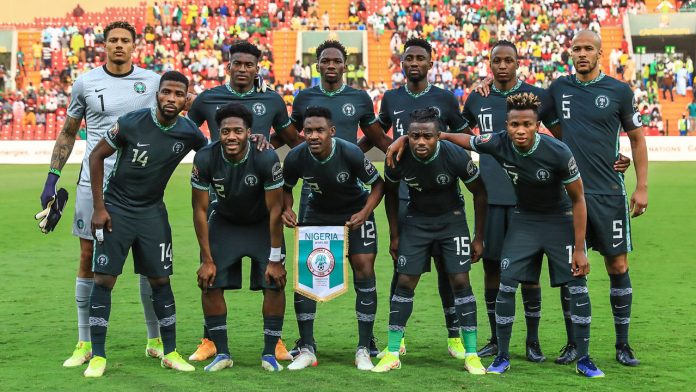
As far as the Super Eagles’ part in the competition was concerned, their 2-0 win over Guinea-Bissau in the final Group D tie capped up a strong showing in the group stages. Already guaranteed a spot in the last 16, the Super Eagles advanced to the knockout stages as Group D winners with a perfect record after winning their third game in a row on Wednesday last week. There was an opportunity to ease off the steam, but Nigeria’s caretaker coach Augustine Eguavoen chose to keep the momentum going as his team put up a convincing performance yet again. However, Eguavoen himself identified room for improvement in the team’s inability to maximise goal-scoring chances created. It is hoped that they will improve as they progress into the knockout stages where every little extra can be the difference maker.

Jude Obafemi is a versatile senior Correspondent at THEWILL Newspapers, excelling in sourcing, researching, and delivering sports news stories for both print and digital publications.