April 06, (THEWILL) — Yusuf Alli returned from Glasgow last month with a public declaration: Team Nigeria would surpass its record of 12 gold medals and 35 total medals from Birmingham four years ago, the finest performance in Nigerian Commonwealth history. The statement was bold, and its significance lies not in the ambition itself but in what it would require to be made real. The infrastructure needed to back that claim is being assembled now, during a period in which the gap between Nigerian sport’s intentions and its execution has rarely been more visible.
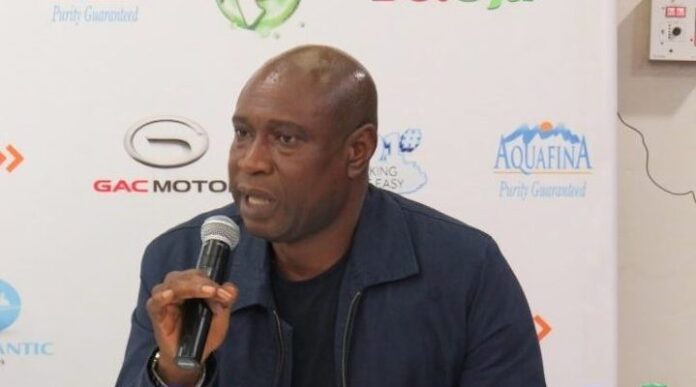
Alli is well placed to understand both sides of that gap. The 65-year-old former long jumper, who set the national record of 8.27 metres in 1989 and won gold at the 1990 Games in Auckland, also served as general coordinator for the Birmingham campaign that produced Nigeria’s record return. His appointment by the National Sports Commission, under chairman Shehu Dikko and director general Bukola Olopade, is therefore not merely ceremonial. He has seen at close range what a well-functioning campaign requires and, by extension, what an underfunded one costs. He describes the role as a privilege rather than an entitlement, and frames its duties with a clarity that is instructive: managing athlete welfare, coordinating logistics, handling travel documentation, resolving disputes, and ensuring that competitors arrive at their events with their attention focused on performance rather than administration.
The commission has moved early, which itself marks a departure from past cycles. In February, it released more than N200 million in training grants to 26 selected athletes across several sports. A training base has been established in Aberdeen, chosen to allow the squad to acclimatise to Scottish conditions ahead of the Games, which run from July 23 to August 2. A separate arrangement with the British Cycling Association will allow Nigerian cyclists to train in Manchester. These are not cosmetic gestures. Early acclimatisation is standard practice among competitive sporting nations, and the decision to secure a base in-country before the opening ceremony reflects a genuine attempt to remove some of the logistical pressures that have undermined previous Nigerian campaigns. President Bola Tinubu has indicated federal government support for the team’s preparations, lending political weight to the commission’s planning.

A group of ambassadors has also been named, drawing together former administrators including Dr Amos Adamu, Chief Patrick Ekeji, Alhassan Yakmut, and Gbenga Elegbeleye, alongside former competitors such as Olympic medallists Daniel Igali and Blessing Oborodudu. Whether these figures will contribute substantively to athlete support systems or function primarily as public relations appointments is a question that Nigerian sports administration has not always answered well. High-profile names have accompanied previous campaigns without producing meaningful operational change. Their value here will be measured in what they actually deliver to athletes on the ground.
The Games themselves present a structural challenge that no amount of early planning can entirely neutralise. Glasgow 2026 has been reduced to 10 sports, covering athletics, swimming, artistic gymnastics, track cycling, netball, weightlifting, boxing, judo, bowls, and three-on-three basketball, to keep the event financially viable. Wrestling, which contributed several of Nigeria’s gold medals in Birmingham, has been removed entirely. The medal pool is smaller, and Nigeria must compensate for that absence across a compressed programme. Athletics and weightlifting carry the heaviest expectations. Para-powerlifting adds further medal opportunities where Nigeria has a strong tradition. The arithmetic is unforgiving, and every event that falls short of a podium finish will register more sharply than it would in a broader competition.
Two pressures bear on the campaign that no planning document addresses directly. The first emerged in Asaba in March, when home-based athletes who spent six weeks at a Commonwealth preparation camp raised objections publicly, claiming they received only N75,000 each for transport and describing feeding and accommodation conditions as unsatisfactory. Videos of the protest circulated online. The commission’s director general disputed the account, stating that athletes received approximately N170,000 each and that conditions were monitored throughout the camp. The Athletics Federation of Nigeria president acknowledged a brief delay in payments, attributed it to a third-party process, and confirmed that all funds had since been disbursed. The episode is significant not because it is necessarily definitive, since accounts differed sharply, but because it surfaced during a campaign built on claims of reformed athlete welfare. Such incidents, however officially resolved, tend to linger in the confidence of those they affected.
The second and more structural difficulty concerns athletes based in the United States. Several of Nigeria’s most prominent track and field competitors, including Tobi Amusan, Kanyinsola Ajayi, and Samuel Ogazi, train and compete in America under visa arrangements that have grown more precarious following recent changes in United States immigration policy. The concern, already borne out during the World Indoor Championships in Poland where Nigeria was represented by only one athlete while others stayed behind to protect their residency status, is that international travel could jeopardise their ability to return. Officials have attributed the problem to foreign government policy rather than domestic failure and say they are seeking solutions, but their options are limited. Athletics is Nigeria’s deepest source of medals, and a squad diminished by travel anxiety would make the record target considerably harder to reach.
Alli has said the commission is working on measures to ensure athletes can travel and return without complications. The reassurance is genuine, but the anxiety it is meant to address is equally so. Athletes who have built careers and lives in the United States are being asked to weigh a sporting moment against their personal circumstances. That calculation belongs to each individual, and no official statement resolves it. The lesson from past cycles is not that Nigerian athletes lack capability, since Birmingham proved the opposite, but that sustained results depend on a system that handles the ordinary requirements of competitive sport without failure. Funding that arrives on time. Camps that include the athletes they were designed for. Documentation that is processed before, not after, a crisis develops.
Glasgow will offer the most precise test yet of whether the current leadership has genuinely altered those patterns or merely restated familiar ambitions in more confident language. The record is breakable. The conditions required to break it are demanding but not impossible. What Alli and the commission must now demonstrate is that the early work already done will not lose momentum in the months that remain.

Jude Obafemi is a versatile senior Correspondent at THEWILL Newspapers, excelling in sourcing, researching, and delivering sports news stories for both print and digital publications.