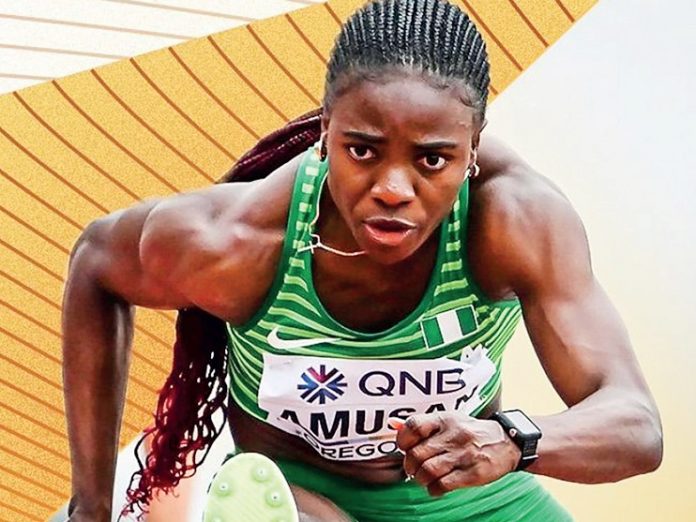
On Tuesday, September 20, the new women’s 100m hurdles World Record set by Nigeria’s Oluwatobiloba Ayomide Amusan at the 2022 World Athletics Championships in Oregon, America, in July, was formally ratified by World Athletics, thereby placing a stamp of confirmation on her status as the first Nigerian to hold a World Record and entering same into the record books. It also put paid to the disconcerting voices that quickly queried the timestamps and sought to raise doubts about the reality of the clock, led prominently by the 200- and 400-metre legend Michael Johnson, who was working as a BBC television commentator for the event at the time.
The margin by which Amusan broke the record and the sheer number of personal and national records set by other competitors in the race, as well as the fact that the fourth, fifth, sixth, and eighth-place finishers in that semifinal also ran their best times ever, were both significant factors in the doubters’ minds. The times set by the other three runners were the best of the year.
Amusan broke the previous record of 12.20 set by American Kendra Harrison in London in 2016 by setting a new record of 12.12 at a level of the competition where records are broken by the slimmest of margins. Indeed, four of the most recent world records in the event, for example, were above the previous marks by 0.01, 0.04, 0.01 and 0.03 seconds and none had been as much as the 0.08 seconds that Amusan shaved off the record she broke. One will have to go as far back as 1980 to find the last time the record was lowered by such a large margin.

It was enough to evoke questions of validity in the minds of doubters like Johnson who publicly queried the record, stating in a Twitter post that he did not believe that the times for the race were correct. He supported his disbelief with the fact that even the athletes themselves, Amusan included, looked shell-shocked when they realised how fast the times said they had run.
It was a valid point and Johnson later had to defend himself from those who thought he was biased because a Nigerian had broken the record of his compatriot, saying he was merely doing his job as a commentator, wondering if the clock had malfunctioned and querying the times of all the athletes and not one specific athlete.
However, the snide remarks about how Amusan could have accomplished such remarkable feat did not stop there. Reports quickly pointed to the footwear she was running in with the implication that is possibly gave her an extra push to race faster. Suddenly, shoe technology was on the front burner. It was revealed that Amusan was running in Adidas’ Adizero Avanti shoes designed for runners who compete in 5-10 km races and customised with bouncy foam to aid running.
It required Amusan to personally debunk the claims as she set the records straight saying: “My abilities are not centred around spikes. I had patella fasciitis at the beginning of the season. So that set me back for a while. I spoke to Adidas and requested if I could get spikes with a softer sole. They recommended a lot of stuff and I feel comfortable in that, so I was using them basically the entire time.”
Even if Amusan’s world record was deemed to be a wind-aided 12.06 (2.5 m/s), the fact that the record was ratified to effectively lay to rest all these dissenting opinions about what may or may not have seen her completely trash the old record, was extremely significant. More so, the fact that she continued to demonstrate that her abilities were at their best, whether the wind was behind her running or whether Adidas footwears were providing enough bounce.
In competitions following the Oregon Championships, Amusan has continued to leave her competitors in her wake. After retaining her African title ahead of Oregon, she successfully defended her Commonwealth title in a Games record of 12.30 in August before capping her season with victory in the Wanda Diamond League final with another record, this time a meeting record of 12.29.

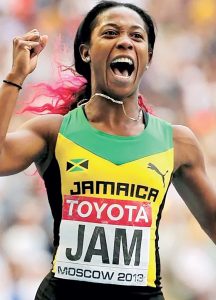
These accomplishments saw a sizeable rise in her ranking by World Athletics. On Friday, September 18, Amusan, who was rated 43rd in September 2021, climbed an entire 38 positions to become the fifth-ranked athlete in the world. All these accolades have come to a season-ending nomination for the World Athletics Athlete of the Year 2022, which was made public the previous week.
She was nominated alongside nine other outstanding athletes and put forward for the public to join in deciding which of these athletes was deserving to be the best overall in a two-part, three-way voting process will first determine the five women finalists for the first part before the winner will emerge from those five in the second part.
The three-way voting will be distributed thusly: World Athletics Council (50 per cent), World Athletics family (25 per cent) and a public vote (25 per cent) via Facebook, Instagram and YouTube likes and Twitter retweets on the post for the specified athlete. Voting will close on October 31, with a winner announced in early December.
Challenging Amusan for the prize are American shotputter Chase Ealey, who won the World Championships and Diamond League titles and holds the numbers 2-5 farthest throws in American history; the 35-year-old Jamaican 100m sprinter Shelly-Ann Fraser-Pryce, who won the World Championships and Diamond League titles also and ran a record seven sub-10.70 races in one year; Peruvian Race Walk athlete Kimberly Garcia, Peru, who won World titles in the 20km, 35km events; and Jamaican 200m sprinter Shericka Jackson, who won the World Championships and Diamond League titles and notched the second-fastest time in history.
The others are Kenyan 1500m athlete Faith Kipyegon, who won the World Championships and Diamond League titles and ran the second-fastest time in marathon history; Ukrainian high jumper Yaroslava Mahuchikh, who won the World Indoor Champion, finished as a World Outdoor silver medalist while equalling the national record clearance; American 400m hurdles athlete Sydney McLaughlin-Levrone, who broke the world record twice, lowering it from 51.46 to 50.68, won world titles in 400m hurdles, 4x400m relay and is the seventh-fastest relay performer in history; Bahamian 400m athlete Shaunae Miller-Uibo, who won World Indoor and Outdoor titles; and Venezuelan triple jumper Yulimar Rojas, who won the World Indoor and Outdoor Championships and Diamond League titles as well as breaking her own indoor (and overall) world record.
The progress that Amusan has made this year and how far she has been able to come through her dedication to improvement, despite the odds, must count in her favour to be named athlete of the year. In the publication of the nominations on the World Athletics website, the international governing body for the sport of athletics itself wrote in the description of Amusan’s journey: “After narrowly missing out on global medals in 2021 and 2019, Nigerian sprint hurdler Tobi Amusan established herself as the world No.1 in 2022.” It is hoped that this will also translate into her being Crowned “Athlete of the Year 2022” to cap off a undeniably sensational year for the 25-year-old.

Jude Obafemi is a versatile senior Correspondent at THEWILL Newspapers, excelling in sourcing, researching, and delivering sports news stories for both print and digital publications.