February 09, (THEWILL) – The world of football transfers often presents narratives more complex than initial appearances suggest. The recent story of Victor Boniface and Al Nassr provides a compelling exploration of how quickly professional football fortunes can transform, revealing the intricate dynamics of modern football negotiations.
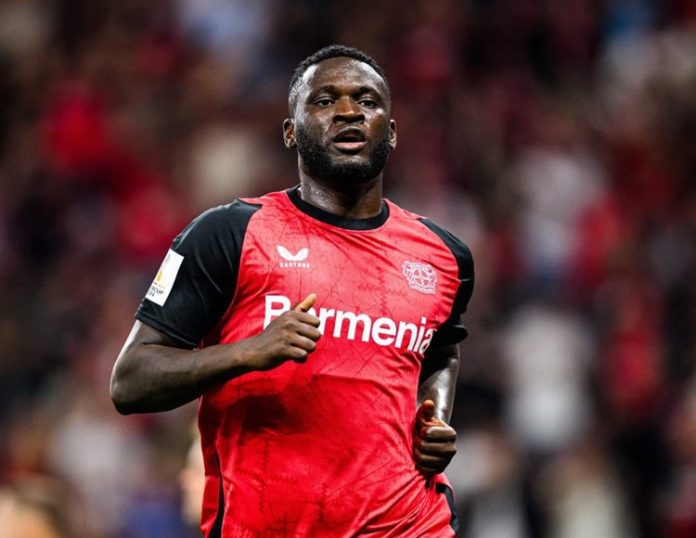
Victor Boniface, the Nigerian striker making significant waves at Bayer Leverkusen, found himself at the centre of intense transfer speculation.
Al Nassr, the Saudi Arabian club renowned for high-profile signings, including Cristiano Ronaldo and Senegalese star Sadio Mane, had initially targeted the talented forward with a proposed investment of over €60 million. The potential transfer represented more than just a financial transaction; it symbolised the changing landscape of global football and the increasing influence of emerging football markets.

The negotiations progressed smoothly, with personal terms reportedly agreed and medical examinations completed. For all practical purposes, the transfer seemed imminent. However, the potential move ignited substantial controversy, particularly among Nigerian football supporters who viewed the potential transfer with profound skepticism and deep concern.
Football fans, particularly in Nigeria, perceived the proposed move with significant apprehension. They interpreted the potential transfer to the Saudi Pro League as a perplexing decision, especially given Leverkusen’s extraordinary recent achievements. The team had accomplished the remarkable feat of going unbeaten last season, dramatically dethroning Bayern Munich and ending the serial champions’ long-standing dominance. Under Xabi Alonso’s tactical brilliance, Leverkusen had transformed into a formidable European football force, with Boniface playing a crucial role whenever he was available and not sidelined by injury.
The context of Boniface’s potential departure was critical. Leverkusen were not merely a good team; they were a historic side that had shocked the footballing world. Their unbeaten season represented more than just a statistical achievement – it was a fundamental challenge to the established order of German football. Bayern, the league’s perennial champions, had been comprehensively outplayed and dethroned. In this context, Boniface was not just a player, but a key component of a potentially generation-defining team.
Supporters questioned the wisdom of leaving such a successful team for a league that, despite Ronaldo’s star power, had yet to establish genuine competitive credibility compared to Europe’s top footballing nations. The transfer seemed to many like a premature exit from European football precisely at the moment Boniface’s professional potential was reaching its peak.
In a surprising twist, Al Nassr abruptly changed direction. Instead of finalising the deal with Boniface, the club redirected its attention to Jhon Duran, the young Colombian forward from Aston Villa. The Saudi club ultimately acquired Duran for approximately €77 million, a move that dramatically altered Boniface’s transfer prospects and left many in the football world scratching their heads.
For Boniface, this unexpected development could have been a significant professional setback. However, the striker demonstrated remarkable professional composure in the aftermath. He smoothly reintegrated into the Bayer Leverkusen squad, resuming training and continuing to perform at a high level by coming off the bench to score the winner against Koln in the 98th minute of extra time and qualify Leverkusen fit the DFB Pokal semi-finals. It was a response that exemplified the mental strength required of modern footballers, who must navigate complex and often unpredictable transfer landscapes.
However, the transfer collapse became a moment of collective relief for Nigerian football enthusiasts. They interpreted the failed transfer as a preservation of Boniface’s sporting ambitions, preventing what many considered a potentially career-limiting move to a league perceived as secondary to Europe’s top competitions. The Saudi Pro League, despite significant financial investments, had not yet proven itself capable of matching the competitive intensity and developmental opportunities of European football.
This transfer saga offered profound insights into modern football’s transfer market dynamics. The increasing financial power of emerging leagues is fundamentally reshaping global football transfers. Clubs can now make substantial investments previously considered unimaginable. However, financial resources alone do not guarantee sporting success or player development.
For Boniface, the incident underscores the importance of carefully considering professional career moves. Remaining at Leverkusen meant continuing to work under Xabi Alonso, competing at the highest European levels, and potentially winning significant trophies with a team that had already written its name in football history.
The financial proposition from Al Nassr was undoubtedly attractive. A transfer fee of over €60 million would be tempting for any footballer, especially one from a developing football nation. However, Nigerian fans and football experts viewed this potential move through a more strategic lens: sustained success in top-tier European competitions offers more long-term value than a lucrative but potentially career-stalling move to an emerging league.
Following the collapsed transfer, Boniface continued to demonstrate his professional value to Leverkusen. Though returning to the squad post injury, his performances remain consistently strong, contributing significantly to the team’s competitive efforts in the Bundesliga and European competitions. This continued excellence validated the belief that staying at Leverkusen was the right decision.
The transfer narrative provides broader commentary on current football transfer dynamics. The involvement of financially powerful clubs from emerging football markets is creating new professional movement patterns. Saudi Arabian clubs, in particular, are becoming increasingly active in pursuing international talent, challenging traditional football migration routes.
The Boniface transfer saga serves as a compelling reminder of football’s inherent unpredictability. It illustrates how complex professional negotiations can be, how quickly plans can change, and the importance of adaptability in modern sports. For young footballers, it offers a valuable lesson in career management, strategic thinking, and maintaining professional focus amid external pressures.
For Boniface, Leverkusen, and Nigerian football fans, this episode represents a unique moment of professional and sporting reflection. It underscores the intricate nature of football transfers, where financial considerations, strategic planning and individual performances intersect in unexpected ways.
The football world continues to evolve, with stories like Boniface’s captivating fans, players and clubs in the ongoing narrative of the beautiful game. Each transfer window brings new stories of ambition, strategy, and human drama, reminding us why football remains the world’s most beloved sport.

Jude Obafemi is a versatile senior Correspondent at THEWILL Newspapers, excelling in sourcing, researching, and delivering sports news stories for both print and digital publications.