November 23, (THEWILL) — The lights at the Mohammed VI Polytechnic University dimmed late on Wednesday evening, but the reverberations from the 2025 Confederation of African Football Awards will echo across the continent for months to come. In a ceremony that blended celebration with controversy, Morocco transformed what should have been a pan-African showcase into a coronation of Atlas Lions football, claiming both major individual honours whilst Nigeria departed with team accolades that told a different, equally compelling story.
Achraf Hakimi emerged as the continent’s new king, becoming the first defender in over five decades to claim the Men’s Player of the Year award. The Paris Saint-Germain full back’s triumph marked a significant departure from the traditional dominance of forwards in this category, yet his credentials were undeniable. Throughout the voting period, which covered performances from January to mid-October, Hakimi was instrumental in PSG’s historic campaign that delivered the UEFA Champions League trophy alongside a domestic treble. His role transcended conventional defensive duties, functioning instead as the creative engine of a European champion.
The voting panel, comprising CAF technical committee members, national team captains, coaches and media representatives, clearly favoured silverware and structural importance over pure goal scoring volume. Mohamed Salah, who claimed both the English Premier League Golden Boot and the title for Liverpool, finished second, whilst Nigeria’s own Victor Osimhen, who moved to Galatasaray on loan and became the leading scorer in the Turkish Super Lig with 26 goals, placed third. For Osimhen, who claimed this very prize in 2023, the result represented a stark shift in fortunes, though not necessarily a reflection of declining standards.

The Nigerian striker’s nomination itself confirmed his enduring quality and his capacity to produce at the highest level regardless of tactical setting or league. His statistical output in Turkey was remarkable, and he played a central role in Galatasaray’s domestic challenge. However, he lacked the singular, defining club achievement that propelled Hakimi to the podium. The margin between nomination and victory, subtle yet significant, points to the enduring influence of European club success in shaping continental recognition.
The sight of Hakimi accepting his trophy on home soil, amidst thunderous applause from a partisan Rabat crowd, felt inevitable. It represented perfect symmetry for a nation preparing to co-host the 2030 World Cup, a statement of intent from a kingdom positioning itself as the diplomatic and sporting capital of Africa. Yet this moment of Moroccan triumph would prove to be merely the opening act in an evening destined to provoke debate for years.
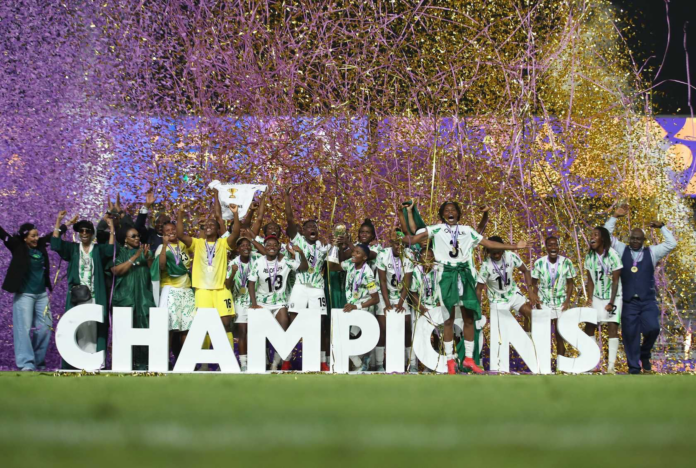
The most intense controversy emerged from the Women’s Player of the Year category, where Ghizlane Chebbak claimed the honour ahead of Nigeria’s Rasheedat Ajibade. The decision highlights the often contradictory nature of football awards and raises questions about how different kinds of achievement are valued. Ajibade had captained the Super Falcons to their record-extending 10th Women’s Africa Cup of Nations title, defeating Morocco in the final. She was named Most Valuable Player of that tournament and had transitioned seamlessly from Atlético Madrid to Paris Saint-Germain, announcing her arrival with a UEFA Champions League goal against Real Madrid.
By most traditional metrics, the best player of the continental champion team usually claims the individual prize. The panel, however, looked elsewhere. Chebbak, the Moroccan captain now with Al Hilal, took the trophy after finishing as Golden Boot winner at the WAFCON despite her team’s defeat in the final. Her supporters point to her influence in elevating women’s football across the MENA region, whilst critics suggest the emotion of the occasion and the advantage of competing on home soil influenced the vote. When a host nation wins both major individual awards, scrutiny becomes inevitable.
For Ajibade, the outcome represents a bitter disappointment. She conquered the continent with her team, beating Chebbak in the match that mattered most, yet left Rabat without the personal accolade to match her gold medal. It has been a recurring dynamic in continental awards, where club platform and exposure in major European competitions can outweigh actual tournament success. This pattern benefits players who have the opportunity to perform in clubs that reach deep into continental tournaments, creating an interplay between reputation and access that shapes perceptions of merit.
Yet the Nigerian paradox cuts both ways. Whilst the individual awards slipped away, the collective might of West African football remained unassailable. The Super Falcons were named Women’s National Team of the Year for the second consecutive time, a vindication of their dominance that voters could not ignore despite the home atmosphere. The award confirms that Nigerian football continues to set the standard in women’s competition across Africa, producing results regardless of venue or opposition.
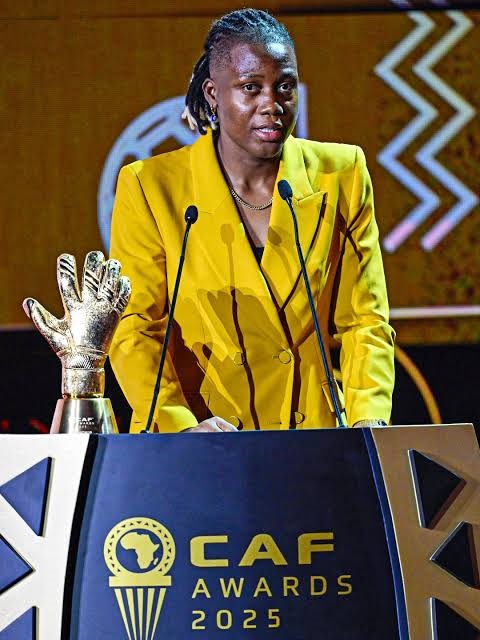
Furthermore, Chiamaka Nnadozie continues to operate in a category of her own. Her selection as Women’s Goalkeeper of the Year for the third consecutive time rendered that particular contest a formality. Nnadozie’s heroics for Brighton and Hove Albion and the Super Falcons have established her as the undisputed number one on the continent. In an evening where political winds perhaps blew in favour of the hosts, Nnadozie’s excellence proved too overwhelming to overlook. She represents the consistency upon which Nigerian football builds its reputation, a foundation that remains unshaken even when headlines drift elsewhere.
The ceremony, hosted by Beninese singer Angélique Kidjo with performances from Congolese artist Awilo Longomba and Ghanaian musician Fuse ODG, offered additional narratives beyond the Moroccan-Nigerian axis. Bubista of Cape Verde claimed Coach of the Year, a refreshing acknowledgement of overachievement that breaks the monopoly of traditional giants and offers hope to smaller federations. At club level, Pyramids FC of Egypt was named Men’s Club of the Year following their maiden CAF Champions League triumph. This perhaps signals a shift in Egyptian football’s power dynamics away from the usual dominance of Al Ahly and Zamalek.
The atmosphere in Rabat deserves particular attention. Morocco has positioned itself not merely as a footballing nation but as a soft power hub executing events with polish and professionalism that rival European galas. This was not simply an awards ceremony but a diplomatic exercise, broadcasting readiness for the 2030 World Cup to an audience of former legends and global dignitaries. The success of Moroccan representatives across youth, senior and individual categories reinforced the perception that the centre of gravity in African football has tilted firmly northward.
Nevertheless, questions regarding the voting process will linger. Overlooking Ajibade in favour of Chebbak will fuel debate about home bias, just as the absence of Esther Okoronkwo from the women’s shortlist despite her player of the match performance in the WAFCON final prompts questions about selection criteria. These debates serve a useful purpose, keeping the administrative machinery under public scrutiny and ensuring future panels remain alert to the need for transparency.
For Nigerian stakeholders watching the long term, the 2025 awards should prompt practical reflection on two fronts. First, there remains the need to secure pathways for players to join clubs that provide sustained exposure in major competitions, particularly UCL football in Europe. Second, investment in domestic and national structures that enable talent identification and preparation for top-level demands continues to be essential. Progress in these areas would increase the likelihood that players performing for Nigeria also collect the kinds of club honours that sway continental voting panels.
The 2025 CAF Awards will be remembered as the night the Atlas Lions roared loudest. Hakimi and Chebbak are worthy winners who have raised the profile of sport in their country, and their faces will adorn billboards from Tangier to Laayoune. However, the footnotes of history will also record that the Super Falcons held the line, keeping the most important trophy in Lagos. The glitter of the awards ceremony belongs to Morocco, but the grit of champions belongs to Nigeria. With the dimming of lights in Rabat, attention shifts back to the pitch, where the rivalries ignited in this auditorium will spill onto grass. African football emerges healthier for these contests, proving once again that the continental game remains incapable of being dull.

Jude Obafemi is a versatile senior Correspondent at THEWILL Newspapers, excelling in sourcing, researching, and delivering sports news stories for both print and digital publications.