December 12, (THEWILL) – The incidences of infection by the Omicron variant of COVID-19 across the football world has alarmed the authorities, football clubs and fans alike, especially as plans are afoot for next year’s African football showpiece.
Omicron, classified as the B.1.1.529 variant of COVID-19, was first reported to the World Health Organisation (WHO) from South Africa on November 24 this year. The first known confirmed B.1.1.529 infection was from a specimen collected on November 9, 2021.
Omicron swiftly gained notoriety for having a large number of mutations. Preliminary evidence demonstrated that the variant had an increased risk of reinfection as compared to other Variants of Concern (VOCs). Although it was not immediately obvious if positive COVID-19 cases in Tottenham Hotspur and Leicester City were of the Omicron variant, they have decimated the first-team squads and management staff in the pair of English Premier League sides that Spurs had to be excused from their UEFA Europa Conference League tie against Rennes last Thursday.

The postponement came at the last minute, after the French team had arrived England believing that the fixture was still due to hold as initially scheduled. The English club was able to convince UEFA to reschedule while Rennes returned home without playing. Leicester did not have as many positive cases as Spurs and their UEFA Europa League tie against Napoli was not similarly postponed.
These are the sorts of disruptions to football schedules combined with the risks to the health and safety of footballers that evoked the European Club Association, the recognised body representing the interests of professional association football clubs in UEFA, to voice their concerns about sending players to the upcoming African Cup of Nations after the infectious and rapidly mutating variant was discovered in South Africa late last month. This concern came just as countries around the world began to reintroduce restrictions and travel bans, and may most likely lead to a fresh dispute over player release for international duty next month at the African football showpiece in Cameroon.
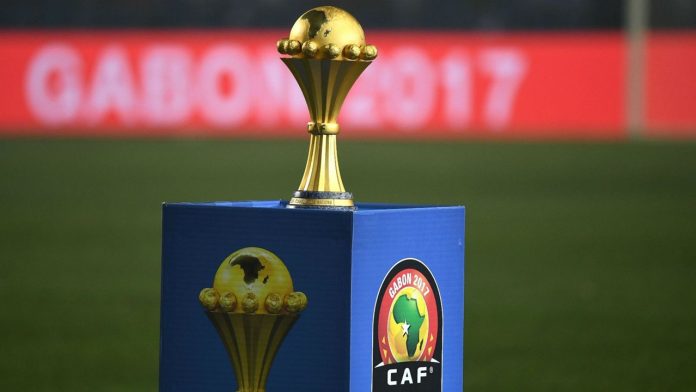
Everything is in place for the continental tournament, which has already been moved twice. The TotalEnergies AFCON 2021, Africa’s biannual international men’s football championship, will be the 33rd edition of the tournament, which is organised by the Confederation of African Football (CAF). Cameroon will host the rest of Africa from January 8 to February 6 in a showcase of African football. However, the tournament’s scheduling has been a fraught with changes. The tournament was initially set to take place in June and July 2021, but CAF announced on January 15, 2020 that due to unfavourable weather conditions during that time, it would now be held from January 9 to February 6, 2020. However, given the consequences of the COVID-19 pandemic across the continent, CAF again shifted the tournament for the second time to January 2022 on June 30, 2020, but kept the name 2021 AFCON for sponsorship purposes.
The fact that most of the best African players ply their trade outside the shores of the continent implies that there will be mass inflow of these footballers from all across Europe as they are expected to join up and represent their respective countries in Cameroon. The dilemma in that reality is that, as aforementioned, many countries have already begun implementing even harsher lockdown regulations in response to concerns about the Omicron variant’s infection rate. The United Kingdom has doubled down on its infamous “Red List” all in a bid to mitigate the spread of the variant after it was detected on the continent.
International travel bans were imposed on South Africa at the end of November, following the identification of the new type by South African experts. The controversial travel bans took effect on November 25, with flights to the UK from South Africa, Botswana, eSwatini, Lesotho, Namibia, and Zimbabwe no longer permitted. However, these bans were considered controversial because tracing points to the fact that the Omicron variant was widespread in Europe long before it was discovered by South African researchers. Nigeria, which borders Cameroon, was also added to the UK’s “Red List” sparkling a nigh diplomatic row as the Senate in Nigeria and the Federal Government did not take the inclusion lying low.
The Senate denounced the move, which, according to the lawmakers, was an act carried out without justification. They urged the Federal Government to engage with their British counterparts in an effort to reverse the inclusion. That conclusion followed a debate on “The need for the UK Government to remove Nigeria from the Red List”. The motion was sponsored by Senator Ike Ekweremadu. He had raised a point of order to convey his displeasure with the UK government’s recent action, despite the fact that Nigeria has one of the lowest COVID-19 cases in the world. Last Tuesday, the Nigerian government formally rejected the travel ban, which it described as “Knee-jerk, apartheid, discriminatory, punitive, unfair, indefensible and unscientific, while calling on the British government to immediately review the decision. African leaders and the WHO have expressed displeasure with the travel bans, claiming that the variation had been found in many regions of the world.
The Red-listing and travel bans aside, the ECA’s determination to meet with FIFA in the coming weeks to address next year’s AFCON was effected for the benefit of the clubs the Association represented and in relation with the safety of footballers of African descent.
In a statement addressing this concern, the association said, “The Board also expressed its deep concerns around player safety and welfare ahead of the African Cup Nations and upcoming international windows in early 2022, particularly in light of the worsening public health situation and the severe challenges faced during recent international windows. The Board agreed to engage urgently with FIFA to ensure all necessary precautions are in place to protect players and club interests as the health situation continues to deteriorate in an alarming manner.”
In addition to the obvious health risk, the ECA is concerned about the impact post-AFCON quarantining may have on domestic schedules, with several leagues eager to avoid the pandemonium that occurred in September. THEWILL recalls how some clubs, in order to prevent the need for an isolation time upon their return, prohibited their South American players from travelling for the international break. This resulted in a protracted legal struggle with FIFA over whether those players should be punished for failing to report for international duty. Although that did not play out eventually, the anxiety still lingers and the ECA is determined to prevent anything similar from recurring.
The way out for some clubs in the international matches of October, was to agree to pay for private aircraft to fly their players back as quickly as possible, with the players themselves agreeing to remain in a bubble throughout the international break.
All of this sparked off a rumour that next year’s AFCON had been postponed yet again. This prompted an immediate reaction from CAF, refuting the rumours, which claimed that the 24-team tournament’s dates or even site could be changed in recent days, with Qatar being mentioned as a possible alternative host. Alex Siewe, the Director of Communications for CAF, insisted that neither his organisation nor top Cameroonian officials were considering any such alternatives or postponements. He was not amused to have to answer to these rumours when asked.
“We can’t keep spending time dealing with rumours. We did not receive any other message or information from our leaders – nothing such as changing of dates or countries. We did not discuss such during all our last meetings. We are on site. We are working.”
The fact that CAF was working hard to ensure the success of the tournament was proven by the arrival of the Federation’s personnel in Cameroon to supervise the organisation of the AFCON finals. Siewe confirmed this when he said: “An official delegation from CAF has been released and general secretary Veron Mosengo-Omba is joining us in two days. This gives the implication that the continental football governing body was unfazed by the decision of the ECA to hold talks with FIFA over the safety of organising a football competition in the middle of the outbreak of Omicron.
“As it has done in continental competitions so far, CAF plans to abide by COVID-19 protocols and to organise the tournament as scheduled between January and February 2022.”

Jude Obafemi is a versatile senior Correspondent at THEWILL Newspapers, excelling in sourcing, researching, and delivering sports news stories for both print and digital publications.