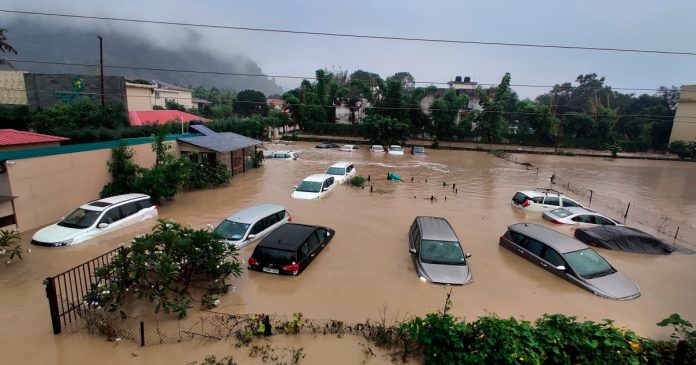
The recent flooding that wreaked unprecedented havoc on the Trademore Estate in the Lugbe area of Abuja is a sad reminder that the perennial devastating floods are just back with us, especially with the coming of the rains. The colossal loss that came with the disaster, leading to the submergence of over 100 houses and loss of lives, according to reports, is really sad.
The incident is also a pointer to what to expect in other flood-prone areas in communities and settlements in many states across the country. Only last year, the rampaging floods swept through 33 out of the 36 states in the country, leaving tears, sorrow and deaths on its trail with over 600 persons killed and 2, 400 others injured within a period of four months.
The National Emergency Management Agency (NEMA) in fact estimated that over two million Nigerians were displaced in various parts of the country by flooding in 2022 with the value of economic damage put at N4.2 trillion as numerous farmlands were washed away by the floods.

Sadly, we seem not to have learnt any lesson from the experience of the past as both residents and settlers of the vulnerable areas continue to live their lives as if nothing had happened as they wait for another disaster to strike. The authorities at both the local, state and national levels, also simply looked the other way immediately after the initial response.
But like the proverbial Nigerian problem that has defied simple solutions, the flooding continues year after year with residents of the vulnerable areas left to their fate as they await another traumatising experience from the perennial challenge .
The Nigeria Meteorological Agency (NiMET) had warned early in the year that the rainy season would start early and it would be accompanied by serious flooding, thus preparing Nigerians for what to expect.
The agency had predicted that from March, the southern coastal states, such as Bayelsa, Rivers and Akwa Ibom, would experience torrential downpours, while other inland cities witness precipitation in April as the central states experience rain in May.
NiMET also warned of extended rainfall in Gombe, Kaduna, Kwara, Enugu, Anambra, Ogun, and Lagos states, saying between June and July, the northern states of Sokoto, Kebbi, Zamfara, Kano, Katsina, Jigawa, Yobe and Borno would experience the arrival of rain, which will heighten between July and September. One would have expected the various regulatory authorities to have swung into action by putting in place measures to mitigate another devastating experience.
However, aside from the occasional notices served by the Lagos and Ogun State Governments, as well as a few others, to residents living on river banks and in flood-prone areas in their respective states, no real action was taken to ensure that such vulnerable people move out before disaster strikes.
Our governments always wait for harm to be done before going about with their miserable palliatives and corruption-infested emergency and humanitarian assistance to victims of disasters while those who fall victims of the perennial flooding, in some cases, often resist efforts by the regulatory authorities to move them out to safety before the onset of the rains.
Our various relief efforts have been a cesspool of corruption as over N1 trillion budgeted for ecological and disaster management by the Federal Government over the years has not been properly accounted for by those responsible for its disbursement.
It is sad that almost a year after the Federal Government inaugurated a Committee for the Development of a Comprehensive Plan of Action for the Prevention of Flood Disasters in Nigeria, in the aftermath of the 2022 flooding, the report has neither been made public nor implemented despite the 90-day term of reference given to the committee last November.
We therefore join the call for the issue of flooding in the country to be given the urgent and proper attention it deserves as the safety and protection of lives and property of the citizens remains the number one responsibility of the government.