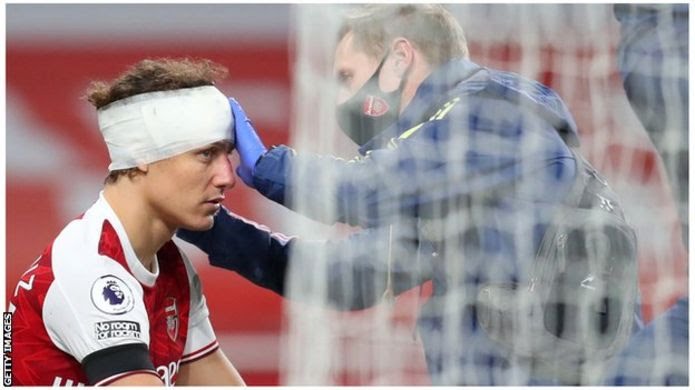
BEVERLY HILLS, February 06, (THEWILL) – The English Football Association has reached a decision to begin trialling a new protocol for handling head injuries and concussions in the sport, starting with the slate of matches this weekend.
As part of the trial, each team will be allowed a maximum of two concussion substitutes that can be used in addition to the three regular substitutes, but under certain circumstances.
In addition, medical team doctors will be allowed as much time as they need to assess the affected player(s) as necessary in order to examine for concussion symptoms while the video footage is being simultaneously reviewed if ever a match is stopped by the match official for a potential concussion injury.

If, after due examinations have been carried out and the player(s) is seen to exhibit clear symptoms of concussion and/or there’s video evidence that a concussion may have occurred, the player(s) will be removed from play and substituted.
However, if, for any reason, the player is allowed to remain on the pitch but later develops concussion symptoms during the match, the player can then be substituted under the concussion protocol rules and abiding by the circumstances spelled out by the FA.
To continue on the hypotheticals, should a club make a concussion substitution, the opposing club will also be given an opportunity to make an additional sub of their own, even if they have used their three allotted “regular subs” prior to the concussion substitution of the opposing team.
The guidelines for adopting the concussion substitutions note with insistence that match officials are precluded in the decision making process as to what constitutes a head injury. That call was reserved only for the tunnel doctors and medical professionals from the clubs playing the match.
The League took a while to wake up to the fact that concussion-related injuries are a big deal. The rules actively encouraged players to hide concussion-related symptoms, because they may not have wanted to “penalise” their clubs by using one of their three subs or leaving them down a man if they had used all sub options.
There are examples where players were visibly struggling after clashing heads but were allowed to dangerously continue to play. One instance was the 2013 head-long collision between Hugo Lloris and Romelu Lukaku in a match between Tottenham Hotspur and Everton. Hopefully, these new protocols will make sure that potential head injuries in the game are treated with the care and support they so desperately require.
The trial will run through the end of the season.

Jude Obafemi is a versatile senior Correspondent at THEWILL Newspapers, excelling in sourcing, researching, and delivering sports news stories for both print and digital publications.