October 20, (THEWILL) — Nigeria’s youngest footballers have encountered a sobering reality at the world stage this month, as both the under-17 women’s Flamingos and the under-20 men’s Flying Eagles suffered heavy defeats that have exposed systemic vulnerabilities in the country’s youth development structures. The losses, though separated by gender and geography, reveal a common thread: Nigerian youth teams possess undeniable talent yet struggle to translate potential into consistent performance when facing technically superior opposition.
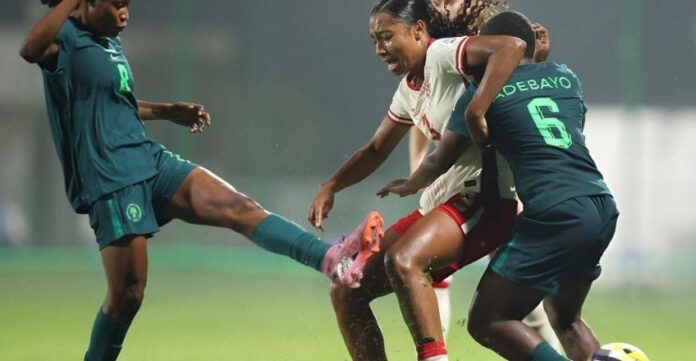
The Flamingos’ 4-1 defeat to Canada in their opening match of the FIFA U-17 Women’s World Cup in Morocco on 19 October served as a particularly stark awakening. Playing at the Football Academy Mohammed VI in Salé under humid conditions, Nigeria found themselves behind within two minutes when Gabriela Istocki converted a cross from Molly Hale. That early strike forced the young Nigerians into a reactive posture from which they never fully recovered, despite showing flashes of quality throughout the contest.
Nigeria’s response, however, demonstrated character. They dominated possession in the first half and peppered the Canadian goal with 13 shots, six on target, compared to Canada’s meagre two attempts. In the 30th minute, that pressure yielded reward when Queen Joseph capitalised on goalkeeper Khadijah Cisse’s parried save to equalise, poking the loose ball past defender Bridget Mutipula. The 15-year-old forward from Edo Queens displayed the composure and instinct that had made Nigeria champions at the African U-17 Women’s Cup of Nations in Tanzania earlier this year, where they scored 18 goals across five matches.

The interval arrived with scores level, but the second half told a different story entirely. Despite finishing with 50.2 per cent possession overall and 17 shots to Canada’s 10, Nigeria’s defensive fragility proved fatal. In the 73rd minute, substitute Melisa Kekic restored Canada’s advantage with a low strike that exploited space behind Nigeria’s back line. Seven minutes later, Julia Amireh capitalised on a spill by goalkeeper Elizabeth Boniface to make it 3-1, then added a fourth in the 86th minute from a cross by captain Olivia Chisholm. The impact of Canada’s substitutes contrasted sharply with Nigeria’s inability to stem the tide from the bench.
Boniface, a 16-year-old from Plateau United, bore much of the criticism for the second-half collapse. Her errors under pressure highlighted a lack of communication within the defensive unit. Yet, coach Bankole Olowookere’s charges must learn collectively rather than assign individual blame. His 4-3-3 formation had generated width and crossing opportunities through wingers Blessing Ifeoma and Kaosarat Olanrewaju, yet midfield turnovers allowed Canada to counter with devastating efficiency. A video assistant referee check in the 57th minute for a potential penalty came to nothing, and by the time Nigeria made attacking substitutions, the match had slipped irretrievably away.
What made this defeat particularly troubling was not merely the scoreline but what it revealed about preparation. The Flamingos had entered the tournament with considerable expectations, backed by their continental triumph and an eighth appearance at this level. Yet the 4-1 margin exposed gaps in readiness against opponents who arrived with detailed video analysis and tactical flexibility. Reports suggest that whilst the Nigerian Football Federation allocated funds for a pre-tournament camp in Abuja and friendlies against European sides, logistical delays affected training intensity. Inadequate scouting of Canada, who qualified through CONCACAF playoffs, left Nigeria vulnerable to tactical surprises.
These challenges extend beyond individual matches or tournaments. The broader picture reveals funding disparities that undermine consistent development, with the Flamingos’ budget estimated at half that allocated to the men’s under-20 Flying Eagles. This inequality limits access to sports science support, international exposure and the kind of sustained preparation that transforms raw talent into polished performance.
The Flamingos’ struggles in Morocco found an uncomfortable parallel in Chile, where the Flying Eagles crashed out of the FIFA U-20 World Cup with a 4-0 defeat to Argentina in the round of 16 on October 8. Having navigated a challenging group stage that included a narrow loss to Norway, a spirited win over Saudi Arabia and a draw with Colombia, Nigeria arrived at Estadio Nacional in Santiago with genuine hope of progressing further. Instead, they encountered an Argentine side determined to avenge their 2-0 defeat to the same opponents two years earlier.
The 4-0 scoreline mirrored the defensive vulnerabilities that plagued the Flamingos, suggesting that Nigeria’s youth pipeline suffers from systemic issues rather than isolated failures. Both teams had qualified through continental success yet faltered against organised, technically proficient opposition. Data from FIFA indicates that African teams average 1.8 goals per match at youth World Cups compared to 2.4 for European and South American sides, a disparity often attributed to differences in coaching standards and facility access. Past triumphs, such as the Golden Eaglets’ 2015 U-17 World Cup victory, prove that Nigerian talent can compete at the highest level, but such successes remain sporadic rather than sustainable.
The Nigeria Football Federation now faces mounting pressure for reform. Calls for mandatory youth academies at club level, increased investment in women’s programmes and integration of sports psychology grow louder with each disappointing result. In a nation where football unites communities and provides escape from economic pressures, these losses resonate deeply. Yet within the disappointment lie opportunities for growth.
Queen Joseph’s equaliser against Canada showcased exactly the kind of composure that develops into senior-level excellence. At 15, she represents the potential that exists throughout Nigerian youth football if properly nurtured. Similarly, Flying Eagles captain Daniel Bameyi, a 19-year-old defender with Slovenian club Primorje, displayed leadership qualities that could serve future national teams. The challenge lies in creating systems that consistently develop such talents rather than relying on individual brilliance to overcome structural deficiencies.
For the Flamingos, the tournament remains alive. France defeated Samoa 4-2 in the other Group D opener, leaving the standings tight and advancement still possible. A victory against France on October 22 could revive hopes, though much will depend on how quickly Olowookere can address the defensive lapses and restore confidence shaken by the Canadian defeat.
Nigeria’s football heritage demands more than sporadic excellence. The country that produced Mercy Akide, Perpetua Nkwocha, Asisat Oshoala and Rasheedat Ajibade possesses the raw material for sustained success across all age groups and genders. What remains missing is the infrastructure, funding parity and systematic approach that converts promise into performance. As the Flamingos prepare for their crucial second match and the Flying Eagles commit to rebuilding, the question facing Nigerian football is whether these defeats will finally spur the reforms that talent alone cannot achieve.
The global stage has delivered its verdict with uncomfortable clarity. Nigeria’s youth teams can no longer rely on athleticism and individual brilliance to overcome better-prepared opponents. Technical sophistication, tactical flexibility and defensive solidity must become priorities, backed by investment that matches ambition. Only then will the country’s youngest players fulfil their potential and restore Nigeria’s reputation as a genuine force in world football at every level.

Jude Obafemi is a versatile senior Correspondent at THEWILL Newspapers, excelling in sourcing, researching, and delivering sports news stories for both print and digital publications.