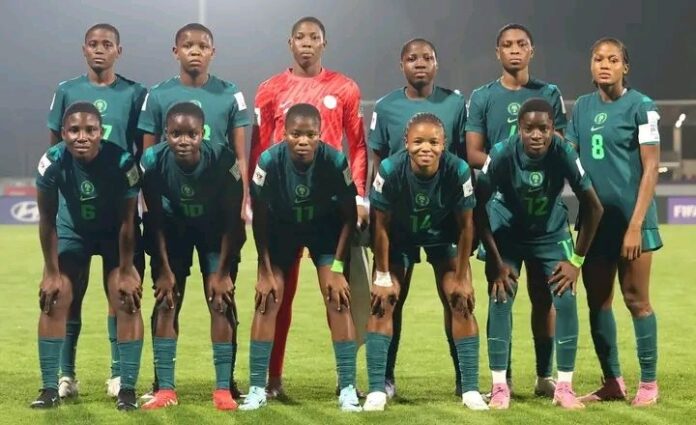
October 26, (THEWILL) — Nigeria’s under-17 women’s national football team, the Flamingos, arrived in Morocco for the 2025 FIFA U-17 Women’s World Cup carrying the weight of expectation built on their third-place finish in 2022. The tournament, hosted on African soil for the first time, brought particular scrutiny to their Group D campaign against Canada, France and Samoa. What unfolded in their opening fixtures, however, was a stark reminder of the gap between potential and execution at youth level.
The opening match against Canada on October 19 at the Mohammed VI Football Academy in Salé set an ominous tone. Within two minutes, Gabriela Istocki capitalised on a defensive lapse to give the North Americans an early advantage. Nigeria responded with purpose, and in the 30th minute, Queen Joseph restored parity with a composed finish. The first half ended level, with the Flamingos holding a slight edge in chances created, though they failed to truly test the opposition goalkeeper.
The second half, however, told a different story entirely. Canada introduced fresh legs that ruthlessly exploited gaps in Nigeria’s backline, with Julia Amireh scoring twice and Melisa Kekic adding a fourth to complete a 4-1 victory. Defensive lapses in transition allowed the North Americans to counter with devastating efficiency, turning what had been a competitive encounter into a comprehensive defeat. Head coach Bankole Olowookere later reflected on the missed opportunities in the opening period, describing the result as a harsh lesson in clinical finishing.

Three days later, the Flamingos faced France at the same venue and Olowookere’s decision to retain an unchanged starting lineup signalled his faith in the group’s capacity to learn quickly. The match unfolded as a tense, tactical battle, with both sides prioritising defensive solidity. Nigeria started brightly, forcing early saves from French goalkeeper Chevray Lauryne, whilst Chisom Nwachukwu’s set-piece efforts repeatedly tested the European defence. Possession tilted towards the Flamingos in patches, yet clear openings remained frustratingly scarce.
The second half brought greater intensity. In the 50th minute, Joseph’s corner found Nwachukwu, whose close-range header drew another fine save from Lauryne. France responded with their own near-miss around the hour mark, when substitute Luna Laboucarie broke through, only for defender Jumai Adebayo to clear off the line after goalkeeper Elizabeth Boniface hesitated. Video assistant referee interventions checked two Nigerian penalty claims but both were ruled out..
The defining moment arrived in the 81st minute, when Maïssa Fathallah’s low drive slipped past Boniface to secure a 1-0 victory for France. Despite the loss, observers noted a marked improvement in organisation compared to the Canada fixture, with fewer defensive concessions and greater physical commitment throughout.
These consecutive defeats have left the Flamingos at the foot of Group D with zero points and a goal difference of minus five. Canada and France sit joint top with six points each, whilst Samoa, making their tournament debut, also remain winless. The expanded 24-team format allows the four best third-placed teams to advance, meaning Nigeria’s path to the knockout stages remains mathematically open, albeit increasingly narrow.
Across both matches, patterns in performance have become apparent. Defensively, the team has struggled with concentration in the final stages, conceding three of their five goals after the 70th minute. Against Canada, gaps emerged as full-backs pushed forward without adequate cover, leaving Boniface exposed to long balls and penetrating runs.
The France game showed progress, with tighter defensive lines and fewer errors until the crucial final moments, yet a single lapse proved fatal. Boniface commanded her area competently overall, distributing accurately and organising the back three, though her handling of Fathallah’s shot highlighted the need for sharper reflexes under pressure.
In attack, the Flamingos generated 17 shots against Canada, six on target, but converted only one, underscoring persistent issues with composure in front of goal. Set pieces offered the most consistent threat, as evidenced by Joseph’s deliveries and Nwachukwu’s aerial presence. Blessing Okpe featured prominently in these phases, connecting on headers from corners that forced saves or clearances, though none found the net. Her aerial ability adds a dimension that suits Olowookere’s preference for direct approaches, yet she requires better service to maximise her impact.
Shakirat Moshood, operating as an attacking midfielder, has been central to transitions, dropping deep to collect possession before feeding runners like Joseph. Her vision and work rate maintained momentum against France, where she covered considerable ground to disrupt the European side’s build-up play.
Queen Joseph has emerged as the standout individual performer. Her equaliser against Canada came from a solo surge, beating two defenders before slotting home with remarkable composure for a 16-year-old. Against France, she created the clearest chance with her corner delivery whilst also tracking back to support the midfield pivot. Joseph’s blend of technical skill and maturity positions her as a potential successor to senior stars like Asisat Oshoala. Full-back Fatimoh Shuaib also impressed, using long throw-ins to bypass midfield and deliver into dangerous areas, repeatedly unsettling the French defence. These contributions suggest a squad with considerable raw talent, though one that lacks the clinical edge required to match stronger opponents consistently.
Olowookere’s management has drawn mixed assessments. His decision to field an unchanged side against France signalled continuity, allowing the team to display improved shape and intensity. Following that match, he called the result unfortunate, praising the fight shown but lamenting the late concession as heartbreaking. After the Canada defeat, he focused on lessons from missed chances, urging better use of video analysis for tactical adjustments. Tactical shifts, such as introducing a more defensive midfielder or varying substitutions around the hour mark, could address the evident fatigue that has undermined late-game performance. Olowookere’s experience with youth sides, including leading the Flamingos to bronze in 2022, provides a solid foundation, yet the pressure inevitably mounts with elimination looming.
These performances reflect broader challenges within Nigeria’s youth women’s football structure. The country boasts a formidable senior team, the Super Falcons, who lifted their 10th Africa Cup of Nations title in 2024, with players earning substantial rewards including $100,000 each. Yet age-grade programmes receive far less support. Funding shortages limit access to quality training facilities and medical care, forcing many young players to train on makeshift pitches without qualified coaches. Infrastructure gaps extend to national camps, where teams like the Flamingos relocate frequently for training sessions, disrupting crucial preparation periods.
Cultural factors add further layers of difficulty, particularly in northern states where family expectations often steer girls away from sport. Initiatives in Kwara and Kano have seen local academies grow, with players defying traditional norms to join national squads. The successes of the senior women’s national team, the Super Falcons, havs spurred sponsorships and grassroots programmes, increasing participation rates, but systemic issues persist.
The Nigerian Football Federation faces ongoing criticism for uneven investment, with calls from figures like captain Rasheedat Ajibade for improved scouting, player welfare and better integration of diaspora talent. Past youth tournament bronzes highlight the nation’s potential, yet consistent underperformance internationally points to the urgent need for sustained grassroots investment.
The Flamingos’ showing thus far reveals both the promise and pitfalls inherent in Nigeria’s talent development pathway. Players like Joseph and Moshood, drawn from domestic leagues such as Bayelsa Queens, embody the determination emerging from under-resourced environments. If nurtured properly through improved infrastructure and coaching, they could significantly bolster the senior pipeline, addressing the Super Falcons’ occasional competitive dips. However, without meaningful reforms in funding and facilities, such talents risk stalling at youth level, perpetuating cycles of early tournament exits and unfulfilled potential.
The final group match against Samoa on 25 October offers a critical opportunity for redemption. The Pacific islanders, winless and goal-shy, pose little threat on paper, yet Nigeria requires a comprehensive victory to improve their goal difference and mount a credible challenge for one of the four best third-place spots. Olowookere has emphasised the need for ruthlessness, targeting multiple goals whilst maintaining defensive discipline.
Samoa’s coach has spoken of playing for pride, aiming to narrow their substantial deficit, but the Flamingos hold clear advantages in experience and squad depth. A strong result could salvage the campaign, providing momentum for future cycles and underscoring the value of continued youth investment. For now, the team prepares in Rabat, acutely aware that precision in attack and resolve in defence will ultimately determine their tournament fate.

Jude Obafemi is a versatile senior Correspondent at THEWILL Newspapers, excelling in sourcing, researching, and delivering sports news stories for both print and digital publications.