December 01, (THEWILL) — When Benjamin Edozie stepped into the arena in Tbilisi, Georgia, last year, he was representing more than just personal ambition. The Nigerian fighter’s silver medal at the 2025 International Mixed Martial Arts World Championships marked Nigeria’s debut on that global stage. Yet, it also signalled something far more significant: the emergence of a structured, economically viable sports industry that could channel Nigerian athletic talent into sustainable foreign currency earnings.
This transformation has been remarkably swift. Just over a decade ago, mixed martial arts in Nigeria existed only as informal training groups scattered across Lagos and Abuja, where enthusiasts adapted techniques from boxing and wrestling. The turning point came in March 2014 with the establishment of the Nigerian Mixed Martial Arts Federation, which began the painstaking work of organising amateur competition under international rules. Affiliation with the International Mixed Martial Arts Federation followed in 2019, bringing global legitimacy and access to standardised training protocols.
The sport’s evolution from an underground activity to an official national federation occurred on 11 January 2023, when the Federal Ministry of Youth and Sports Development formally recognised NMMAF. This approval placed mixed martial arts under the same regulatory oversight as traditional sports, granting the federation authority to develop, regulate and monitor all related activities nationwide. More importantly, it positioned the sport within Nigeria’s economic diversification strategy, transforming what had been sporadic individual success into a scalable export industry.

The economic rationale is compelling. Nigeria already receives substantial diaspora remittances, which surpassed $21 billion in 2022 and represent the second-largest source of foreign exchange after oil. Yet the earnings of a single globally successful fighter represent an intensely concentrated, high-yield stream compared to general remittance flows. The median Ultimate Fighting Championship competitor earned over $91,000 in 2022, excluding performance bonuses and sponsorships. For talented Nigerian youth facing unemployment rates exceeding 40% in some demographics, this represents a transformative pathway.
Building this pathway requires institutional legitimacy, which NMMAF has pursued through rigorous licensing and compliance measures. The federation now regulates all categories of competition, from amateur to professional, ensuring unified safety standards and transparent structures. Any foreign organisation wishing to operate in Nigeria must obtain NMMAF licensing, whilst certifications for practice, officiating or event participation are only recognised when validated through the federation’s framework. This quality control is fundamental to the sport’s viability as a national export, guaranteeing that Nigerian talent meets international standards before reaching elite leagues.
The domestic ecosystem has expanded rapidly. By 2024, NMMAF registered more than 1,500 amateur athletes nationwide, up from fewer than 500 three years earlier. Regional workshops trained over 200 officials by mid-2025, addressing expertise gaps that had limited earlier events. Youth pipelines were established through partnerships with schools in Lagos and Port Harcourt, providing discipline and fitness alongside skill development for teenagers in a demographic where economic opportunities remain scarce.
Continental exposure came at the 2024 African Games in Accra, where Nigerian competitors claimed five medals, including Joy Obanla’s gold in the women’s division after securing victory with a rear-naked choke in the final. This performance qualified Nigeria for further international assignments, including the Africa Fight Championship World Series hosted in Lagos last September. Over four days, fighters from 12 African nations competed before crowds exceeding 5,000 per session, demonstrating the sport’s appeal in a football-dominated nation.
Professional pathways emerged through promotions such as the African Knockout series, which by 2025 was attracting over 10,000 spectators across multi-night events in Lagos. These gatherings created temporary employment for approximately 150 staff per show, from security to medical teams, whilst generating revenue from ticket sales and merchandise. Banking firms and other sponsors covered production costs and athlete stipends, recognising the commercial potential.
The Professional Fighters League’s entry into Africa amplified these gains significantly. Backed by a $21 million investment from Helios Sports and Entertainment Group, PFL Africa launched in July 2025 with broadcasts reaching 200 million viewers. Nigerian participants included Juliet Ukah, a police officer who trains in Lagos and advanced in the regular season with a submission win, earning $10,000 in prize money. The finals, scheduled for December in Cotonou, include 11 fights across 12 nations with $400,000 titles at stake.
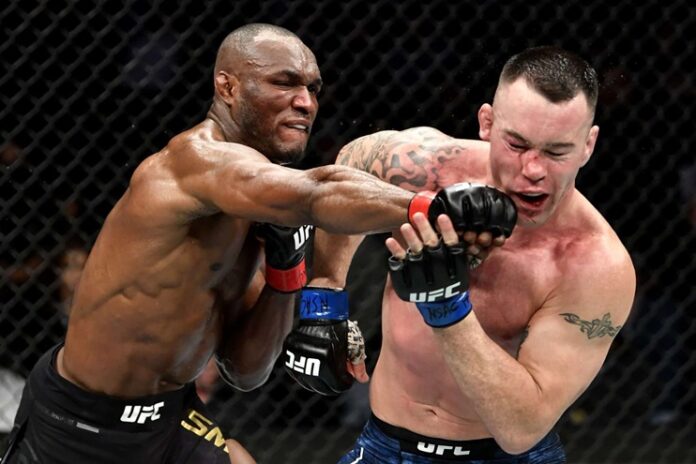
Nigerian athletes on international rosters further illustrate the sport’s reach. Kamaru Usman, with two UFC welterweight titles, has generated over $10 million in endorsements, part of which funds Nigerian charities and a training facility in Auchi that serves 100 youths annually. Sodiq Yusuff maintains a professional record whilst conducting coaching clinics in Lagos, whilst Kennedy Nzechukwu’s UFC victories highlight Nigerian striking ability. These athletes function as powerful sources of inspiration whilst providing essential financial and technical expertise that compensates for domestic funding limitations.
Yet challenges persist. Infrastructure remains concentrated in Lagos and Abuja, leaving rural areas underserved. Travel costs for continental events strain budgets, with NMMAF relying on sponsorships that cover only 60% of operational needs. Funding from the sports ministry, whilst increased to N50 million in 2025, falls short of demands for full-time staff and equipment. Medical support requires expansion, and cultural perceptions sometimes view the sport as risky, deterring parental consent for youth involvement.
The federation addresses these concerns through community outreach, hosting seminars to explain safety protocols and anti-doping education. The sport’s inclusion as a demonstration event at the National Sports Festival in 2022 and its planned return in 2025 aim to secure scoring status by 2026, which typically unlocks more substantial governmental allocations.
As Nigeria stands at this threshold, the question is whether fans, promoters, sponsors and government will act to transform early promise into lasting structure. The regulatory foundation has been laid, the talent development pathway established. What remains is the systematic funding and maintenance of the national ecosystem that produces champions, thereby maximising the flow of foreign earnings back into the Nigerian economy. For a nation seeking to diversify beyond oil, mixed martial arts offers a proven model: structured talent development generating high-value, sustainable foreign currency returns.

Jude Obafemi is a versatile senior Correspondent at THEWILL Newspapers, excelling in sourcing, researching, and delivering sports news stories for both print and digital publications.