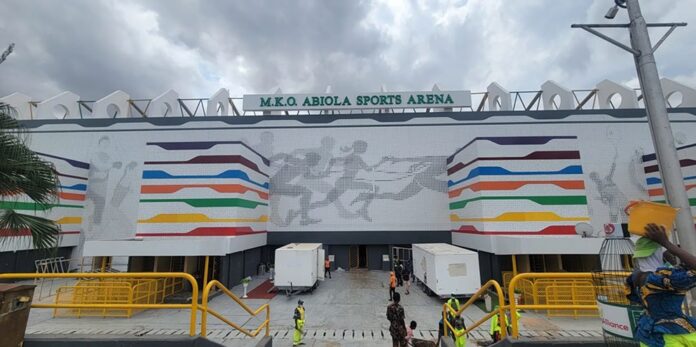
June 01, (THEWILL) – The curtain has fallen on the 22nd National Sports Festival, the Gateway Games 2024, hosted in Ogun State, but the echoes of its triumphs, setbacks, and spirited moments continue to resonate. Over 12,000 athletes from across the country converged in Abeokuta, Ikenne, Sagamu, and Ijebu-Ode, competing in more than 32 disciplines in what has long been dubbed Nigeria’s version of the Olympics. This year, the stakes felt higher, the ambitions louder, and the vision clearer.
From the electrifying opening ceremony at the newly-refurbished MKO Abiola International Stadium in Abeokuta, that featured Davido and Asa, there was a palpable sense that this festival would be different, not just another routine sporting event, but a showcase of Nigeria’s dynamic athletic identity.
Perhaps the clearest sign of that evolution came in the form of a controller and a screen. For the first time, esports made its debut as a medal event. It may have seemed like an unlikely pairing at a festival traditionally rooted in track and field, wrestling, and football, but it landed well. The inclusion drew younger audiences and signalled a shift: Nigeria is not just chasing medals; she is catching up with global sporting trends.

Every sports festival delivers winners. However, NSF 2025 delivered stories. Ogun’s own Kolade Otunla made waves, literally, in the men’s 100m backstroke, rewriting the record books with a time of 1:02.41. Faith Osamuyi clocked 13.26 seconds in the women’s 100m hurdles, staking her claim to international contention. Yet, perhaps the most touching moment came from 13-year-old Tofunmi Ibidapo of Oyo State, who took silver in the 200m breaststroke. Her performance did not just break a seven-year swimming medal drought for her state, it stirred hearts and reminded everyone that talent knows no age.
Then, there was Amarachi Chijioke, a weightlifter many had never heard of before the Games. Now, her name is already being whispered in national training programme discussions. The festival, once again, proved itself as a launchpad for future champions.
On the medal table, Team Delta continued their reign at the top. The Deltans have now clinched the NSF title for the fifth consecutive time, and ninth time in all. Their sustained dominance is attributed to significant investments in sports infrastructure, talent development, and athlete incentives, including substantial cash rewards for medalists.
However, it was the host state, Ogun, that turned heads, finishing second overall with 93 gold medals. More than just numbers, the feat reflected both preparation and pride. Football drew crowds too, none louder than those cheering Ogun’s emphatic 4–1 semi-final win over Kwara.
Behind the scenes, Ogun State invested heavily. The MKO Abiola Stadium was not just patched up, it was transformed, with international-standard lighting, seating, and turf. A purpose-built Games Village housed athletes and officials, designed with legacy in mind. The state is already eyeing future events, including the 2025 Under-18 and Under-20 Athletics Championships.
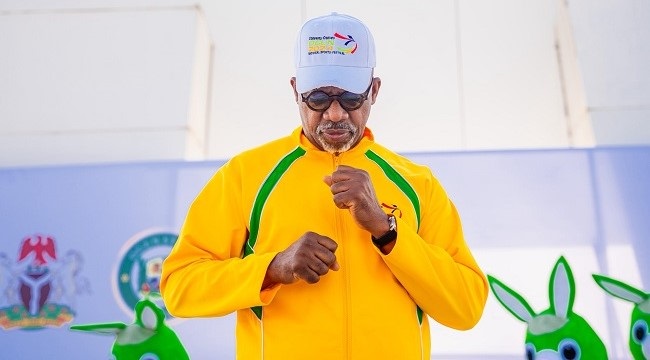
What set Gateway Games 2024 apart was not just what happened on the track or in the pool. The Games felt like a festival in the truest sense, alive with culture, music, and local pride. The ‘Omo Ogun’ mascot brought the host state’s spirit to life, while the theme song, E’kaabo (“welcome” in Yoruba), echoed through every venue, blending warmth with unity. Tourism spiked, with visitors flocking to heritage sites like Olumo Rock and the Adire market. And when Davido and Asa hit the stage during the ceremonies, sport met culture in a fusion that made the festival feel bigger than medals.
Local businesses flourished too. From hotels and taxis to food vendors and artisans, the economic impact rippled across communities. According to the state’s tourism board, Ogun saw a notable uptick in cultural site visits and hospitality bookings throughout the festival period.
No event of this scale goes off without hiccups. Several events were scrapped due to incomplete facilities, a blow to athletes who had spent months preparing. Transport delays in Sagamu and Ijebu-Ode frustrated some teams. The National Sports Commission acknowledged the shortcomings and promised reforms. Still, for many, the bigger picture remained: Nigeria must do better by its athletes, not just in the spotlight of competition, but in the everyday grind of preparation and support.
As the dust settles in Ogun, the baton passes to Enugu State, host of the 2026 edition, the Coal City Games. Enugu’s Commissioner for Sports, Lloyd Ike Ekweremadu, has already promised to raise the bar. Plans are underway to upgrade sporting infrastructure and market local gems like Ngwo Cave to visitors.
Indeed, the blueprint has been drawn. Ogun did not just host, it aspired. And in many ways, it delivered. More than 12,000 athletes arrived. Many will leave with medals but all leave with memories. For some, this was the beginning of careers that could end on Olympic podiums. For others, it was a lesson in perseverance. For the nation, it was a mirror, reflecting where we are, how far we have come, and where we still need to go.
Gateway Games 2024 reminded Nigeria that sport is more than competition. It is culture. It is community. It is the quiet determination of a 13-year-old in the pool and the roar of a crowd celebrating something bigger than just a goal. It is a story still being written. And, that will continue to inspire generation after generation to chase after their goals and ambitions.

Jude Obafemi is a versatile senior Correspondent at THEWILL Newspapers, excelling in sourcing, researching, and delivering sports news stories for both print and digital publications.