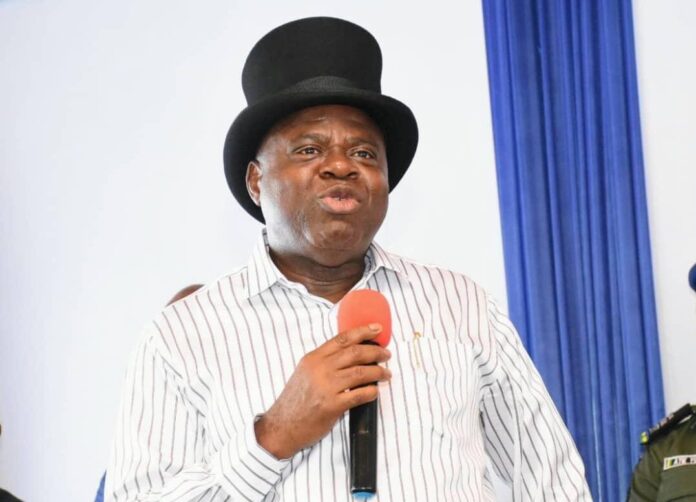
July 15, (THEWILL) — Governor Douye Diri has identified poor implementation of research findings by the government and other relevant public institutions as one of the critical factors responsible for the lack of sustainable development in the country.
Governor Diri stated this on Monday when he received a delegation of Senior Executive Course 47 from the National Institute for Policy and Strategic Studies, NIPSS, Kuru, Jos, during a courtesy call at the Government House, Yenagoa.
Diri, who spoke through Senator Lawrence Ewhrudjakpo, his deputy, noted that NIPSS study teams had, over the years, diligently carried out strategic studies on different themes. He emphasised that if such critical research findings had been implemented, the country would have made significant progress.

He condemned the practice where Nigeria invests heavily in funding research through various institutions, yet fails to deploy the findings for national development—an attitude he described as a major setback to the nation’s growth on all fronts.
Describing the theme adopted for the NIPSS study tour as very relevant to the state, Governor Diri emphasised that Bayelsa is the epicentre of the trillion-dollar potential marine and blue economy, given its strategic location and vast marine resources.
He assured the NIPSS team of the state government’s full cooperation and collaboration throughout their stay in the state to ensure substantial achievement of the study’s objectives.
Being the Governor’s first official assignment following the passing of former President Muhammadu Buhari, a moment of silence was observed at the meeting. Deputy Governor Senator Ewhrudjakpo offered prayers for the peaceful repose of the departed Nigerian leader.
Earlier in his remarks, Air Vice Marshal Mohammed Omar, the leader of the visiting Senior Executive Course 47 delegation to the state, said Bayelsa was chosen as one of the coastal states for the study in view of its rich marine endowments.
AVM Omar, who thanked the State Government for the warm reception accorded to the team, noted that the theme of their research, “Blue Economy and Sustainable Development: Issues, Challenges and Opportunities”, was carefully selected to add to national development discourse.
He expressed confidence that, at the end of the study tour, the team would have gathered all necessary information for a comprehensive report that would not only support the development of the new Ministry of Marine and Blue Economy but also facilitate the effective harnessing of the country’s marine resources.

Amos Okioma is a Correspondent at THEWILL