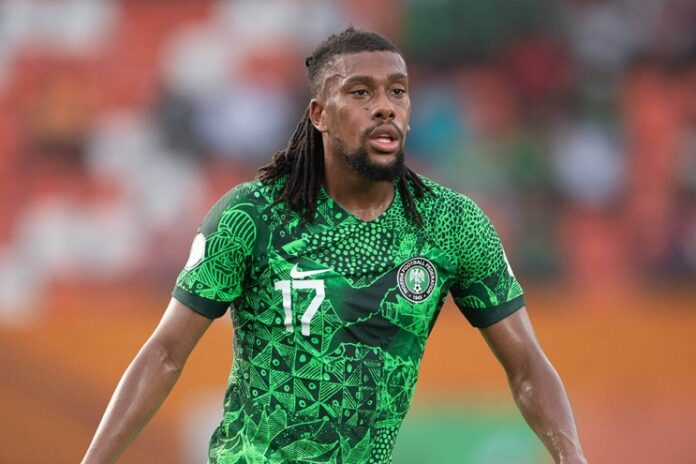
October 13, (THEWILL) — Nigeria’s Super Eagles stand on the edge of another World Cup absence after a disappointing run of qualifiers and a 2-1 victory over Lesotho on October 11 that kept their qualification hopes for the 2026 tournament alive, but only just. The win in Polokwane, South Africa, came through a penalty from William Troost-Ekong and a debut goal by Akor Adams, yet it exposed familiar weaknesses in attack and defence that have plagued the team throughout the campaign.
With one match left against Benin Republic on Tuesday, the Super Eagles require a margin of victory of at least four goals to overtake the group leaders on goal difference, while also needing Rwanda to defeat South Africa. Failure in either scenario drops Nigeria into the playoffs for the second-placed teams, a path that carries no guarantee of success. This predicament in Group C, which includes Lesotho, Zimbabwe, Rwanda, Benin and South Africa, highlights a campaign that began with promise but unravelled through a series of draws and narrow escapes.
The Super Eagles entered the qualifiers with high expectations, backed by a squad rich in talents, such as Victor Osimhen, Ademola Lookman and Alex Iwobi. Nigeria has qualified for six previous World Cup events, reaching the round of 16 in three of those appearances, including the memorable 1994 debut under Clemens Westerhof. Yet the nation has endured repeated disappointments in recent decades.

In 2006, a controversial head-to-head rule denied them a playoff spot after Angola edged out a better record in shared matches. The 2010 failure stemmed from losses to Guinea and Kenya, while 2018 saw a shock 1-0 defeat to Benin that derailed the group. Most recently, in 2022, Ghana’s away-goal triumph in a playoff sealed another miss, marking the third absence in five attempts. These setbacks share common threads: inconsistent coaching, defensive lapses and an inability to convert dominance into results. The current cycle repeats that pattern, turning what appeared a manageable group into a fight for survival.
Qualifying began on 16 November 2023 with a match against Lesotho in Uyo, followed by another against Zimbabwe four days later. The campaign continued in June 2024 with an away fixture to Benin in Abidjan and then an away game to Rwanda. In September 2024, the team hosted Zimbabwe before travelling for a draw with South Africa in Bloemfontein, during which an own goal by William Troost-Ekong cancelled out Samuel Chukwueze’s opener. Coaching instability marked the period, starting with interim coach Augustine Eguavoen overseeing an away fixture to Rwanda in March 2025 across five games before handing over to Finidi George in April. George managed four matches, including a home game with South Africa on 21 March and a home fixture against Zimbabwe on 25 March, until his resignation in June due to boardroom tensions. Eguavoen returned as interim in July and guided the team through a home match against Rwanda on 6 September. Eric Chelle, a Malian with experience at Mali’s national youth teams and Club Africain, took control on 7 January 2025, inheriting a side on seven points from six games.
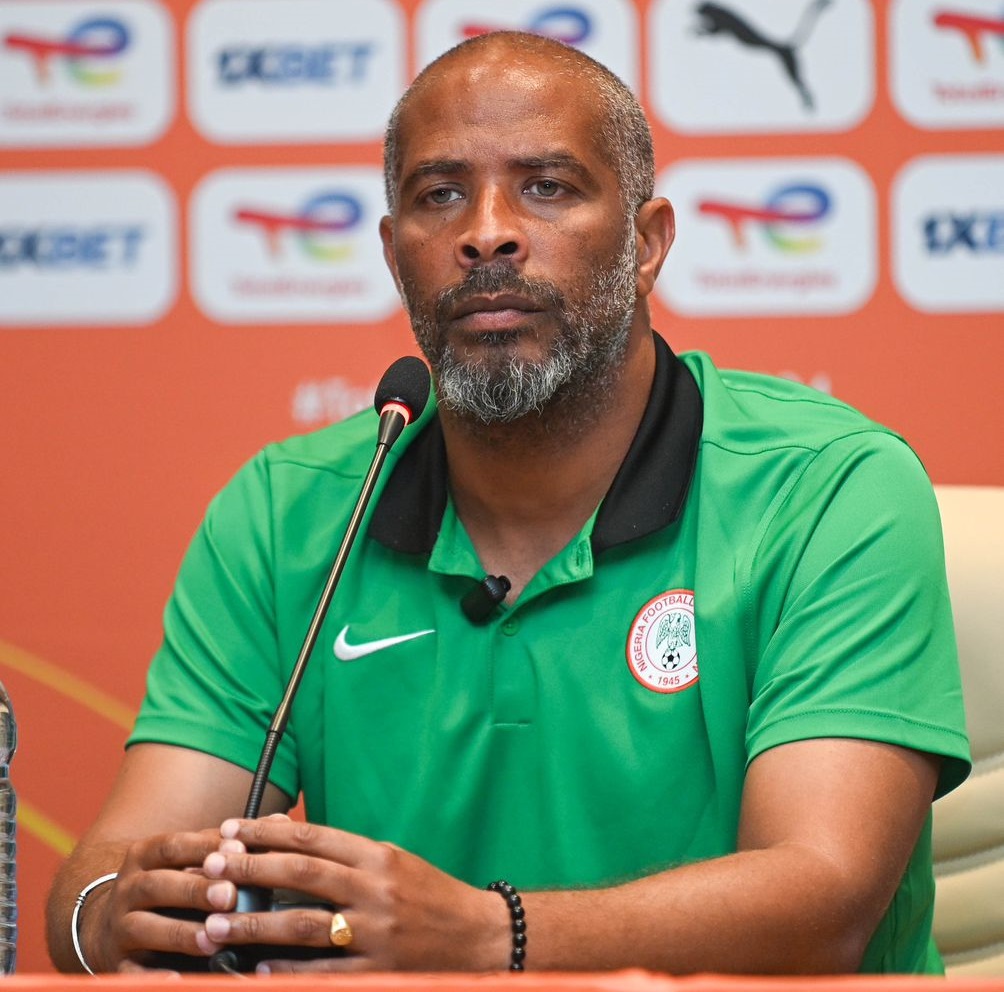
Under Chelle, results improved marginally but lacked conviction. The latest window brought further drama. On 9 September, South Africa drew 1-1 with Nigeria in Bloemfontein, where Victor Osimhen’s header equalised after Evidence Makgopa’s opener, but Cyriel Dessers’ missed chances drew criticism. One month later, the Lesotho match nearly slipped away. The Super Eagles led 1-0 by half-time through Troost-Ekong’s penalty, only for Hlompho Kalake’s header to pull one back on 83 minutes. Nigeria’s midfield faltered, with Calvin Bassey and Wilfred Ndidi struggling to retain possession, while Osimhen remained isolated up front. Akor Adams’ introduction led to his debut goal on 80 minutes, but the team clung on amid Lesotho’s pressure, including a denied penalty appeal.
Meanwhile, Benin secured a 1-0 away win over Rwanda through Tosin Aiyegun’s 80th-minute strike, extending their lead to 17 points, while South Africa’s goalless draw with Zimbabwe kept them on 15.
This sequence of events points to deeper issues within the team and beyond.
Tactically, Nigeria has dominated possession in most games, averaging 62 per cent across the campaign, but converted just 11 of 28 shots on target into goals. Expected goals data shows an underperformance of 3.8, with Dessers and Osimhen combining for only five strikes despite 120 minutes each on average. Chelle’s formation has provided structure, yet transitions remain vulnerable, as seen in the Lesotho goal from a quick counter.
Selection controversies compound the problem. The Nigeria Football Federation (NFF) has rotated over 25 players per window, forcing tactical changes instead of reinforcing stability. Financial disputes have also disrupted preparations; players boycotted training in March over unpaid bonuses, and the NFF’s budget shortfalls delayed Chelle’s arrival by weeks.
The federation’s role cannot be overlooked. Critics point to administrative chaos, including the abrupt dismissal of George after public clashes with officials. Amaju Pinnick’s successor, Ibrahim Gusau, faces accusations of favouritism in appointments and failure to invest in scouting. This neglect shows in the national team’s reliance on Europe-based stars, with domestic leagues producing few graduates. South Africa’s success under Hugo Broos, with 15 points and a +7 goal difference, stems from cohesion built over three years, including players from Mamelodi Sundowns. Benin’s rise to the top, under former Nigeria coach Gernot Rohr, reflects disciplined defending and counter-attacks, having lost just once in nine games.
The financial toll adds urgency. Qualification brings N18 billion in FIFA prizes, plus commercial boosts estimated at N25 billion more. Missing out risks sponsor withdrawals and youth talent exodus, as seen after 2022 when several prospects joined European academies without national call-ups. Broader implications extend to national morale; football unites Nigeria’s 220 million people, and another absence could fuel debates on governance. Rwanda, ranked 148th, holds leverage with their final game against South Africa, while Benin’s motivated squad seeks revenge for earlier losses.
Back to the permutation cycle, if Nigeria triumphs 4-0 over Benin, they reach 17 points with a +6 goal difference, potentially topping the group if South Africa falters. Anything less seals second place at best, which will technically mean facing a two-legged tie against another runner-up, such as Uganda or Congo. Yet, it is uncertain if Nigeria has the points tally to qualify for this playoff round as there are second-placed teams with higher point counts than the Super Eagles have managed to garner. Even if they make it, history shows playoffs as treacherous, Nigeria lost the last in 2022. Chelle must instill urgency in training, perhaps shifting to a more aggressive 4-3-3 to feed Osimhen. The NFF could aid by settling dues promptly, avoiding distractions.
This campaign underscores a need for reform. A stable coach, clear pathways for domestic players and transparent funding could end the cycle. Until then, the Super Eagles’ story remains one of squandered potential, where brilliance flickers but fails to ignite. The match against Benin offers one final chance to rewrite the narrative, but the weight of past failures looms large. Nigeria’s football future depends not just on 90 minutes in Uyo, but on lessons learned from what has the potential to be another World Cup miss. One too may for ardent football fans in the country for whom the game is a tonic to wash down the bitter pills of their increasingly difficult realities.

Jude Obafemi is a versatile senior Correspondent at THEWILL Newspapers, excelling in sourcing, researching, and delivering sports news stories for both print and digital publications.