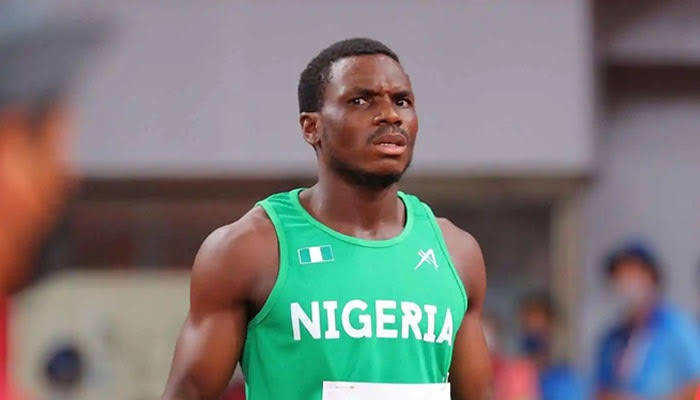
March 31, (THEWILL) – Nigerian jumper, Goodness Iredia, has been handed a three-year ban for a doping violation, casting a shadow over his promising career. The Athletics Integrity Unit (AIU) imposed the sanction after Iredia tested positive for a prohibited anabolic steroid during a meet in Louisville, USA, on January 31. This incident adds to a growing list of Nigerian athletes who have faced similar punishments in recent years, raising concerns about doping compliance within the country’s athletics community.
Iredia, a specialist in long and triple jump, was competing at an event in Louisville when he was subjected to an in-competition test. His urine sample, analysed at a World Anti-Doping Agency (WADA)-accredited laboratory in Utah, revealed the presence of Metenolone and its metabolite, 3a-Hydroxy-1-methylene-5a-androstan-17-one. Metenolone is an anabolic androgenic steroid, a class of substances that are strictly prohibited both in and out of competition according to WADA’s 2025 Prohibited List. Anabolic steroids are synthetic derivatives of testosterone, designed to promote muscle growth and enhance athletic performance. Their use is banned in sports due to the unfair advantage they provide and the potential health risks they pose to athletes.
The AIU, the independent body responsible for enforcing anti-doping rules in athletics, confirmed that Iredia did not possess a Therapeutic Use Exemption (TUE) for the detected substance. A TUE allows athletes with legitimate medical conditions to use otherwise prohibited substances under strict supervision. Furthermore, the AIU found no procedural errors in the testing process, ensuring the validity of the results. On February 19, the AIU notified Iredia of the adverse analytical finding, and he was provisionally suspended on February 26.

Given the opportunity to contest the findings, Iredia could have requested an analysis of his B sample or submitted evidence in his defence. However, on March 5, he chose to admit the violation by signing an Admission of Anti-Doping Rule Violations and Acceptance of Consequences Form. This admission allowed him to benefit from a one-year reduction in the standard four-year sanction, per Rule 10.8.1 of the World Athletics Anti-Doping Rules. Consequently, Iredia’s period of ineligibility was set at three years, running from February 26 this year to February 25, 2028.
In addition to the ban, all of Iredia’s competitive results from January 31, 2025 onward have been disqualified. This means he forfeits any titles, medals, ranking points, prizes, and appearance fees earned during that period. For a young athlete like Iredia, who is reportedly 20 years old, missing three years of competition during his prime could have a significant impact on his career trajectory.
The AIU’s decision is final under Rule 8.5.6 of the World Athletics Anti-Doping Rules. However, both WADA and the Nigeria National Anti-Doping Committee (NADC) retain the right to challenge the ruling before the Court of Arbitration for Sport (CAS) in Lausanne, Switzerland. If either organisation decides to appeal, Iredia would then have the option to file a cross-appeal.This case is not an isolated incident in Nigerian athletics.
In recent years, several high-profile Nigerian athletes have faced doping bans. The most notable is Blessing Okagbare, who received an 11-year ban from the AIU in 2022 after testing positive for multiple prohibited substances and failing to cooperate with investigations. Divine Oduduru, a former NCAA sprint champion, was also handed a six-year ban for his involvement in doping violations linked to Okagbare’s case. Other athletes, such as Samson Idiata and Grace Nwokocha, have also served suspensions, highlighting ongoing concerns about doping within Nigerian athletics.
The recurrence of doping cases among Nigerian athletes raises questions about the effectiveness of anti-doping education and enforcement in the country. While the AIU and WADA play crucial roles in detecting and sanctioning violations, preventing doping requires a multifaceted approach that includes education, support, and oversight at the national level. Young athletes like Iredia need to be aware of the risks and consequences of doping, not only in terms of their careers but also their health.
Doping undermines the integrity of sports by creating an uneven playing field and eroding public trust in athletic achievements. The use of performance-enhancing drugs can also have serious health consequences for athletes, including cardiovascular issues, liver damage, and psychological effects. Anti-doping measures, such as those enforced by the AIU and WADA, are essential to maintaining fair competition and protecting athletes’ well-being.
In Iredia’s case, his admission of the violation and acceptance of the consequences demonstrate a recognition of his mistake. The reduced ban reflects the anti-doping rules’ provision for cooperation, which can serve as an incentive for athletes to take responsibility for their actions. However, the broader challenge remains: how to prevent doping in the first place.
Education is key. Athletes, coaches, and support staff must be thoroughly informed about the prohibited substances, the testing procedures, and the consequences of violations. National federations, such as the Athletics Federation of Nigeria, have a responsibility to implement robust anti-doping programmes that include regular testing, education workshops, and support for clean sport initiatives.
Moreover, addressing the root causes of doping, such as pressure to perform, lack of resources, or inadequate medical supervision, is crucial. Providing athletes with the necessary support, including access to proper training facilities, nutrition, and medical care, can help reduce the temptation to use banned substances.
Iredia’s case serves as another reminder of the ongoing battle against doping in athletics. While the AIU’s actions slow the effectiveness of anti-doping measures in catching violators, the recurrence of such cases underscores the need for continued vigilance and improvement in prevention strategies. For Iredia, the three-year ban represents a significant setback, but it also offers an opportunity for reflection and growth. With the right support and guidance, he may yet return to the sport and contribute positively in the future.
Indeed, Iredia’s doping ban highlights the persistent challenge of doping in athletics and the importance of stringent anti-doping measures. The case adds to a concerning trend among Nigerian athletes, emphasising the need for enhanced education and support to prevent future violations. The athletics community must continue to focus on promoting clean sport and ensuring that athletes compete on a level playing field.

Jude Obafemi is a versatile senior Correspondent at THEWILL Newspapers, excelling in sourcing, researching, and delivering sports news stories for both print and digital publications.