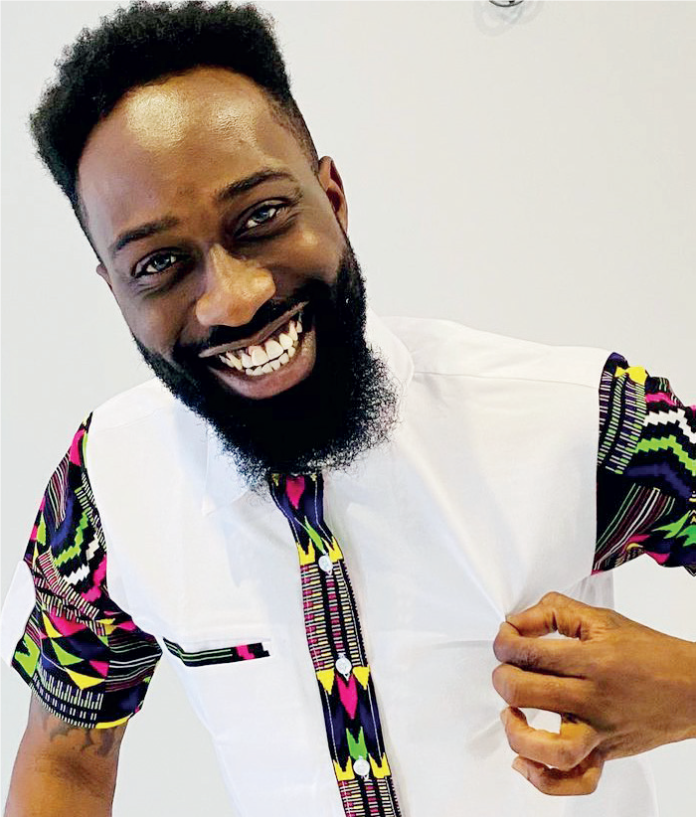
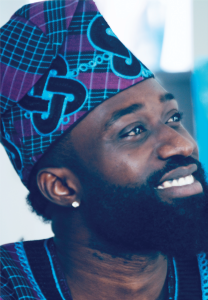
January 09, (THEWILL) – Olalekan Olaleye, also known as Lekan King Kong, is a content creator, actor and serial entrepreneur. He speaks with SHADE METIBOGUN about his foray into entertainment and his love for Yoruba language
You planned to release a movie on Netflix in 2021, but did not. What happened to that dream?
I intend to complete the production of the movie this month. Last year I had a lot of challenges. That was why I couldn’t do anything about the project. It will be an amazing project. The movie will be produced in English and Yoruba languages. The script is very brilliant and full of suspense. All hands are on deck and there is a lot to look forward to.

You graduated with a first class degree in Business Administration. How come you took up skit making as a career?
What I do is beyond just comedy. It is a fact that I graduated top of my class with a first class in Business Administration. I have always been passionate about business. Whatever I do, I try to be the best. So far, I will say that I have been able to achieve that, which is my primary assignment in life. What made me to go into skit making and entertainment generally is passion. I love to create stuff. I love to see people happy. I love to share my experience because I am a person that loves to learn a lot. I love to know something about everything. I am a creative person. When I started as an entertainer, I was able to incorporate my business knowledge into it. The Internet has been the biggest medium for a while now. If you haven’t promoted your business on the Internet, you are still joking. When I create content, it brings me more valve and more clients. I don’t think I would love to do any other thing apart from entertainment. I am also an entrepreneur and I have a few business interests. I own a farm and I am into oil and gas business with my brother. Creating content has been very profitable for me. The return on advert is a lot. So I am enjoying it.
Your are quite fluent in Yoruba. It was even rumoured at a time that you studied Yoruba in school. How come you understand and speak the language so well?
Yoruba language is very important to my brand innovation. You will find me speaking the language in 99.9 percent of everything that I do. I am comfortable with my mother tongue; it is my logo. It is what made me who l am today. It is my foundation. I have always spoken Yoruba with confidence, no matter who I am talking to and no matter where I am.
Yoruba language is dying. It is even being referred to as vernacular. When I started creating content, it was in Yoruba. If it were English language, I might be accused of making errors. It is easy for me to create content in Yoruba. In doing so, I am preaching and appealing to people who have given up on the language. Some people don’t even teach their children the language any more.
The beauty of Yoruba language is far beyond communication. It is such a beautiful language. I was born in Ogbomosho, Oyo State and my local language is Yoruba while my dialect is core Ogbomosho. I started learning English Language when I was around six years-old in primary school. My parents started speaking Yoruba to me from home. All my siblings and grandparent spoke Yoruba language to me. I was born into the language and I was a very inquisitive child. When you say something in Yoruba that I don’t understand, I would ask to know what you are saying. And I never forgot such words or phrase.
Most of your voice-overs are done in Yoruba language, but you are based in South Africa. Does it mean that South Africans are not part of your target audience?
I live in South Africa, but my content is universal. My target audience is the Yorubas. My plan is to entice people to love what is already there. I am not trying to gather an English speaking audience. For instance, South Africa has 11 local languages, but I am not targeting nor enticing them to come and learn my language. I hope someone is doing what I am doing with their language, too. South Africans don’t joke about their language and culture. They love their culture so much. My target is the Yorubas and I want them to understand that their language is beautiful. I don’t expect Europeans to show interest in Yoruba or desire to speak it fluently. I want them to be interested in their culture and language and be able to speak it fluently, too. But, they can also enjoy the fun in my language. The people I want to bring back to the core are the Yoruba who are lost and don’t care about the culture or value of their language anymore, people who don’t teach their children the language anymore. My target is not just to do or put content out there, which everybody can enjoy because they understand it. I want something for my people. I might be sentimental about it, but that is what I really have in mind.
Your skits are quite unique. You make use of real life situations as your concept. How do you get those videos and concepts you use?
I don’t come up with those videos myself. By the time I wake up in the morning, I would have received about 900 videos that my family wants me to do a voice-over for. When I say family, I mean my fans. But I don’t call them fans anymore; I call them family. When l wake up in the morning, content is already waiting for me. I go through as many as I can, but most times I don’t see all of them. I just make sure I go through as many as possible and select 10 videos for the day. The selected ones may not most people’s favourites. I try my best to satisfy as many people as possible. I go through the videos and create a script as the video speaks to me. I don’t want to say it is easy or difficult to know how to turn the videos into a voice-over, but I believe that whatever you put your mind to do is achievable. More so, it is what I enjoy doing. Viewers’ comments make it funnier than the video itself. The way people talk about it makes me want to do more.
What challenges do you usually encounter in the process of making skits?
Space and time are some of the challenges. If I video call you now, you will notice that I am inside my garage. The whole family is present and so, the house is full. I will have to leave the noisy place to speak with you. Also, I want to spend quality time with my child. I start work in the early hours of the day, but I have been spending time with him since he was born. There are challenges in everything you do in life. I try as much as possible to make every challenge my source of strength. I don’t let it weaken or weigh me down. Whatever be the challenge, I try to tackle it. Some people face challenges of acceptance. It takes a lot to create contents and put it out there for people. You have to think of the people that will accept you and those who will criticise your work and talk down to you. No matter how hard you try, they just want to bring you down. But most of them don’t know that behind the camera, you need confidence, time and even morale. Sometimes you just don’t want to do anything. Such are some of the challenges. If I realise that anything wants to weigh me down and discourage me from meeting up with my schedule, I try to face it and tackle it. That is my approach to challenges and life generally.
When exactly did you move to South Africa?
I have been living in South Africa since 2013. I moved to the country two days after my mother passed on. At first, I just wanted to travel for a while and clear my head. I had lost my dad in 2005 and then my mother followed. I felt empty and decided to have a change of environment and maybe, start a new life. My friend, Tayo Faniran, was living in South Africa at that time. He was already established in South Africa as a top model. When I arrived in the country, we both thought of what we could do together. So we started a fashion company. We brought a tailor from Nigeria and started making ready-to-wear clothes. That was going on until he participated in the Big Brother Africa reality TV show. After he exited the show, we moved to Nigeria together. We thought of the market in Nigeria and decided to do business there as well. But later, I ventured into entertainment fully.
Is your wife South African or Nigerian?
She is South African, but I don’t want to focus on her. That is my happy place. I try as much as possible to keep it as private as I can. Let us focus on me because I always try to keep conversations about my family short.
You seem to be a lover of animals as you also use them to create contents?
It is true that I love animals a lot. I love monkeys. If I am allowed to own up to seven of them in South Africa, I will gladly do so. I love animals, but I don’t play with other people’s dogs. I feel that there is so much about animals that we don’t know. I feel that they do communicate among themselves and we just don’t understand them. But there are some animals that dare not move close to. There was a skit I created about a lion. I visited a place where lions were kept. I was a bit frightened as I stood so close to one of them. I couldn’t move around, but I managed to do the voice-over. Anyway, it was fun, which is one of the attractions of South Africa. Those lions were cubs and the oldest was seven months-old. They were raised like cats. They were taken from their mother when they were mere kittens and raised domestically, with feeding bottles. That is why they are able to move freely among humans. After like a year, they take them to places where you can only drive to see them. By then, they would have been caged properly. Their handlers believe that they might still get wild as they grow so they don’t allow them to mingle with humans again.
You are an entertainer, farmer, businessman, father and husband rolled in one. How do you combine these multiple roles with skit-making?
When it comes to my business, I delegate roles to other people. My brother manages one of my businesses, for instance. I co-own one other business with one of my brothers. My farm is in Nigeria. It comprises several hectares of land where I have planted cashew trees. One part of it is for animal husbandry. I have a fish pond, a few cows and I also plant crops, such as cassava, yam and maize, depending on the season. The cashew trees were planted about four years ago. It takes about five or six years before you can start to harvest them. Soon I will become a major exporter of cashew nuts. I have not really said a lot about it. I guess this is the first time that I am talking about my farm. I co-own the oil and gas company with my brother. We have a gas station in Odo- Oba in Ogbomosho, Oyo State and there is another plant under construction now. My focus is on content creation. I don’t like it when people call me a comedian. I don’t see myself as a comedian. I create contents that are funny. There is more to being a comedian than creating contents. Content creation is my passion. I love it and I enjoy doing it. I co-own a movie production company with Daniel Akinlolu, he is a brother to Beautiful Nubia. When I started the social media thing, he approached me and we have been doing movie business together. I shot my first and second movie with him. He is a great script writer, director and cinematographer and he is going to handle the next movie we are planning to shoot.
Do you have any plan to go into stand-up comedy?
I am a ‘sit-down’ comedian for now, but you can never tell. Let me tell you a secret about myself. I hate to stand up in front of people to make them laugh. We all have our individual fears. I have never tried it before. Maybe when we get there, I will cross the bridge. Although I anchor events occasionally, I don’t make a lot of jokes. I can seat among people and make them laugh, but standing and facing a crowd as a comedian is what I have not tried before. It is a bridge I am yet to cross. Maybe when I get here, I will be able to cross it and make it my comfort zone as well.
What about the fashion business you started with Tayo Faniran? Did you guys call it quit at a point?
A lot of things happened businesswise and we fell apart. I don’t want to go into a lot of details.
Are you still friends?
Yes, we are still cool together.
What was growing up like for you?
I was born in Ogbomosho Oyo State. I am the last child in my family. I have eight brothers and two sisters. I attended Adisa Memorial Nursery and Primary School, Federal Government College, Ogbomosho and the University of Ilorin. For about three or four years, I studied Linguistics at UNILORIN before moving to Ajayi Crowther University in 2008 and graduated with a first class in Business Administration.