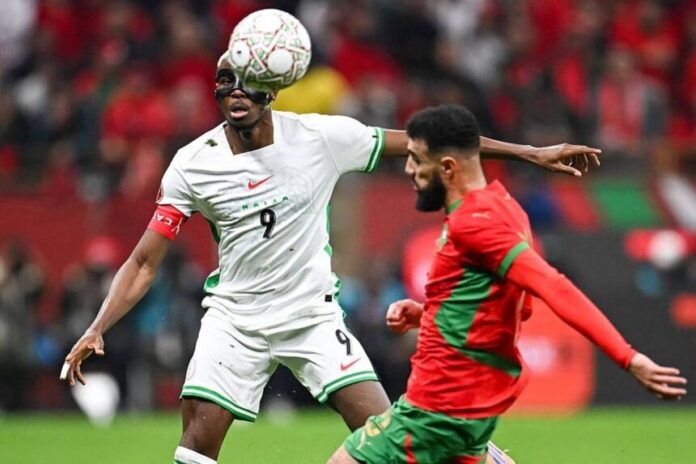
January 18, (THEWILL) — When the final penalty struck the net at Rabat’s Prince Moulay Abdellah Stadium on Wednesday night, the roar from 45,000 Moroccan supporters confirmed what the scoreline had failed to reveal over two hours of tense, goalless football: that home advantage in knockout football can prove as decisive as tactical acumen or individual brilliance. Morocco’s 4-2 penalty shootout victory over Nigeria in the semi-final of the 2025 Africa Cup of Nations represented not merely progression to Sunday’s final against Senegal, but vindication of a tournament strategy built around fortress mentality and collective resolve.
For Nigeria, the defeat carried particular cruelty. The Super Eagles had entered this semi-final having conceded sparingly throughout a campaign that saw them win all three group matches and dispatch Mozambique 4-0 before defeating Algeria 2-0 in the quarter-finals. Their 14 goals across six matches testified to attacking potency, yet when confronted by Morocco’s disciplined defensive structure and the weight of expectation from a fervent home crowd, Eric Chelle’s side found themselves unable to translate territorial ambition into genuine scoring opportunities. The statistics told part of the story: Morocco registered nine shots on target to Nigeria’s four, enjoying approximately 55 per cent possession whilst creating the clearer chances through Brahim Díaz’s creative menace in midfield.
Yet possession statistics rarely capture the psychological dimensions of semi-final football, particularly when one team enjoys the sustained vocal support that transformed the Prince Moulay Abdellah Stadium into an intimidating cauldron. The noise levels made communication between players difficult, forcing both sides to rely on pre-established tactical patterns rather than in-game adjustments. Nigeria’s defensive organisation, marshalled effectively by Calvin Bassey, repeatedly frustrated Moroccan attacks despite the hosts’ territorial dominance. Stanley Nwabali, commanding his area with authority, provided reassurance whenever high crosses threatened, whilst the midfield shield limited space for Morocco’s more creative players to operate.

The first half unfolded as a careful chess match, with Nigeria’s compact defensive shape forcing Morocco to probe patiently for openings. Díaz curled one effort wide, whilst at the other end Ademola Lookman saw his attempt gathered by Yassine Bounou. Victor Osimhen, closely marked throughout by two Moroccan defenders who recognised his threat, managed a header in the 54th minute that Bounou saved comfortably. These isolated moments of promise never coalesced into sustained pressure from either side, with both coaches seemingly calculating that defensive solidity offered better prospects than attacking ambition.
The second half maintained this cautious pattern. Morocco applied pressure in phases, yet Nigeria’s defensive discipline held firm. The game’s tactical conservatism reflected both the stakes involved and perhaps a mutual acknowledgement that one defensive error might prove catastrophic. Substitutions failed to alter the dynamic significantly, though Nigeria’s decision to withdraw Osimhen before the shootout attracted subsequent scrutiny from supporters who questioned whether fresher legs might have been deployed differently.
Extra time brought fatigue rather than goals. The warm Rabat evening and the match’s intensity had sapped energy from players on both sides, reducing the contest to a war of attrition. Morocco continued to enjoy marginally better chances, but Nigeria’s defensive resilience suggested that penalties had become the likeliest route to resolution. When the whistle finally confirmed that conclusion after 120 goalless minutes, the psychological advantage shifted decisively towards the hosts.
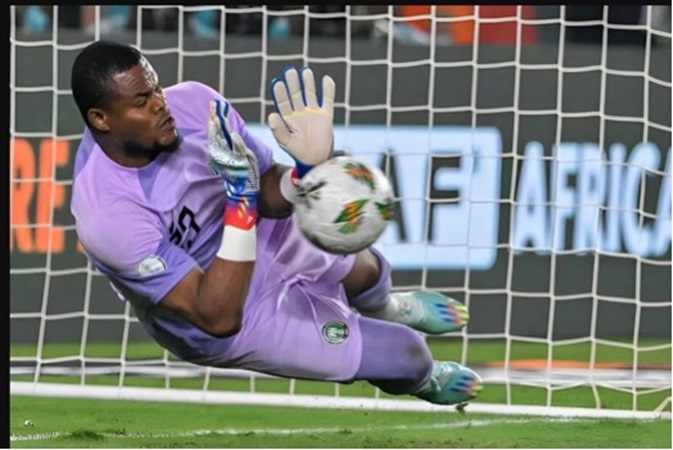
Penalty shootouts compress football’s complexities into individual moments of technical execution under extreme pressure. Morocco converted their attempts with composure. Nigeria managed only two successful kicks, with Bounou saving two efforts from the Super Eagles to earn the man-of-the-match award. Afterwards, Bounou emphasised the crowd’s role in providing extra motivation during those tense moments, a sentiment that captured how home advantage had permeated every aspect of Morocco’s campaign.
The result marked Morocco’s first Africa Cup of Nations final appearance in 22 years, ending a drought stretching back to 2004 and offering the prospect of a second continental title following their solitary triumph in 1976. For tournament hosts competing on home soil for the first time since 1988, the victory represented both tactical success and emotional release. Walid Regragui’s assessment of the final as an even contest with 50 per cent chances for each side suggested measured confidence rather than complacency.
Nigeria’s response to elimination has encompassed both disappointment and reflection. Chelle acknowledged that his team had matched Morocco throughout before penalties proved unkind, praising defensive resilience whilst lamenting inadequate clinical finishing. Osimhen expressed frustration yet highlighted squad unity and the strong displays that had characterised earlier rounds. The statistics support this nuanced assessment: remaining unbeaten in regulation time whilst reaching the semi-finals represents considerable achievement, yet the inability to create clearer scoring opportunities against elite opposition identifies areas requiring development.
Saturday’s third-place match against Egypt now offers Nigeria an opportunity to salvage bronze and conclude the tournament positively. The fixture tests the squad’s capacity to recover focus following such deflating circumstances, yet also provides a stage for reaffirming quality on the continental platform. For a team seeking their fourth Africa Cup of Nations crown, having previously triumphed in 1980, 1994 and 2013, this represents modest consolation.
Morocco’s final against Senegal promises compelling theatre between two sides possessing both tactical discipline and individual quality. The hosts will seek to convert sustained home support into tangible silverware, aware that such opportunities arrive rarely in international football. For Nigeria, the lessons from Rabat centre on the fine margins separating success from elimination in knockout competition. They defended superbly, competed admirably, yet ultimately discovered that in penalty shootouts, nerve and fortune matter as much as preparation and talent.

Jude Obafemi is a versatile senior Correspondent at THEWILL Newspapers, excelling in sourcing, researching, and delivering sports news stories for both print and digital publications.