September 29, (THEWILL) — Nigeria’s football clubs entered the 2025/2026 Confederation of African Football competitions with considerable expectations, yet the preliminary rounds delivered a mixture of progress and disappointment. Two teams advanced in the Champions League, while the Confederation Cup representatives departed early, and the women’s side failed to qualify for the main tournament.
These outcomes highlight ongoing difficulties in the Nigeria Premier Football League, where clubs often lack the resources to compete effectively on the continent. The results also carry weight for Nigeria’s position in the CAF association rankings, which determine future slots in these events.
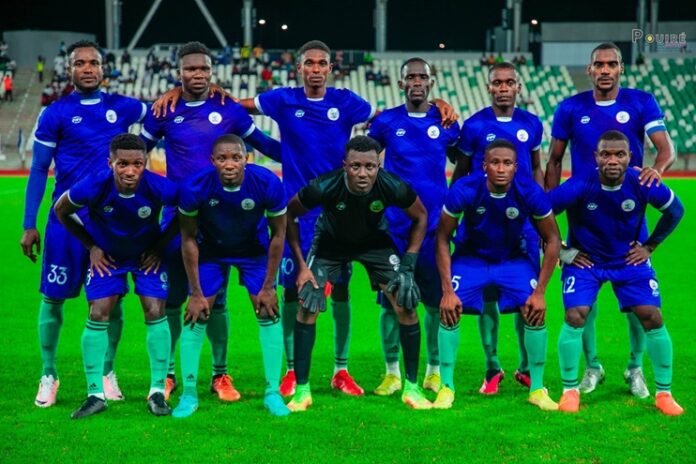
Remo Stars and Rivers United obtained places in the second preliminary round of the TotalEnergies CAF Champions League after completing the first round successfully. Remo Stars, the NPFL title holders, faced US Zilimadjou from Comoros in their debut continental tie. The first leg in Ikenne ended with a 4-0 victory for the Nigerian side. In the return match on 21 September in Moroni, Remo Stars added a 1-0 win through a penalty, resulting in a 5-0 aggregate triumph. This marked the first time Remo Stars progressed beyond the initial stage in a CAF competition.

Coach Daniel Ogunmodede’s charges will now prepare for a challenging matchup against Mamelodi Sundowns of South Africa, with the first leg scheduled for October 17 to 19 and the second for October 24 to 26. Sundowns, who hold a strong record in the competition, including recent semi-final appearances, present a stern test for the newcomers.
Rivers United, the NPFL runners-up, also moved forward, defeating Les Aigles du Congo from the Democratic Republic of Congo 1-0 on aggregate. The opening encounter in Brazzaville concluded without goals, allowing Rivers United to carry a clean sheet into the home leg at the Godswill Akpabio Stadium in Uyo on 21 September. Forward Stephen Manyo scored the decisive goal in the 45th minute, obtaining passage to the next round. Opponents for Coach Finidi George’s Rivers United in the second round will be Black Bulls from Mozambique, who advanced after overcoming Green Mamba of Eswatini. This fixture offers a potentially winnable path, but Rivers United must address defensive vulnerabilities exposed in domestic matches to avoid upsets. The club has appeared in CAF competitions for three straight seasons, yet has not reached the group stage since 2021.
In the TotalEnergies CAF Confederation Cup, Nigeria’s hopes ended abruptly in the first preliminary round on September 28. Abia Warriors, who finished third in the NPFL last season, met Djoliba of Mali. The home leg in Umuahia produced a 1-1 draw. However, in Bamako, Djoliba won 1-0 through a second-half strike, eliminating coach Imama Amapakabo’s side 2-1 overall. Kwara United faced a similar fate against Asante Kotoko of Ghana. The away leg in Kumasi resulted in a 4-3 loss for Kwara United, who led twice before conceding late goals.
Back at the Moshood Abiola Stadium in Abeokuta, the second leg finished 0-0, confirming a 4-3 aggregate defeat. Kwara United’s defence struggled, allowing four goals in the first match, which proved costly. These early exits mean no Nigerian presence remains in the Confed Cup, a competition where the country last claimed victory in 2005 with Enyimba.
Bayelsa Queens represented Nigeria in the WAFU Zone B qualifiers for the 2025 CAF Women’s Champions League, held in Côte d’Ivoire from August 27 to September 5. The NWFL champions topped their group with convincing wins, 3-0 over ASKO de Kara of Togo and 4-1 against Sam Nelly of Liberia. In the semifinals on September 2, Bayelsa Queens defeated USFA of Burkina Faso 2-1. The final against ASEC Mimosas of Côte d’Ivoire ended 1-1 after regular time. The match went to penalties, where ASEC Mimosas prevailed 8-7, denying coach Domo Okara’s side a spot in the finals for the first time in three years. Bayelsa Queens’ run displayed technical ability, but the shootout highlighted mental pressure in high-stakes moments.
These performances fit into a broader pattern for Nigerian clubs in CAF events. The country enjoyed dominance in the early 2000s, with Enyimba winning the Champions League in 2003 and 2004, the only Nigerian successes in the modern era. From 1968 to 2002, Nigerian sides played 204 matches in the competition, obtaining numerous semi-finals and finals appearances. However, no club has reached a final since then, turning Nigeria into relative underperformers compared to Egypt, Morocco, and South Africa. In the Confederation Cup, Enyimba’s 2005 title stands out prominently. On the women’s side, Rivers Angels reached the semi-finals in 2021, but consistent qualification remains difficult due to regional competition.
Several factors contribute to this decline. Financial constraints limit squad preparation and travel logistics, with NPFL clubs often relying on limited budgets for international trips. Infrastructure issues, such as substandard training facilities and pitches, hinder daily operations and player development. The domestic league’s irregular schedule also leaves teams fatigued before continental duties begin. Then, there is the issue of indebtedness, which affects registration and compliance, as observed with clubs like Akwa United facing barriers in lower divisions. CAF’s increased prize money, $100,000 per participating club this season, provides some relief, but it does not address root causes like private investment shortages. Nigeria holds the 12th spot in the CAF association rankings, the threshold for two slots in each competition, but recent poor showings threaten this status. Among individual clubs, Rivers United ranks 24th continent-wide with 14 points over five years, while Enyimba sits at 35th. North African teams dominate the top 20, underscoring the resource gap.
The women’s game faces parallel obstacles. Limited funding for the NWFL means players often balance training with other employment, reducing focus and recovery time. Regional qualifiers like WAFU-B expose teams to varied opposition, but without sustained support, progress stalls. Bayelsa Queens’ semi-final victories demonstrated potential, yet the final penalty defeat points to needs in psychological training and depth.
Looking to the remainder of the season, Remo Stars and Rivers United hold the key to salvaging Nigeria’s campaign. Their second-round ties in October could lead to the group stage, where CAF allocates $700,000 per team plus match bonuses. Advancement would boost the national coefficient and encourage sponsors, who have avoided NPFL investments due to past inconsistencies. For the Conf Cup sides, the focus shifts to domestic recovery, with lessons from these ties informing adjustments in the NPFL campaigns. Abia Warriors and Kwara United must strengthen defences and scouting to fare better next year.
In the women’s tournament, the finals in Morocco from November 1 to 13 will proceed without Nigeria, but Bayelsa Queens’ experience could inform NWFL reforms. Greater allocation from the Nigeria Football Federation for women’s programmes might yield future breakthroughs, aligning with the Super Falcons’ international standing.
Overall, this season’s start reveals a familiar cycle: talent exists, but systemic barriers impede results. Remo Stars’ clean progression offers encouragement, suggesting that focused management can yield gains. Yet, without broader changes such as in improved funding, better facilities, and league stability, Nigerian clubs risk further marginalisation. The October fixtures provide an immediate chance to alter the trajectory, potentially restoring some continental credibility.

Jude Obafemi is a versatile senior Correspondent at THEWILL Newspapers, excelling in sourcing, researching, and delivering sports news stories for both print and digital publications.