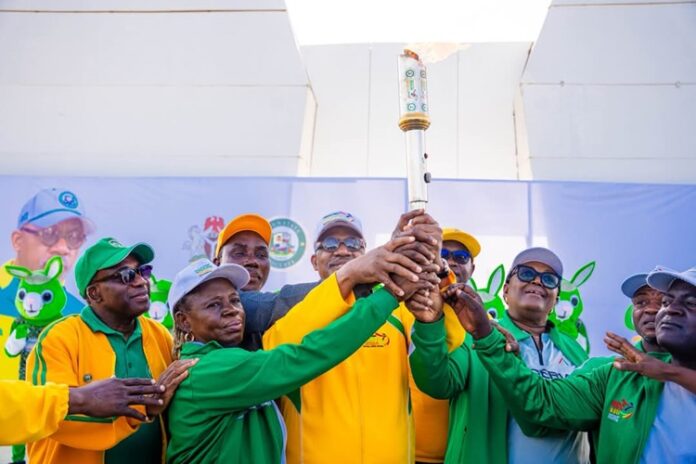
May 18, (THEWILL) – The 22nd National Sports Festival commenced on May 16 in Ogun State, Nigeria, and will conclude on May 30. This biennial event, often described as Nigeria’s domestic equivalent to the Olympic Games, brings together athletes, coaches, and officials from all 36 states and the Federal Capital Territory. Over 15,000 participants are expected to compete in 32 sports, ranging from athletics and football to wrestling and table tennis. Held primarily in Abeokuta, the state capital, the festival serves as a platform for promoting sporting excellence, fostering national unity, and supporting youth development. Ogun State, hosting the event for the second time since 2006, has undertaken extensive preparations to ensure a successful tournament, with significant investments in infrastructure, logistics, and cultural displays to highlight Nigeria’s diversity.
The National Sports Festival was established in 1973 as a means to promote reconciliation and unity following the Nigerian Civil War of 1967 to 1970. Its primary objectives were to engage the country’s youth, encourage competitive sports, and provide a pathway for talented athletes to progress to national and international stages. Over the years, the festival has produced numerous athletes who have achieved global recognition, including Mary Onyali, a sprinter discovered at the 1985 Kwara Games, and Falilat Ogunkoya, the first Nigerian woman to win an individual Olympic track medal in 1996. Chika Chukwumerije, a taekwondo athlete who competed in three Olympic Games and won a bronze medal in 2008, also emerged from the festival. These examples underline the event’s role as a breeding ground for sporting talent, offering opportunities for young Nigerians to gain exposure and pursue professional careers.
Ogun State’s selection as the host for the 22nd edition reflects its historical and geographical significance. Often referred to as the Gateway State due to its proximity to Lagos and its role as a transit point to other parts of Nigeria, Ogun has a strong sporting heritage. The state previously hosted the festival in 2006, an event remembered for its organisation and impact under the leadership of then-Governor Gbenga Daniel and Commissioner for Sports Bukola Olopade. Olopade, now the Director General of the National Sports Commission and Chairman of the Main Organising Committee, brings considerable experience to the 2024 Games. The state government, led by Governor Dapo Abiodun, has expressed a commitment to delivering a memorable event that not only highlights athletic competition but also stimulates economic activity and promotes tourism.

Preparations for the Gateway Games have been comprehensive. Ogun State has upgraded key venues, including the MKO Abiola International Stadium and the Alake Sports Centre, to meet the demands of a multi-sport event. A dedicated Games Village, a first in the festival’s history, has been constructed to accommodate all contingents, fostering collaboration and logistical efficiency. The state has also invested in transportation, security, and waste management to ensure a smooth experience for participants and visitors. The Ogun State Waste Management Authority has initiated a 24-hour clean-up operation to maintain a clean environment throughout the festival, with personnel deployed across competition venues and public areas. Additionally, the Ogun Police Command has assured maximum security, and the state’s traffic management agency has issued advisories to manage the expected influx of visitors.
The festival’s sporting programme is extensive, featuring 27 compulsory sports mandated by the National Council on Sports and up to five optional sports selected by the host state. These include athletics, football, basketball, boxing, wrestling, swimming, taekwondo, and table tennis, among others. The event is expected to draw between 10,000 and 15,000 athletes, with states such as Oyo sending delegations of over 700 participants, including 320 athletes and 65 coaches. Team Delta, the defending champions, will aim to maintain their dominance, having topped the medal table in eight of the last 10 editions. Oyo State, which set a record for the most gold medals at the 2022 festival, is another strong contender. The host state, Ogun, has also prepared rigorously, with efforts to recruit local athletes who previously represented other states to bolster its team.
Beyond the competitive aspect, the Gateway Games aim to celebrate Nigeria’s cultural diversity. The opening and closing ceremonies will feature performances of music, dance, and art, reflecting the traditions of Ogun State and other regions. Daily exhibitions will allow visitors to engage with local customs, cuisine, and craftsmanship. These cultural elements are intended to complement the sporting events, creating a holistic experience that promotes national unity. The festival’s Torch of Unity, which toured the country before arriving in Ogun on May 16, symbolises this convergence of states and communities. Governor Abiodun has emphasised the event’s potential to foster connections and celebrate shared humanity, aligning with the state’s broader agenda of building a cohesive future.
The economic impact of the Gateway Games is significant. The influx of thousands of athletes, officials, and spectators is expected to boost local businesses, particularly in hospitality, transportation, and retail. Hotels in Abeokuta are reportedly fully booked, and petty traders are anticipated to benefit from increased demand. The state government views the festival as an opportunity to enhance its gross domestic product by creating a sports economy around the newly upgraded facilities. Plans are in place to transform these venues into tourist attractions after the event, ensuring a lasting legacy. The African Athletics Confederation’s interest in Ogun hosting the Under-18 and Under-20 African Championships further underscores the state’s growing reputation as a sports hub.
The festival also serves as a platform for youth development. The National Sports Commission has introduced a novel approach by including promising junior athletes identified through the National Youth Games, allowing them to compete alongside elite professionals. This initiative offers mentorship opportunities and aims to revolutionise talent identification and development in Nigeria. Additionally, the Nigeria Olympic Committee has launched a Safeguarding Handbook and a SAFE SPACE initiative to prioritise athlete welfare. These measures include mental health assessments and training to create a supportive environment, aligning with international standards set by the International Olympic Committee.
The involvement of international coaches marks a significant milestone for the festival. Two American coaches from Mississippi State University attended the athletics events to identify talent and offer scholarships, providing Nigerian athletes with opportunities to study and compete abroad. This international dimension enhances the event’s prestige and underscores its role in connecting local talent with global opportunities. National sporting legends, including Segun Odegbami, Tobi Amusan, and Anthony Joshua, have been enlisted as ambassadors to inspire young athletes and elevate the Games’ profile.
Despite its ambitions, the Gateway Games faced challenges in preparation. Initially scheduled for 2024, the festival was postponed twice, first to January 2025 and then to May 2025, due to delays in facility renovations. The Joint Technical Committee, during a meeting in December 2024, identified issues with the swimming pool and track at MKO Abiola Stadium, necessitating further work. However, recent reports indicate that these concerns have been addressed, with contractors who worked diligently to meet deadlines. The state government’s commitment to delivering a high-quality event has been reinforced by regular inspections and stakeholder collaboration.
The Gateway Games 2024 represent a critical moment for Nigerian sports. The festival’s ability to unite diverse communities, nurture talent, and drive economic growth underscores its importance beyond the realm of athletics. Ogun State’s efforts to deliver a world-class event reflect a broader vision of positioning Nigeria as a leader in African sports. With the participation of thousands of athletes and the support of national and international stakeholders, the 22nd National Sports Festival promises to leave a lasting impact on the country’s sporting landscape and its cultural fabric.

Jude Obafemi is a versatile senior Correspondent at THEWILL Newspapers, excelling in sourcing, researching, and delivering sports news stories for both print and digital publications.