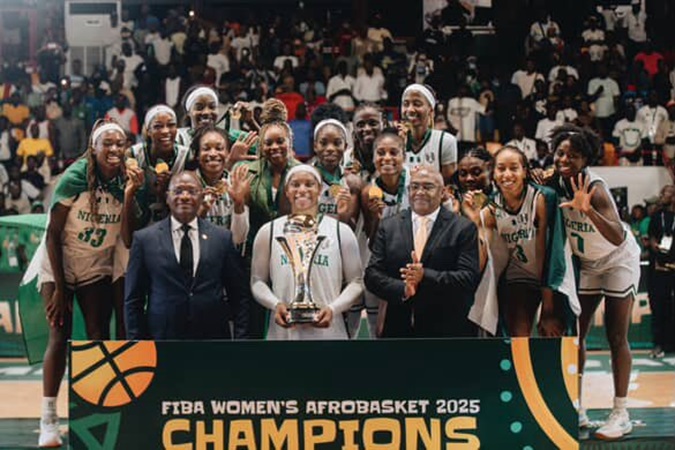
March 15, (THEWILL) — Three days into a qualifying window that doubles as a dry run for global ambition, Nigeria’s D’Tigress find themselves with one result that flatters and another that instructs. The senior women’s basketball team arrived in Lyon carrying the weight of five consecutive African championships and a world ranking of eighth, their place in September’s World Cup in Berlin already secured. What the Astroballe arena in Villeurbanne is offering them instead is something harder to manufacture: honest competition.
The qualifying tournament, which runs from March 11 to 17 and involves 24 nations competing across four host cities for 11 remaining places in the Berlin championship, serves a particular purpose for Nigeria. Having won the 2025 Women’s AfroBasket title in Abidjan, their seventh continental crown in total, coach Rena Wakama’s squad has nothing to qualify for. The value of the Lyon window lies elsewhere: in pushing a settled, experienced group against opponents whose styles bear little resemblance to anything found on the African continent.
That much was confirmed within the first two days of competition. Nigeria opened on March 11 against Colombia in what was the first senior meeting between the two nations, and the outcome was emphatic. A 70-37 victory built methodically through the quarters, 18-12 at the end of the first and 34-29 at half-time, before accelerating into something more one-sided in the closing stages. Colombia were held to a combined eight points across the third and fourth quarters, a defensive performance that illustrated precisely the kind of intensity D’Tigress deploy when their rotations are functioning as intended. Victoria Macaulay, requiring only 14 minutes of court time, led the scoring with 13 points. Nicole Enabosi contributed a double-double of 10 points and 11 rebounds, and Ifunanya Okoro added a further 10.

The following afternoon told a different story. South Korea, operating from a tactical blueprint centred on perimeter shooting and deliberate spacing, took a 20-16 lead after the opening quarter and largely controlled the tempo from that point. Nigeria clawed back enough in the second period to trail by only four at the break, but South Korea’s ability to manufacture clean looks from distance proved decisive. They made 14 three-pointers across the match, and by the final buzzer the scoreline read 77-60, the first occasion on which the Nigerian senior women’s team had ever lost to South Korea. Macaulay was again the standout performer with 22 points and six rebounds, yet 22 turnovers across the 40 minutes undermined much of what the defence offered. Through two matches, Macaulay is averaging 17.5 points per game with an efficiency rating of 19.0; Ezinne Kalu is contributing 7.5 points and 4.5 assists; Enabosi is leading the squad in rebounds at eight per game.
Wakama, speaking to the media in France, described the defeat with the composure of a coach who does not read too much into any single result during a preparation window. The players, she noted, were still finding their rhythm after extended periods apart at their professional clubs, and the loss against South Korea had clarified which adjustments the squad would need to make. Ball security and defensive rotations in transition were the obvious areas of concern. Her broader message was one of process: this week in Lyon exists to sharpen the team, rather than to define it.
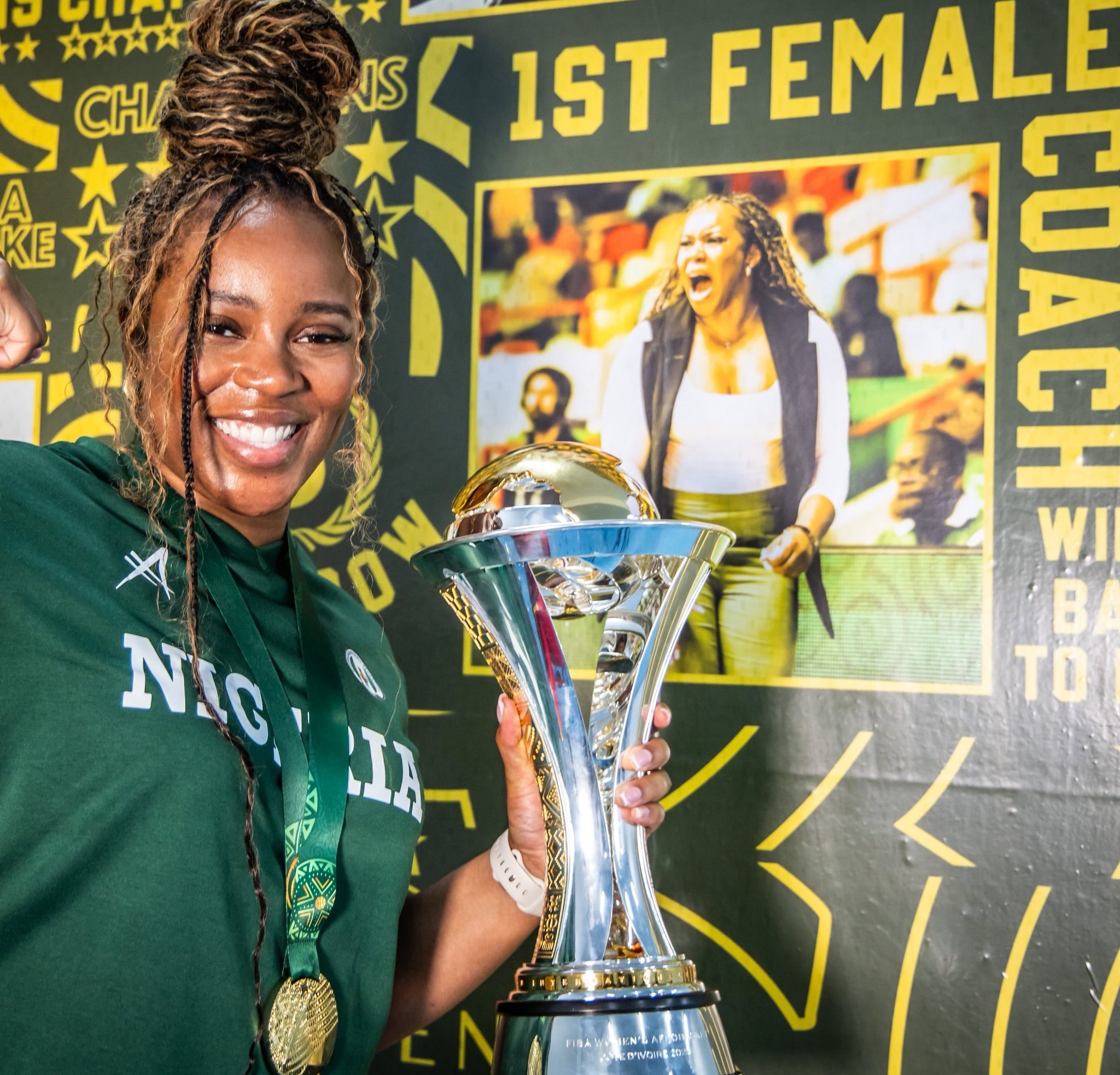
The squad Wakama assembled for the window reflects the philosophy that has underpinned Nigeria’s continental dominance. Eleven of the 12 players selected were part of the AfroBasket title-winning group, providing a level of shared understanding that short training camps alone cannot replicate. Established figures such as Kalu, Promise Amukamara and Amy Okonkwo, the most valuable player at the last AfroBasket, remain central to the team’s structure. Murjanatu Musa, performing consistently in European club competition, adds further depth and is among three players averaging one block per game alongside Elizabeth Balogun and Pallas Kunaiyi-Akpanah. Rita Igbokwe represents the newer generation, integrated into a group that already carries a clear identity.
The remaining three fixtures present an escalating degree of difficulty. The Philippines, who face Nigeria on March 14, operate in a similar mould to South Korea, prioritising pace and perimeter shooting. France follow on March 15 as both the host nation and one of Europe’s most established women’s programmes. Germany close the group on March 17 with the added motivation of a nation due to host the World Cup. Results against the two European sides will carry particular weight when assessing how far Nigeria’s game has developed since their quarter-final appearance at the 2018 World Cup in Spain, still their best finish in global competition and the benchmark against which the current generation is quietly measured.
There is a broader dimension to the week that extends beyond basketball. Nigeria’s preparations in Lyon have coincided with the period following International Women’s Day, and the team’s sustained success has been cited within the country as evidence that investment in women’s sport produces tangible returns. Officials have pointed to D’Tigress as a model for other disciplines, arguing that the federation’s ability to maintain stability in coaching and squad selection over several years has been as important as individual talent in producing five successive continental titles.
That stability has not always been the backdrop to Nigerian basketball. Administrative tensions within the federation created uncertainty around the management of the sport, and that governance disputes formed a background distraction in the months leading into the Lyon tournament. Players and coaching staff have had to keep their focus trained on the court while those questions continue to be resolved at the administrative level, a challenge that the consistency of results suggests they have largely managed.
What the qualifying window is revealing, then, is a team that knows its strengths, principally defence, continuity and experienced guard play, and is working to address the vulnerabilities that stronger opposition will inevitably expose. The 22 turnovers against South Korea, and the difficulty in containing high-volume three-point offences, are problems the coaching staff will need to correct well before Berlin. The fixtures against France and Germany will begin to show whether those corrections are taking hold. For a squad that has spent years mastering its own continent, the task ahead is to demonstrate that the lessons absorbed in Lyon are capable of translating to the world stage.

Jude Obafemi is a versatile senior Correspondent at THEWILL Newspapers, excelling in sourcing, researching, and delivering sports news stories for both print and digital publications.