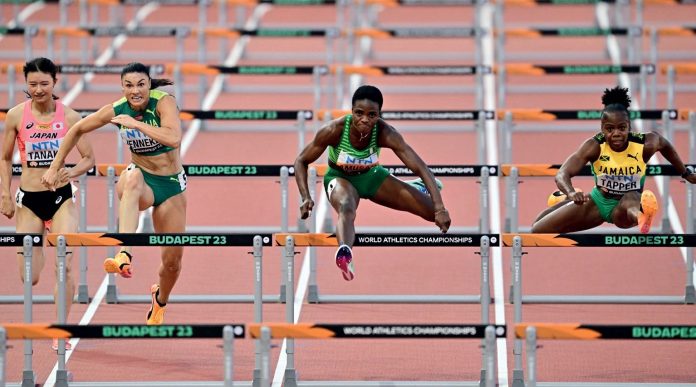
September 03, (THEWILL) – The 2023 World Athletics Championships in Budapest marked a profoundly disappointing competition for Nigeria’s team, who failed to win any medals and struggled mightily in their respective events. Out of the 25 athletes, comprising 11 male and 15 female athletes, only two managed to reach event finals, with none finishing in the top three of their disciplines.
The poor performance raises difficult questions about the state of Nigerian athletics and what must be done to revive the fortunes of a once-proud sprinting nation.
Nigeria earned qualification spots through a variety of methods, including meeting entry standards, accumulating ranking points, receiving wild card entries, and gaining representation through continental allocations.

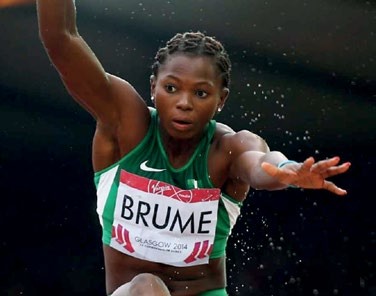
Some of the most notable Nigerian athletes that competed for the country in Budapest included World Record holder Oluwatobiloba Amusan. The reigning African 100m hurdles champion and Commonwealth Games gold medalist entered the championships boasting a personal best of 12.40s in the event. With Amusan was Ese Brume, the 2019 World Championships bronze medalist and current African record holder in the women’s long jump. She arrived with a personal best of 7.17m.
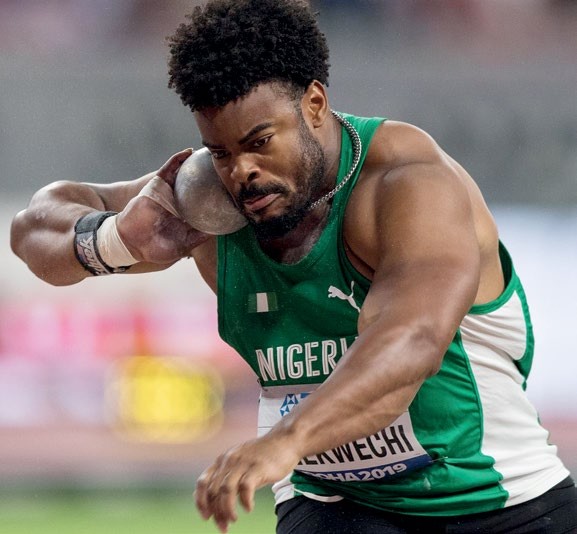
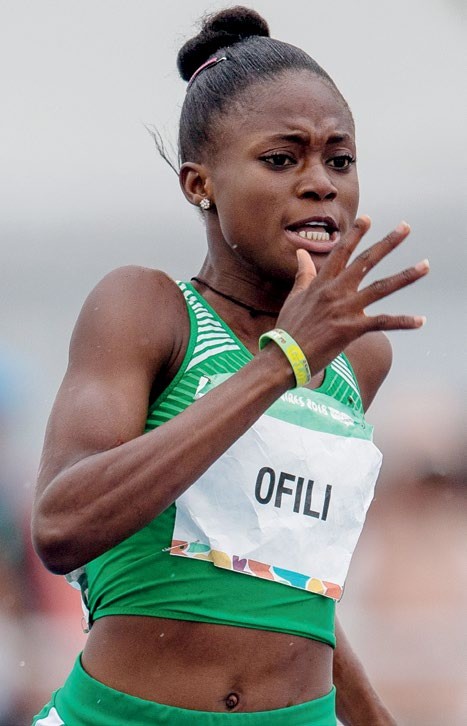
One of the promising male athletes was Chukwuebuka Enekwechi, the 2018 Commonwealth Games silver medalist and reigning African champion in the men’s shot put. He qualified with a personal best throw of 21.80m. Another strong contender for medals was Favour Ofili, the newly minted African 200m champion and Nigerian national record holder. She punched her ticket with a personal best of 22.30s. They all showed promise especially after impressive showing in the previous Championships in Oregon and the Commonwealth Games in Birmingham. It was easy to see why, on paper, Nigeria’s contingent looked poised to challenge for medals and uplift the country’s athletic pride on the global stage.
However, the reality in Budapest would prove far grimmer. When the starting guns fired in Budapest, Nigeria’s athletes faced world-class fields and cutthroat competition, especially from powerhouses like the United States, Jamaica, Kenya, Ethiopia, and China across the sprints, distances, jumps, and throws. Still, mere competition itself could not wholly explain the underperformance. Lacklustre preparations, insufficient funding, inadequate training facilities, and ongoing administrative dysfunction within Nigerian athletics and the entire sporting sphere, also clearly contributed to the contingent’s struggles.
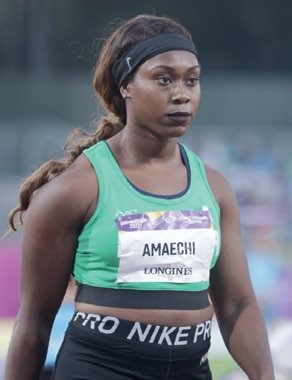
In the end, only two Nigerian athletes managed to reach event finals in Budapest. Enekwechi finished 7th in the qualification round with a mark of 20.68m. Nigeria’s 4×400 Metres Relay Men’s team finished 7th in the heats with a time of 3:14.38 and could not progress beyond the heat. Favour Oghene Tejiri Ashe, competing in the 100m, was disqualified in the heats. In the Discus Throw event, Obiageri Pamela Amaechi finished 18th in the qualification round with a mark of 51.60m. Imaobong Nse Uko, in the 400m event, finished 6th in the heats with a time of 52.24. Similarly, Dubem Nwachukwu finished 6th in the heats of the 400m with a time of 45.60. In the men’s 400m event, Ezekiel Nathaniel finished 4th in the heats with a time of 48.47 and finished 6th in the semi-final with a time of 49.22.
Rosemary Chukwuma competed in the 100m and finished 4th in the heats with a time of 11.24 and finished 8th in the semi-final with a time of 11.26. In the same event, Seye Ogunlewe finished 5th in the semi-final with a time of 10.12. Brume, a favourite for a podium finish in the Long Jump, disappointedly finished 4th in the final with a mark of 6.84m. The most dismaying finish came from Amusan in the 100m Hurdles. She had finished 1st in the heats with a time of 12.48, 1st in the semi-final with a time of 12.56 to raise hopes of defending her gold medal and her championship lead. However, she could only manage a 6th place finish in the final with a time of 12.62.
Other disappointing finishes included Favour Ofili in the 200m. She finished 4th in the heats with a time of 22.66 but finished 7th in the semi-final with a time of 22.86. Alaba Olukunle Akintola, in the 200m, finished 3rd in the heats with a time of 20.54 and 7th in the semi-final with a time of 20.75. In the Hammer Throw event, Oyesade Olatoye finished 15th in the qualification round with a mark of 66.92m. There were further forgettable performances in the relay events for both the male and female athletes. The Men’s Relay Team for the 4x100m race finished fifth in the hea Olympics with a time of 38.20. Meanwhile, the Women’s Relay Team in the 4x100m Relay did not finish their heat. The Nigerian women’s 4x400m relay team competed in the heats with their season’s best time being 3:21.04. Unfortunately, they also did not make it to the final.
The subpar performance of Nigeria’s team in Budapest represented a striking contrast to more fruitful outings at past World Athletics Championship in Oregon and the Commonwealth Games where the country contended favourably for medals and even in the Olympics, though gold medals proved elusive except in the weightlifting events of the Paralympics.
To reverse fortunes and restore Nigeria’s prestige in global athletics, structural and systemic changes are clearly needed across multiple facets of the track and field ecosystem. In the first place, government and corporate support for athletics must increase to elevate training conditions and access to facilities, equipment, coaching, and sport science. Again, oversight must improve to ensure accountability and prevent mismanagement or misappropriation of resources earmarked for athletics programs and athlete development.
Furthermore, all lingering leadership crises, dysfunction, and allegations of corruption that have plagued the Athletic Federation of Nigeria (AFN) need to be a thing of the past so that focus can fully be on returning Nigeria to a place of pride in athletics on the continent and beyond. New steady governance is required to right the ship. The AFN must rebuild relationships with athletes, coaches, officials, sponsors, and fans damaged by past instances of instability.
More high-level domestic and regional competitions are also required to continually test Nigeria’s up-and-coming talents against quality fields. The AFN should leverage partnerships with developmental organisations like World Athletics and the Confederation of African Athletics to make this happen. Nigerian athletes also have to maintain training discipline, physical conditioning, and mental focus while avoiding outside distractions, including doping allegations. Furthermore, coaches and support staff must construct training regimens tailored to peak at major Championships as other countries do.
About allegations of doping, while there have been improvements since the embarrassments at the Olympics in Japan, where 10 athletes had to protest on the streets after the AIU stopped them from competing due to failing to meet required out of competition tests, there are still issues, especially in relation to Amusan. Indeed, the AIU’s withdrawn doping charges against Amusan may have undermined her mental state in Budapest. Though allegations were dismissed and should not cloud her reputation, the ordeal likely took a toll.
Nigeria needs to strengthen anti-doping education for its athletes and reinforce a culture of clean, ethical competition. While a constellation of factors contributed to Nigeria’s Budapest struggles, reversing the tidal wave of underperformance ultimately requires long-term systemic change rather than quick fixes. With visionary leadership, strategic investments, and dogged perseverance from all stakeholders, Nigerian athletics can regain its mantle as Africa’s sprinting powerhouse.
Of all Nigeria’s setbacks in Budapest, none was more shocking than the 6th place finish by world #2-ranked Tobi Amusan in the 100m hurdles final. Amusan was widely expected to challenge for gold but instead stumbled to the rear of the field.
After cruising through preliminary heats, Amusan uncharacteristically lacked her usual superior technique and blazing speed between barriers. Her time of 12.62s was well short of her personal best 12.40s and pre-championship form. Amusan’s disappointing result is undoubtedly multidimensional, with physiological and mental factors in play. In the wake of her Budapest heartbreak, the most important thing is that Amusan, her coaches, the AFN, and all Nigerian athletics stakeholders rally in support of the 25-year-old hurdling sensation. She remains a phenomenal world-class talent more than capable of captivating crowds and winning global medals for years to come. With ample rest and rejuvenation, Amusan can return even stronger and determined to validate her credentials as the best 100m hurdler on the planet.

Jude Obafemi is a versatile senior Correspondent at THEWILL Newspapers, excelling in sourcing, researching, and delivering sports news stories for both print and digital publications.