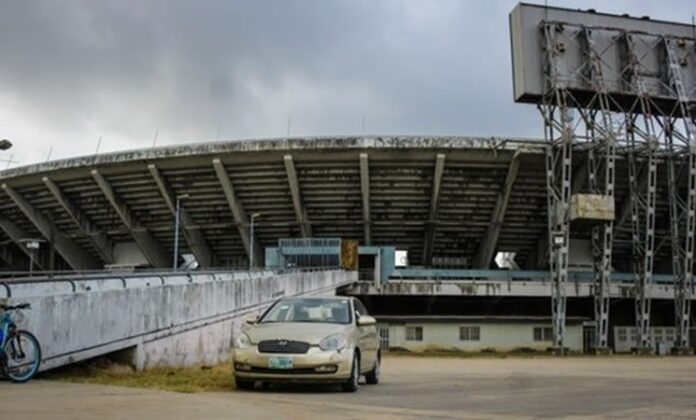
February 02, (THEWILL) – The National Sports Commission (NSC) is launching a comprehensive transformation of Nigeria’s sports facilities, targeting the revival of iconic stadiums nationwide through innovative public-private partnerships. Chairman of the Commission Shehu Dikko outlined an ambitious plan to rehabilitate key sports infrastructure, beginning with the National Stadium in Surulere, Lagos.
The facility, which has languished in disrepair for decades, represents the first step in a national strategy to modernise sporting venues across the country. According to Dikko, the initiative aligns with President Bola Tinubu’s Renewed Hope Agenda, with a vision to establish sports as a critical economic driver. The NSC aims to generate approximately three million jobs and contribute three percent to the national Gross Domestic Product through strategic infrastructure development.
Dikko highlighted the critical nature of the project, noting the devastating state of sports facilities that were once national symbols of achievement. Currently Nigeria boasts only one stadium meeting FIFA standards, but the NSC plans to develop at least six functional and FIFA-approved stadiums across the nation.

The rehabilitation strategy focuses on multiple stadiums across Nigeria. Key facilities earmarked for transformation include the Ahmadu Bello Stadium in Kaduna, Tafawa Balewa Stadium in Bauchi, Obafemi Awolowo Stadium in Ibadan, and the Nnamdi Azikiwe Stadium in Enugu. The MKO Abiola Stadium in Abuja stands as a priority for the 2025 fiscal year, with plans for a comprehensive overhaul of its main bowl.
Financial commitment demonstrates the government’s serious approach to sports infrastructure. The sports sector budget has dramatically increased from N29 billion in 2024 to over N94 billion in 2025, representing a 227 percent increase. This substantial funding will support not only stadium renovations but also the construction of about 100 mini-stadiums to boost grassroots sports development.
The public-private partnership model represents a strategic approach to overcome historical challenges of infrastructure maintenance.
Dikko emphasised the need to create comprehensive sporting complexes that operate beyond traditional stadium functions. The vision includes integrating hotels, restaurants, parks, and other revenue-generating amenities to ensure financial sustainability.
Philanthropist Kessington Adebutu has already demonstrated the potential of such collaborative efforts. Under a previous “Adopt-a-Facility” initiative, he supported the restoration of the pitch, tracks, and scoreboard at the National Stadium, maintaining some level of functionality during periods of neglect.
The NSC plans to leverage over 2,500 hectares of land across the country to attract private sector investment. The ultimate goal is to develop stadiums that can host international tournaments with minimal preparation time. This approach goes beyond previous stadium constructions that focused solely on basic sporting infrastructure.
Stakeholders have expressed optimism about the initiative. The House Committee on Sports Chairman, Kabiru Amadu, has urged careful management of allocated funds, hoping the increased budget will address long-standing challenges in sports infrastructure and support the numerous sports federations.
The transformation extends beyond physical infrastructure. The NSC aims to restructure the sports sector framework, beginning with the establishment of the commission and updating the Establishing Act to meet global best practices. This institutional repositioning is crucial to creating a more efficient and responsive sports development ecosystem.
Community impact remains a central consideration. The stadiums are not merely sporting venues but potential economic and social centers that can provide opportunities for youth engagement and local development. By creating multi-purpose facilities, the NSC hopes to generate continuous economic activity and provide positive outlets for young Nigerians.
The economic projections are promising. The initiative targets creating direct, indirect, and induced jobs while positioning sports as a significant contributor to the national economy. This approach recognises sports not just as a recreational activity but as a potential economic powerhouse.
Yet, the challenges remain significant. The NSC must navigate complex bureaucratic processes, mitigate corruption risks, and attract investors in a potentially volatile economic environment. However, Dikko remains confident that transparent processes and clear incentives will overcome these obstacles.
The plan includes specific strategies for each stadium. For instance, the Nnamdi Azikiwe Stadium in Enugu will play a central role in the 2026 National Sports Festival. The MKO Abiola Stadium in Abuja is set for a complete transformation, with plans to collaborate with an international group to create a comprehensive sports city.
Government engagement extends to both federal and state levels. The NSC is working closely with state governments to ensure that all available stadium infrastructure, whether state or federally owned, receives necessary upgrades to advance sports development.
The initiative represents more than infrastructure development. It symbolizes a national commitment to revitalising sports as a critical component of economic and social progress. By transforming neglected stadiums into modern, multi-functional complexes, Nigeria can create sustainable sporting ecosystems that will generate revenue, create jobs, and inspire future generations.
While stadiums across the country prepare for renovation, there is a palpable sense of anticipation. The National Stadium in Lagos, once a symbol of neglect, may soon become a testament to Nigeria’s sporting potential, reflecting the nation’s ambition and determination to excel.
The success of this initiative will depend on continued commitment, strategic planning, and effective collaboration between government, private investors, and local communities. If successful, it could set a precedent for infrastructure development not just in sports, but across various sectors of the Nigerian economy.

Jude Obafemi is a versatile senior Correspondent at THEWILL Newspapers, excelling in sourcing, researching, and delivering sports news stories for both print and digital publications.