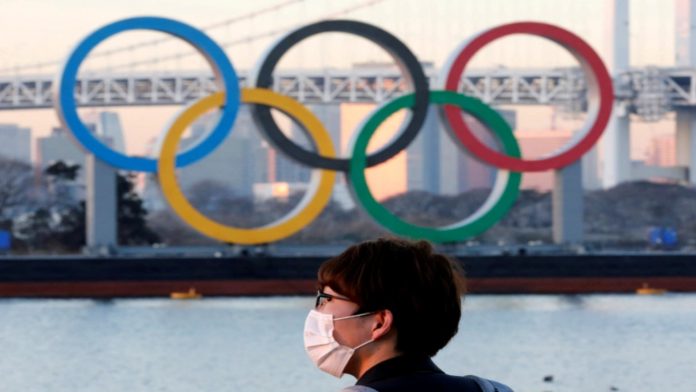
BEVERLY HILLS, May 28, (THEWILL) – The viability of the summer Olympics, scheduled for Japan, has been frequently brought under scrutiny especially because of the COVID-19 situation currently plaguing the Asian nation. However, after pushing the Games back by a year at substantial costs, organisers are not ready to do so again.
Yet, the wisdom of sticking to the timeframe cropped up again after the Japanese government issued an extension of a coronavirus emergency in Tokyo and other parts of the country until just a month before the Olympics on Friday.
Immediately, doubts about whether the Games can go ahead safely were the major theme in the reactions that followed the extension. This time around, organisers are rethinking the decision on whether to allow local fans at the Games but will not reach a determination until the emergency ends on June 20, just weeks before the opening ceremony kicks off.

As THEWILL reported on Tuesday, March 9, overseas fans have already been barred, in an unprecedented decision as organisers battle to convince Japan’s sceptical public that the Games can go ahead and will be safe for the country without undue fears of migrating variants of the virus.
But the internal situation has not improved even if the current outbreak is comparatively smaller. Still, around 12,500 deaths have been recorded in the midst of partial lockdowns. Now, a fourth wave of spiking infection rates has prompted the government to put emergency measures in place in 10 regions including Tokyo.
What these measures do is control public gathering by limiting the sale of alcohol in bars and restaurants and asking them to close early, while encouraging telework and capping audience numbers at events to keep infection rates low and flatten the curve of the wave.
While announcing the measure, Yoshihide Suga, Japanese Prime Minister, said: “The number of new cases has been declining since the middle of the month but the situation continues to be uncertain.”
By implication, the decision places Tokyo and nine other parts of the country under states of emergency until June 20, fuelling fresh doubts about prospects for the pandemic-postponed Olympic Games and placing the organisers in a fresh set of dilemmas.
Seiko Hashimoto, the Tokyo 2020 chief, remained optimistic about the Games, telling the media that the measures were welcomed because “we expect the infection situation to improve” and she acknowledged that a decision on local fans, originally expected in early June, would now not be taken until the end of the month as they continued to observe circumstances.
“Once the state of emergency is lifted, we will assess how many spectators we can allow in,” she said before adding that there could be different rules for indoor and outdoor venues and the decision would be based on government guidelines and COVID-19 health and safety regulations.
What it comes down to is caution as organisers press ahead with arrangements for the Games. They are expecting to receive the first athletes, Australia’s softball team, due to arrive in the coming week. Yet, their confidence has not translated to the populace as opposition in Japan remains strong, with medical experts and business leaders calling for cancellation of the Games.
As recently as Thursday, Naoto Ueyama, chair of a small doctors union, issued a stern and professional warning that going ahead with the Games could produce a “Tokyo Olympic strain” of the coronavirus and urged a cancellation to prevent a “disaster” of unseen proportions.
Haruo Ozaki, head of the larger Tokyo Medical Association with more than 20,000 members, said organisers would have to bar all spectators at a “minimum” to prevent a medical crisis that may compound the situation the medical community was dealing with.
In response, Prime Minister Suga said he was “aware that many are voicing their worries and concerns over the Olympics”. Speaking candidly at a press conference, he said the number of overseas participants would be kept to a minimum and athletes would have no interaction with the Japanese public based on COVID-19 restrictions.
He assured the public that “We’re listening to those voices and preparing for a safe and secure Olympics.”
The organisers have also been involved in calming fears and valid concerns of the population by driving home the message that the Games will be safe and announcing recently that the vast majority of those in the Olympic village will be vaccinated so as to pose no threats to others.
Athletes representing the host country and all Olympic staff are due to start receiving vaccines from next month. They will be allowed to jump the waiting line as Japan’s slow vaccine rollout continues to be a factor. But, Suga was confident that the country was on track to be administering a million doses a day from mid-June, up from around 400,000 a day at the moment on average presently.
Even if that happens, the initial slow pace has been roundly condemned across the country, piling pressure on the PM. Suga was appointed after Shinzo Abe’s resignation last year and will be facing his first election as prime minister in the autumn but things are not looking up for him with the strong dissatisfaction people have of his handling of the pandemic response.

Jude Obafemi is a versatile senior Correspondent at THEWILL Newspapers, excelling in sourcing, researching, and delivering sports news stories for both print and digital publications.