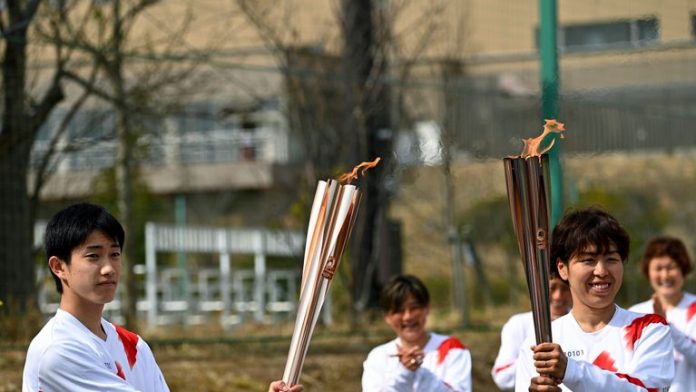
BEVERLY HILLS, March 25, (THEWILL) – The traditional Olympic practice that signals the commencement of the preliminary activities of the Games has taken off in Japan with the beginning of the Tokyo Olympics torch relay on Thursday.
This comes a whole year after the coronavirus pandemic necessitated a costly postponement.
Organisers are hopeful the torch will symbolise a “ray of light” to banish the darkness of the problems caused by the pandemic and bring a ray of hope for the success of the organisation and the safety of the participants.
Ahead of the relay, organisers barred spectators from the departure ceremony and the first leg because of the ongoing concerns around the pandemic.
However, spectators were allowed to line the rest of the route for the 121-day relay. It is expected that the torch bearers will criss-cross Japan as the relay is set to involve 10,000 runners before the torch lights the Olympic cauldron on July 23 as planned by the organisers.
A big part of the relay for the organisers is that they hope it dispels all doubts about holding the Games during a pandemic. This was a very significant consideration for Seiko Hashimoto, the Tokyo 2020 chief, who referred to the the Olympic flame as “a ray of light at the end of the darkness”.
At the relay ceremony at Fukushima’s J-Village sports complex, which was a base for responding to the 2011 Fukushima nuclear disaster, Hashimoto said: “This little flame never lost hope and it waited for this day like a cherry blossom bud just about to bloom,” she told
The first torch-bearer, Azusa Iwashimizu, one of Japan’s 2011 World Cup-winning women’s footballers, carried the rose-gold, cherry blossom-shaped torch, accompanied by former teammates for the first lap. She passed the flame to Fukushima high school student Asato Owada, who wore an official white tracksuit with a red diagonal stripe, like all the other bearers.
Watching the relay progress from the second section were a handful of cheering fans, their compulsory masks on as they stood by.
It was at the point of making plans for the torch relay last year that the virus prompted the unprecedented move to postpone the Games, as sport around the world ground to a halt and flight restrictions came into force with travel bans and lockdowns.
Although a vaccine rollout is ongoing, majority of the Japanese public made their voices heard about not being comfortable with overseas spectators travelling into the country for the Games as infection rates were still uncomfortably regular. The government agreed with the organisers to bar these spectators and may likely limit domestic fans too.
Yet, organisers are hopeful that the relay will offer respite after a difficult year, and convince the public that the Games will go ahead on the postponed schedule.

Jude Obafemi is a versatile senior Correspondent at THEWILL Newspapers, excelling in sourcing, researching, and delivering sports news stories for both print and digital publications.