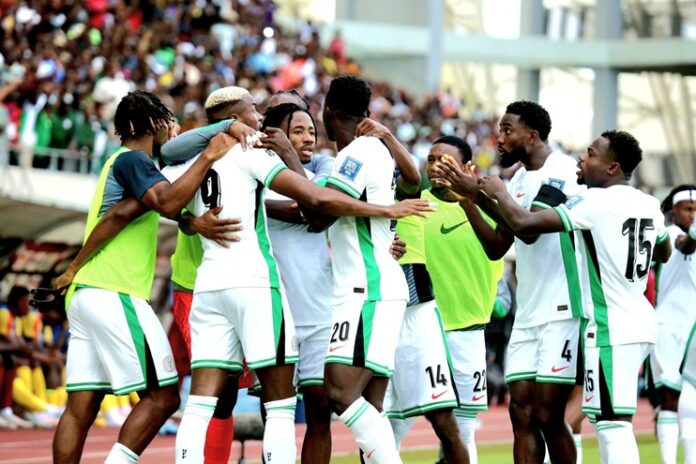
November 09, (THEWILL) — When Nigeria face Gabon at the C.S. Prince Héritier Moulay El Hassan Stadium in Rabat, Morocco on November 13, 2025 far more than three points will be at stake. This single-leg semi-final represents the Super Eagles’ sole remaining pathway to the 2026 FIFA World Cup, a tournament that will unfold across Canada, Mexico and the United States. For a nation that has missed the last two editions of football’s grandest stage, the match carries the weight of redemption, expectation and the future of an entire generation of players.
The encounter, scheduled for 5pm local time, forms part of an unusual four-team mini-tournament organised by the Confederation of African Football. Nigeria’s route to this point has been anything but straightforward. Having finished second in Group C with 15 points from 10 matches, they earned their playoff berth behind South Africa, who claimed the automatic qualification spot with 18 points. The decisive moment arrived on October 14 when Victor Osimhen’s hat-trick powered a 4-0 victory over Benin in Uyo, a performance that illustrated both the attacking potency and defensive solidity the Super Eagles can muster when circumstances demand.
Yet that same group campaign revealed troubling inconsistencies. A 1-1 draw against South Africa and a narrow escape from third place before the final matchday exposed vulnerabilities in maintaining intensity away from home. The Super Eagles scored 16 goals whilst conceding eight, statistics that suggest offensive strength tempered by defensive lapses. These contradictions now come under the sharpest scrutiny, compressed into a format where a single misstep ends all hope.

Gabon’s presence in this playoff represents their own tale of near-misses and persistent ambition. The Panthers finished as runners-up in Group F behind Ivory Coast, accumulating seven wins, one draw and two defeats across their campaign. Their 22 goals scored against nine conceded marked them as one of the strongest second-placed teams, yet they have never graced a World Cup. This represents their closest opportunity, and the knowledge that failure offers no second chances lends their challenge a desperate edge.
The neutral venue in Morocco levels certain advantages whilst introducing fresh complications. Travel to Rabat demands adaptation to cooler November weather and artificial turf, factors that have caught out teams in previous Moroccan-hosted events. More significantly, the decision to stage all matches on neutral ground simplifies logistics ahead of the Africa Cup of Nations in the same country, but it strips Nigeria of the home advantage they typically exploit with considerable effect.
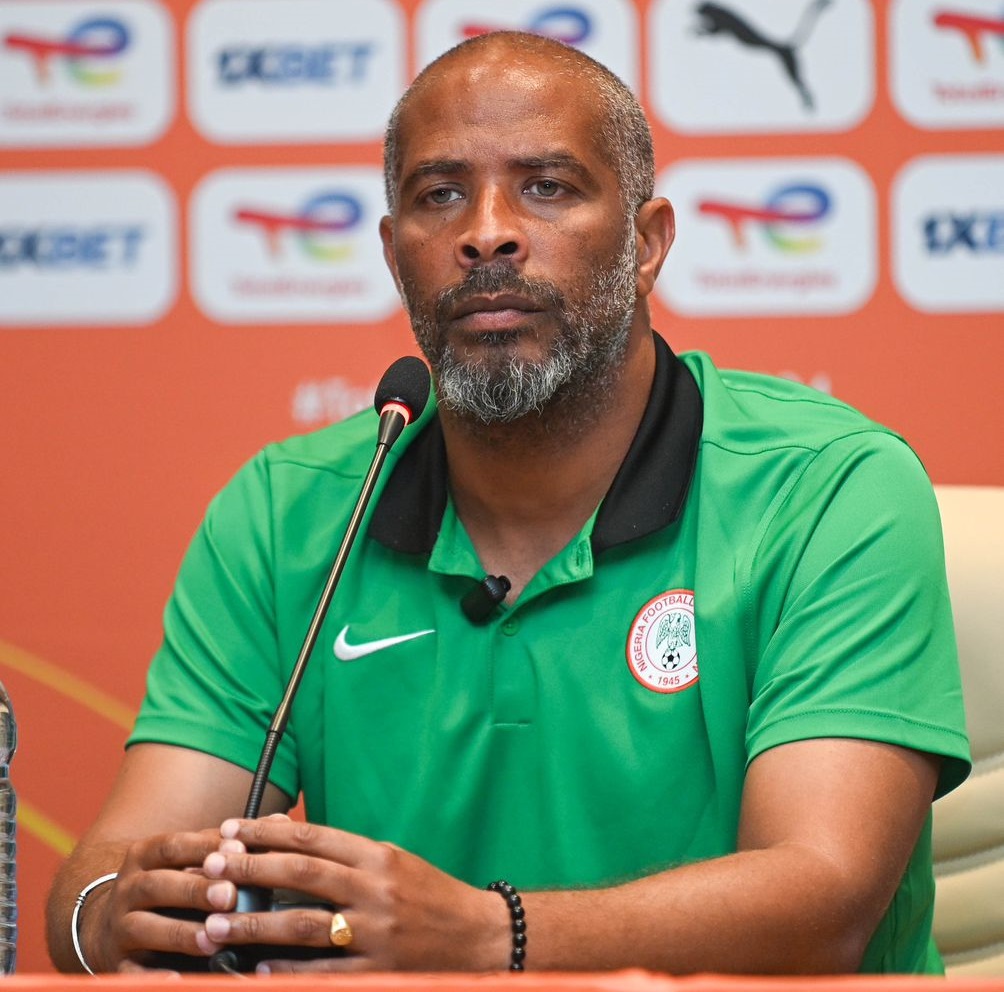
Head coach Éric Sékou Chelle, who assumed control of the Super Eagles in January 2025, has emphasised control of the central areas, defensive structure and building from the back. The Frenchman, who was born in Ivory Coast and holds family ties to Nigeria, has guided the team to four victories, two draws and two defeats in eight matches. His appointment arrived at a moment when Nigeria required steady leadership and a clear plan to recover from earlier disarray. The 4-0 triumph in Uyo provided evidence of a turning point, though whether that represents genuine transformation or merely a flash of excellence remains to be tested.
Chelle favours a 4-3-1-2 formation that emphasises midfield control and quick transitions to forwards. He has integrated younger players alongside veterans, fostering a balance that addresses the chaos of previous management. Squad selection remains pending as of early November, though expectations centre on familiar figures. Osimhen will lead the line after his qualification heroics, supported by Ademola Lookman’s pace and creativity on the wings. Goalkeeper Stanley Nwabali provides stability, whilst Wilfred Ndidi offers defensive cover in midfield. Reports suggest Maduka Okoye may return between the posts for added experience, and Paul Onuachu could feature in attack for his aerial presence.
Gabon’s squad, announced on November 7, comprises 27 players led by captain Pierre-Emerick Aubameyang. At 36, the forward returns after a brief international hiatus, bringing three goals from the qualifiers and a wealth of experience from the highest levels of European football. Denis Bouanga adds pace and creativity from his base at Los Angeles FC, whilst head coach Thierry Mouyouma, appointed in October 2023, prefers a 4-3-3 setup that relies on counter-attacks and wide play. In 20 matches, his record shows 12 wins, four draws and four losses, statistics that suggest competence without dominance.
Mouyouma has publicly stressed mental preparation alongside tactics, and he has confirmed plans to neutralise Osimhen, describing the Nigerian as unpredictable and committing to a collective defensive effort. Gabon’s strength lies in organisation, having conceded relatively few goals in qualifiers, though depth in midfield poses a potential weakness against Nigeria’s press. The Panthers blend experience with youth, with defenders like Bruno Ecuele Manga and Lloyd Palun anchoring the backline whilst midfielders Aaron Boupendza and Johan Obiang provide energy in the middle third.
Historical encounters favour Nigeria, with five wins, three draws and one loss in nine meetings. The sole defeat came in 2014, a 2-0 reverse during Africa Cup of Nations qualifiers that still lingers in memory. More recent clashes include a 1-0 friendly victory for Nigeria in 2018, results that suggest familiarity without guaranteeing outcomes. Gabon enters with momentum from their group stage, and the neutral venue removes any vestiges of psychological advantage Nigeria might otherwise claim.
The tactical battle will likely centre on how Nigeria manage Gabon’s offensive threat, particularly through Aubameyang and Bouanga. Gabon’s attack possesses pace, finishing ability and experience at the highest level. The Nigerian defence must contain those threats whilst retaining offensive potency to avoid being drawn into a purely defensive posture. If Nigeria dominate the centre of the park, they can reduce the risk of rapid Gabon transitions and force the Panthers into longer, slower passages of play. Conversely, if Gabon exploit spaces between Nigeria’s lines, they will create chances on the break and attack the full-backs in wide areas.
Set pieces may prove decisive in a match played on neutral ground, where technical duels and moments of concentration become magnified. Nigeria must win aerial and second-ball battles, especially given that Gabon may seek to disrupt rhythm and strike quickly. Chelle’s approach will focus on possession and high pressing to exploit spaces behind Gabon’s full-backs, with Osimhen’s hold-up play drawing defenders and creating openings for Lookman or Samuel Chukwueze to cut inside. Nigeria averaged 1.6 goals per game in qualifiers, with set pieces contributing 30 per cent of their tallies, though vulnerabilities appeared in transitions where they conceded from counters in three matches.
Mouyouma counters with a compact shape, dropping into a 4-5-1 when out of possession to crowd the midfield. Aubameyang thrives on service from Bouanga, who recorded four assists during qualification, and Gabon’s efficiency on the break saw them score 12 goals from fast moves. They will attempt to limit Nigeria’s crosses, as Osimhen scores 40 per cent of his goals from headers, a statistic that will inform their defensive positioning.
The psychological dimension cannot be overlooked. For Nigeria, failure would extend a six-year World Cup absence, eroding confidence built during three Africa Cup of Nations finals between 2019 and 2024. Success would validate Chelle’s tenure and stabilise the Nigeria Football Federation amid ongoing administrative changes. So far, football fans in the country have expressed cautious optimism on social media, highlighting Osimhen’s form whilst warning of potential upsets. Gabon’s motivation stems from Aubameyang’s final international push, and qualification would mark a milestone for a nation with limited global exposure.
Broader implications extend well beyond the pitch. Qualification would position Nigeria among Africa’s elite for 2026, potentially drawing investment in infrastructure and youth development. The expanded tournament offers more slots, yet competition intensifies with powerhouses like Senegal and Morocco already through. A loss for Gabon would halt progress under Mouyouma, who has rebuilt after a poor 2022 campaign, whilst the playoff’s timing, just before the Africa Cup of Nations, tests squad rotation and recovery for both sides.
The winner of this semi-final will advance to face either Cameroon or the Democratic Republic of Congo in the final on 16 November, also in Morocco. The format is brutal in its simplicity and unforgiving in its execution. There is no return leg, no margin for slip-ups, and no time to recover from early errors. Nigeria must stay mentally sharp, avoid early concessions and maintain composure even if the match becomes tight, all whilst preparing for the possibility of another high-intensity fixture just three days later.
When the referee’s whistle sounds in Rabat, it will mark the beginning of a contest where fine margins decide futures. For Nigeria, this is the climb rather than the direct flight, the consequence of finishing second rather than first. For Gabon, it represents the opportunity to break new ground and announce themselves on the global stage. The Rabat showdown tests preparation, unity and execution under the brightest spotlight, and observers across the continent will watch to see which team possesses the clarity of purpose, discipline in structure and mental fortitude required to seize their last chance at World Cup glory.

Jude Obafemi is a versatile senior Correspondent at THEWILL Newspapers, excelling in sourcing, researching, and delivering sports news stories for both print and digital publications.