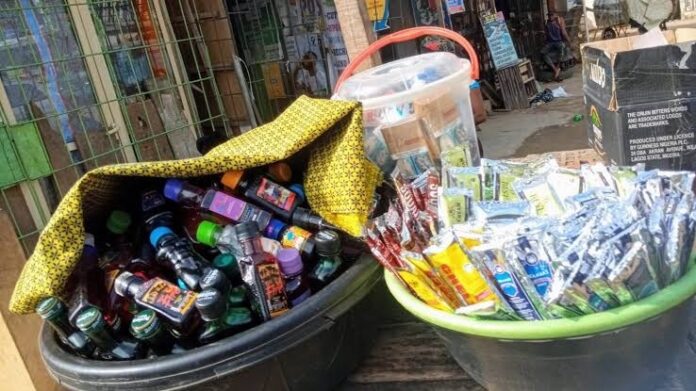
November 24, (THEWILL) — Nigeria’s planned ban on sachet and small-volume (under 200 ml) alcoholic drinks, scheduled to be enforced by December 2025, is triggering sharp warnings from business analysts, who predict a liquidity crisis for manufacturers in the alcoholic beverages sector.
The National Agency for Food and Drug Administration and Control (NAFDAC) is set to fully enforce the prohibition after the Senate directed that the phase-out begin without further extensions. The ban stems from a 2018 Memorandum of Understanding involving NAFDAC, the Federal Ministry of Health, and other agencies, which aimed to eliminate high-strength alcohol in sachets and small PET bottles.
The Manufacturers Association of Nigeria (MAN) has raised the alarm, warning that the ban could wipe out as much as N1.9 trillion in investment and jeopardise over 500,000 direct jobs plus 5 million indirect jobs in the value chain.

Its Director-General, Segun Ajayi-Kadir, criticised the move as economically dangerous, arguing that a regulated approach, not a blanket ban, would have preserved both public health and business interests.
The Food, Beverage and Tobacco Senior Staff Association (FOBTOB) echoed these concerns. The union warned that enforcing the ban could lead to factory closures and massive job losses, estimating that nearly N2 trillion of investments and more than 500,000 direct workers are at risk.
Economists point out that many alcohol producers rely on sachet formats because they cater to low-income consumers and generate high volume. The ban could force manufacturers to absorb unsold inventory, retool their production lines, and face steep drops in demand, all of which will hit cash flow hard.
Dr Muda Yusuf, CEO of the Centre for the Promotion of Private Enterprise, described the ban as a “mixed bag”: while he acknowledges public health justifications, he warns that removing sachet products could significantly depress demand and destabilise business operations.
Public health advocates, including the Coalition for Healthy Food Advocacy and other health networks support the ban, arguing that sachet alcohol is too cheap and accessible, especially to minors, and contributes to social and health risks. They say the long-term social benefits justify the move.
As December approaches, manufacturers must scramble to adapt. Some may shift to larger packaging formats, restructure business models, or exit segments completely. For many, the immediate worry is how to maintain liquidity and meet payroll during the transition.
Without intervention or financial support, the manufacturing sector may see significant disruption putting both jobs and capital at real risk.

Ogochukwu Onwaeze