March 06, (THEWILL) – The sporting world responded overwhelmingly to the global calls for sanctions against Russia, Russian interests and entities after President Vladimir Putin rejected a diplomatic solution to its conflict with neighbouring Ukraine and on Thursday, February 24, ordered a military invasion of the former constituent of the Union of Soviet Socialist Republics (USSR).
That invasion, the first open declaration of war across Europe, apart from the wars in the Balkans, was met by open and direct pushback from every side. The United States, European Union (EU) nations, Japan, and South Korea introduced new financial sanctions over the last weekend, which caused the Russian ruble to fall to a record low and the Russia’s Central Bank to double interest rates.
For the first time too, the EU agreed to arm a third-party country to help Ukraine stave off the impact of a full-blown Russian attack. The sporting world decidedly got involved and has systematically and effectively done much to contribute to the pressure on Russia as the consequences of war are laid bare.

It all began before the threats escalated to a full-scale invasion by Russia’s ground and air forces. With a worsening situation between Ukraine and Russia on the horizon, the Union of European Football Associations (UEFA) began to consider striking out St. Petersburg as the site of the season’s UEFA Champions League final. The schedule for Europe’s most prestigious club championship had the final set to take place on May 28 in Russia’s second-largest city.
Before February 28, UEFA was already under mounting pressure to change the location after Putin revealed his plan to send soldiers into Ukraine’s eastern Donbas region. UEFA officials began backup options while it continued to “constantly and closely” monitor the situation. When the attacks began on Thursday, pressure was brought to bear on UEFA to effect the change of venue and the Executive Committee, led by President Aleksander Ceferin, convened a meeting for the next day to address their reaction to Russia’s invasion. Simultaneously, FIFA also faced requests to exclude Russia from the World Cup qualifying play-offs, which were set to take place at the end of March and will pit Russia against Poland.
While continental and world bodies dithered, individuals and clubs were leading the way. First, a number of F1 race drivers, such as Sebastian Vettel and Max Verstappen, urged that Russia should be banned from the Formula One calendar. Vettel stated that if the Russian Grand Prix in Sochi was held as scheduled on September 25, he would not compete. At pre-season testing in Barcelona, Vettel did not mince words: “My own opinion is I should not go. I will not go. It’s wrong to race in the country. I’m sorry for the people, innocent people who are losing their lives, getting killed for stupid reasons.”
Also reacting, F1 World Champion Verstappen said, “When a country is at war, it is not right to race there.”
German football club, Schalke 04 also was among the first to demonstrate exemplary resolve and action when they decided that the Gazprom logo would be removed from their shirts. Gazprom is the Russian majority state-owned multinational energy corporation, which has been a sponsor of FC Schalke 04, one of the most popular Bundesliga teams, since 2007. With the partnership, the Gazprom emblem was emblazoned on the sporting clothing of the club.
Following intensified military activity against Ukrainian forces by Russia, UEFA’s emergency meeting on the Friday that followed confirmed the decision to change the venue of the UCL Final, which was scheduled to take place on May 28 at the Gazprom Arena, to Paris, with the Stade de France designated as the new venue. Alternative cities such as London, Munich, and Istanbul were considered before Paris was chosen.
UEFA also decided that no European competition games will be played in Russia or Ukraine, with teams from both countries compelled to play their home games at neutral grounds. FIFA was yet to act but countries were piling pressure on the body. In a joint statement after the invasion, Poland, Sweden and the Czech Republic demanded that FIFA transfer play-off games out of Russia and calls for an outright ban of the country from any participation in international football began to grow.
Taking a cue from Schalke, Manchester United terminated their sponsorship agreement with Aeroflot, a Russian airline that same Friday. United and Aeroflot have been partners since 2013, when United became one of the club’s global partners. The contract was extended in 2017 and the value of the contract was in the range of £30 million. The Red Devils were going to take a different carrier to and from their Champions League Round of 16 first-leg encounter against Atletico Madrid. It was still Friday when Formula One released a statement that effectively cancelled the race in Russia for this year. The September 25 race was set to take place for the final time at the Sochi Autodrom this year before returning to its roots in Saint Petersburg in 2023. That was no longer happening with the FIA completely striking it off the calendar. By evening on Friday, the International Olympic Committee (IOC) was mulling the idea of pulling all of its events away from Russia and Belarus had found itself mired in the pressure sports was bringing to bear on Russia. This was because Belarus, a Russian ally, allowed Russia use the country as a launching pad for its assault on Ukraine over its borders.
By Saturday, the conflict in the East of Europe came with consequences to knock on the doors of English football when Chelsea FC manager, Thomas Tuchel, confessed that calls in the British Parliament for penalties against club owner, Roman Abramovich, had admittedly produced “many uncertainties” at the club. The German gaffer was preparing his side for Sunday’s Carabao Cup final against Liverpool at Wembley, where he was hoping to win his third trophy of the year, after winning the Champions League and Club World Cup, but the first domestic title of his time at the London club.
Tuchel agreed that increased scrutiny on Abramovich, who had owned Chelsea since 2003, was “worrying” and “distracting” for his players. It was the first sign of a developing series of events that will lead to monumental changes at Stamford Bridge. The ramifications of the impact of Russia’s invasion within the sporting world were reverberating across borders and were affecting those with Russian passports, whether they favoured the invasion or not. Abramovich, whose ties extended to the corridors of power in Moscow, was already feeling the heat in the UK, with the noose of sanctions and asset seizures loosely hanging around his neck.
Calls for FIFA to add their weight to global actions against Russia continued with the current Best FIFA Men’s Player for 2021, Robert Lewandowski supporting Cezary Kulesza, the president of the Polish Football Association, in the country’s decision not play Russia in their qualifying match for the Qatar 2022 FIFA World Cup as scheduled on March 24. FIFA was considering the disruptions to the schedules and the determination of countries to stick to their decisions to avoid Russia when news broke that Abramovich had ceded control of Chelsea to the club’s Trustee Foundation in a calculated move to avoid those uncertainties that Tuchel pointed out from adversely affecting performance and results, while ensuring that any sanctions on his person will not tell on his investments in the club. In the immediate aftermath of the handover, there were some sports investors and private equity firms, including those from the United States, that quickly started to put up proposals for a potential buy out but the club’s stance, at the time, was that Abramovich had no intention of selling.
Amidst the blanket bans on Russia, her athletes and her entities, there was also a case of a personal ban against Putin himself. It came from the International Judo Federation (IJF), which suspended Putin’s title as its Honorary President and Ambassador. In 2008, the worldwide governing body had bestowed the Honorary President title on the Russian President, who is a judo black belt. A consummate judoka, Putin had received the eighth dan from the IJF in 2012, making him the first Russian to do so. Going beyond the personal ban, the European Judo Union cancelled competitions in Tula and Orenburg.
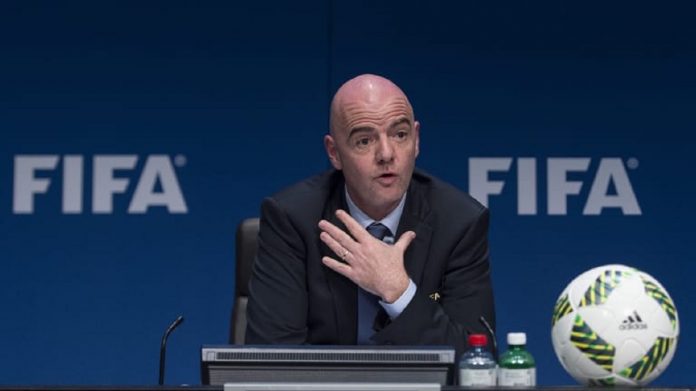
On Sunday, FIFA rose from a meeting of its Council’s Bureau, which includes the presidents of the six regional football confederations, convened to decide a way out and backed down from an instant expulsion of Russia from World Cup qualification, while acknowledging that it was still a possibility. Instead, it decided to allow Russia compete under the “RFU” name of its football federation, the Russian Football Union even though the Russian flag and anthem could not be connected with the RFU. However, the Czech Republic had joined Poland and Sweden in refusing to play Russia. This swell of countries wanting nothing to do with Russia included English whose Football Association stated that its national teams will refuse to play Russia for the “foreseeable future.” These countries were at the forefront of chastising FIFA’s decision, with the consensual position being that it was unacceptable.
However, by Monday after the IOC called on sporting groups to disqualify Russian competitors from international competitions, and the weight of global pressure on FIFA, the football body changed its decision and completely banned Russian teams from competing in all FIFA or UEFA events until further notice. UEFA went further to also end its relationship with Gazprom, the Russian state-owned energy giant that was a major sponsor of the Champions League. The gas company was at the heart of European football and has long-standing economic ties with UEFA. It stated last summer that its sponsorship agreement with UEFA would be expanded to cover the European Championship, as well as the Champions and Europa Leagues. It also owns the naming rights to the Gazprom Arena, where the final is scheduled to take place.
On Tuesday, tennis players of Russian and Belarusian origins were suspended from competing in the Davis Cup and Billie Jean King Cup, although they will be able to compete on the ATP and WTA tournaments as individuals. By Wednesday, video Game developer EA Sports had initiated plans to have the Russian national team and all Russian clubs removed from FIFA 22, FIFA Mobile, and FIFA Online games. Outside of football, the National Hockey League (NHL) is one of the numerous leagues that have suspended business relationships with Russia. But, in a FIFA-esque move, the International Paralympic Committee (IPC) first cleared Russian and Belarussian paralympic competitors to compete as neutrals at the Beijing Paralympic Winter Games before the weight of pressure forced them to make a complete U-turn and barred them as well.

Jude Obafemi is a versatile senior Correspondent at THEWILL Newspapers, excelling in sourcing, researching, and delivering sports news stories for both print and digital publications.