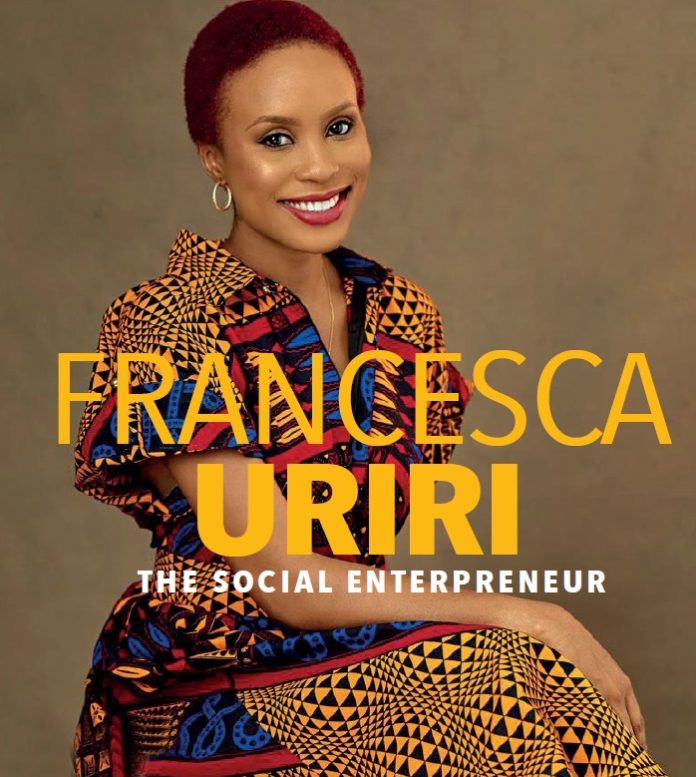
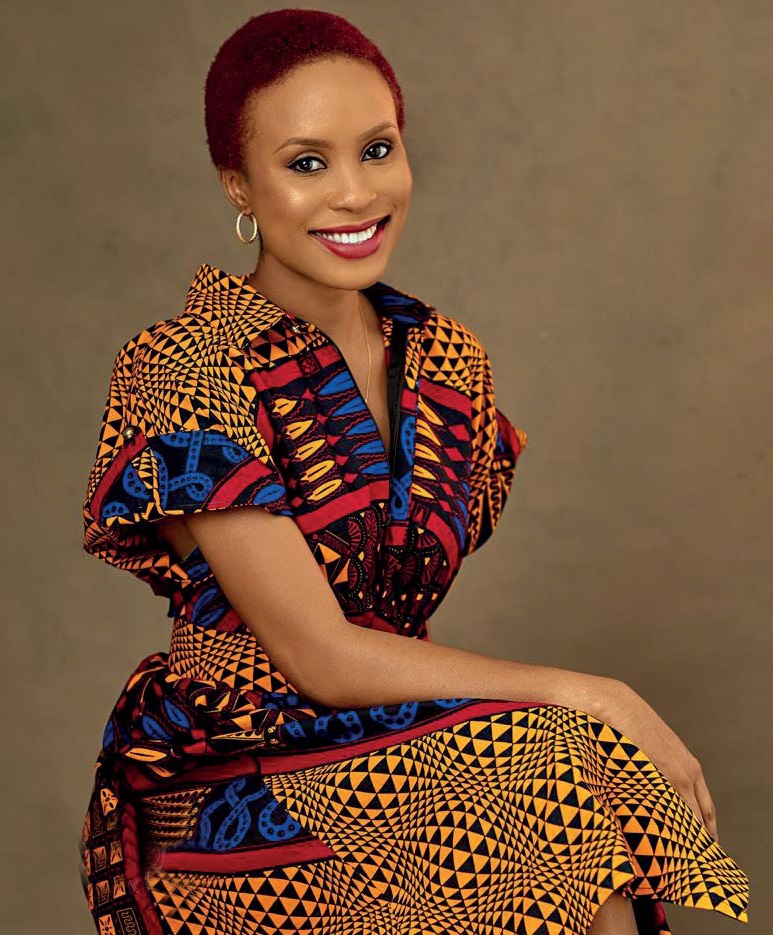
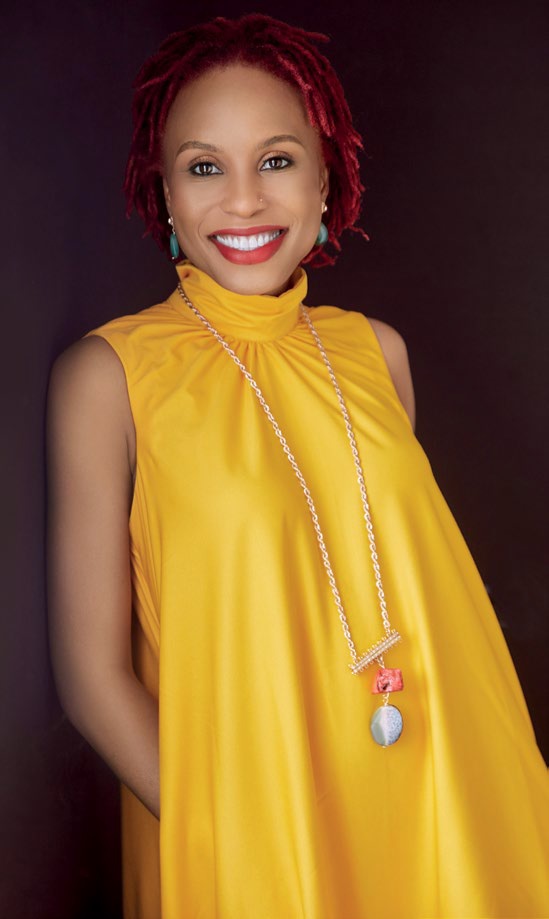
Francesca Uriri, wears many feathers on her cap. She is a Nigerian social entrepreneur, public relations expert, author and founder of a non-profit organisation, Leading Ladies Africa, which aims at providing skills to African women necessary for their success and promoting gender inclusion. In commemoration of the International Women’s Day, she speaks with SHADE WESLEY-METIBOGUN about her passion for the girl child, Leading Ladies Africa and sundry issues. Excerpts:
What inspired Leading Ladies Africa and how has the journey been?

Leading Ladies Africa was founded with the primary aim of creating a platform that amplifies and celebrates the achievements of African women and women of African descent, as a means of inspiring a new generation of African female leaders and change makers. Our work includes pushing for gender parity and equality by building a community that includes diverse African women who thrive in the areas of business, career and leadership. It has been an incredible journey, one that has connected me with amazing women from all over the world and given expression to some of the things that deeply move and inspire me.
What challenges have you encountered so far in the course of running Leading Ladies of Africa? What have you achieved?
Although we are a non-profit organisation, we face the typical challenges that entrepreneurs face in running businesses sustainably, human capital development, scaling up and delivering sustainable programmes, knowing when to pivot and shift focus, etc. However, in terms of achievement, I would say that we have covered a lot of ground and gained a lot of momentum. For example, Leading Ladies Africa has disbursed $40,000 in business funding and scholarship since its inception. Through our Enterprise and Leadership Programme (ELP), 5000 female entrepreneurs have received direct training, coaching and funding for their businesses.
LLA has collaborated with organisations like the Coca-Cola Foundation, Union Bank of Nigeria, and the China Europe International Business School for training during this programme. 500 career women have received coaching and training and have been paired with mentors to strengthen their workplace efficiency and effectiveness.
LLA partnered with FBN Quest on past cohorts of this programme. 500 girls from underserved communities have received leadership and education training, school kits as well as mentorship opportunities, to ensure that they are able to reach their highest potential in life. Through community engagement programs, targeted storytelling, webinars, online sessions and leadership circles, LLA reaches an average of 500k women and girls every month.
LLA is driving some of the most important and urgent conversations that seek to address key issues and challenges that African women and girls currently face. We’ve really made a lot of progress and I’m hopeful that we’ll continue to do so with a right mix of programmatic and content initiatives.
If you are asked to choose between writing, public relations, advocacy or women empowerment, which one will it be and why?
I don’t have a favourite, as these are all different parts of my life that I express differently. More importantly, they all feed into my life’s purpose of being a light in my career, to my family and loved ones, and to the community of women and girls that I serve.
You moved to Silicon Valley a couple of years ago, how has the journey been?
So far, so good. It’s been an extremely rewarding journey, but not without some challenges, of course. I would say that it has stretched me in the most meaningful and impactful ways, both professionally as well as personally.
What are some of the things you cherish as a career woman?
There are many standout moments I’ve had in my over 16-year career. However one of the major things is the opportunity for growth and expansion. I’ve had the opportunity to work in different sectors as a Corporate Communications and Public Relations Professional. Sectors like Oil and Gas, Consulting, Social Impact, Private Equity, and now Technology. These opportunities have given me room to learn something different each time. And I really like that because they shape me, not only as a career professional, but also as a human being.
From your perspective, what kind of challenges are women likely to battle in their career?
There are so many challenges. One is discrimination and bias. Some individuals still erroneously believe that women are “less than,” and so our impact and opinions are still not valued as they should. We’re seeing some changes, but, in my opinion, they are coming too slowly. There is also a wage gap. Why do women who work the same jobs as their male counterparts earn less? Then as a black woman, the obstacles are even more, as you add some of what I’ve mentioned and then include micro aggressions and all the systematic challenges that get in the way of black women getting ahead in the workplace. The data is there, and instead of just pointing out the challenges, it’s important that organisations and individuals begin to do more intentional work of creating sustainable solutions. Like you’ve said, this is from my perspective, and from purely anecdotal accounts from those I’ve encountered. But I believe they are still valid, nonetheless.
How can discrimination against the female gender be addressed in the work place?
Discrimination in the workplace is often systematic, which means that even if individuals are the ones committing these discriminatory acts, there is a system that allows them to do so. So, organisations must work more closely together with their HR and Employee Relations teams to institute practices that deter, and punish (where applicable), these acts of discrimination. It’s not enough to do training or put-up cute posters, there has to be deep reaching systematic work to ensure that bias is completely eradicated from the workplace.
Some women have complained about sexual harassment in the workplace. What do you think can be put in place to address this problem?
It is what I said above. Individuals are perpetrators, but they are only able to thrive and get away with it because the system allows it. So organisations must put in place the necessary frameworks that encourage reporting or flagging of some of these occurrences, and then follow through by punishing those who commit these harmful practices.
What are your best and worst career decisions as a woman?
I don’t look at my career in terms of best and worst. Everything is either an opportunity to grow, or an opportunity to learn. Or both. I’ve found that even in the most challenging and difficult moments of my career which I have had a few, there was something to learn there. And that really is the spirit, to always be learning and open to learning and growing.
Some women believe their gender is their greatest enemy, especially in the workplace. They don’t believe in the phrase ‘women supporting women’. What is your opinion about that?
I think that the more we ask this question, the more we perpetuate what I honestly believe is a myth. First of all, a woman in the workplace shouldn’t support you just because you’re a woman. She should support you because you have potentials, bring value to the table and are open to constructive growth and feedback. Once you have these elements, it really becomes easier to get the support that you need to grow and advance in your career.
How best do you think women can position themselves for leadership roles?
I think it was Oprah who said ‘Opportunity meets preparation.’ So if you want to be in leadership positions, you must be prepared to get into those positions. Be competent, capable, skilled and focused and do all of this consistently, so that when the opportunity comes up, you’re more than ready for it. Also, service is an important element in leadership. To lead, you must know how to serve, to be in service to your organization or team’s vision, to decenter yourself and to focus on the goals ahead.
March is generally known all over the world as International Women’s Day. Any plan by Leading Ladies Africa to reach out to women?
March is our favorite month at Leading Ladies Africa, because we have a few activations that celebrate and highlight the impact and achievements of women. Specifically, we’ll be publishing the annual #100 Most Inspiring Women in Nigeria list, which we’ve done every year for the past 9 years. We’ll also be hosting an IG Live session with some of Nigerians leading female entrepreneurs, talking about how to build and scale sustainable businesses. And then in April, we follow that up with our Leadership by Design Summit, which supports our goal of championing inclusion and diversity for African women and women of African descent. So lots of initiatives all around.
What advice do you have for women as the world marks International Women’s Day?
Don’t ever underestimate the value and impact you bring to this world. And be kind to yourself. Always.
How was growing up?
My father was in the Nigerian Navy, so I grew up in a very diverse, multicultural context with people from different tribes, religions and even races. That has impacted and shaped a lot of who I am today, as I’m incredibly curious, constantly open to learning about new experiences, people, ideas, places and culture, and understand that there isn’t a singular worldview to anything.
What are the values instilled in you that have shaped who you are today?
My parents raised my brother and I to speak our minds respectfully and with candor, not to be afraid to question things that we don’t understand. My father in particular raised me to be confident, curious and bold enough to stand up for what I believe in, even if the crowd was not in agreement. That has shaped the way I see the world and how I navigate through life. I’m not afraid to question or challenge stereotypes, and I’m never interested in following the crowd or doing what everybody else is doing.