June 30, (THEWILL) — The Mobolaji Johnson Arena in Lagos hummed with anticipation on the evening of June 28, as two clubs prepared to contest their first-ever President Federation Cup final. What unfolded over the next few hours would etch itself permanently into Nigerian football folklore, as Kwara United finally claimed the trophy that had eluded clubs from their state for nearly half a century.
The Afonja Warriors entered the final carrying the weight of history and expectation. Founded in 1997, Kwara United had endured 28 years without major silverware, their supporters watching patiently as other clubs celebrated whilst they remained empty-handed. More significantly, no team from Kwara State had lifted the Federation Cup since the state’s creation in 1967, a drought that stretched back 49 years and included Alyufsalam Rocks’ defeat to Enugu Rangers in the 1976 final.
Across the pitch stood Abakaliki FC, recently relegated to the Nationwide League One but carrying themselves with the confidence of giant-killers. Their journey to Lagos had been extraordinary, dismantling established Premier League sides including Enyimba FC, Nasarawa United, Katsina United, and Ikorodu City, often through penalty shootouts that demonstrated their nerve under pressure. Less than a year old as a club, they had already captured the imagination of Nigerian football by reaching the final.

The match itself reflected the cautious respect both teams held for each other. Kwara United, marshalled by captain Abdulafeez Musa and guided by coach Tunde Sanni, approached the game with tactical discipline. Sanni, a former club captain who had stepped into management with the explicit goal of delivering the trophy he never won as a player, had spent weeks preparing his squad mentally for this moment. His emphasis on composure and preparation would prove crucial as the evening progressed.
Early exchanges suggested an open contest might develop. Abakaliki, despite their lower league status, showed no signs of intimidation. Okoro Chukwudi tested Kwara United’s defence with intelligent movement, whilst his teammates pressed high up the pitch, refusing to sit back and absorb pressure. The Ebonyi State side’s approach reflected the fearless attitude that had carried them past more fancied opponents throughout their remarkable cup run.
Kwara United responded with their own moments of quality. Junior Aimufua struck the upright during the first half, a moment that seemed to symbolise their decades of near misses. The ball cannoned off the woodwork and away, leaving supporters wondering whether this would be another evening of frustration. In midfield, Afeez Nosiru orchestrated play with calm authority, whilst Wasiu Alalade’s movement caused constant problems for the Abakaliki defence.
The second half brought its own drama. Alalade thought he had broken the deadlock in the 57th minute, wheeling away in celebration only to see the assistant referee’s flag raised for offside. The goal was correctly disallowed, but the moment highlighted how fine the margins were becoming. Both teams created half-chances without finding the clinical edge needed to separate themselves from their opponents.
As the minutes ticked towards full time, the reality of a penalty shootout loomed larger. Nigeria’s oldest football competition had been decided by spot kicks 17 times previously, and this final seemed destined to join that list. The dramatic conclusion would be fitting for a tournament that had already delivered numerous surprises, but it also meant that decades of dreams would come down to individual moments of skill and nerve.
When referee Harrison Nwokolo’s whistle confirmed the end of regulation time, both sets of players steeled themselves for the ultimate test. Kwara United had reached this stage by defeating Akwa United on penalties in the quarter-final following a 2-2 draw, then overcoming six-time champions Enugu Rangers 1-0 in the semi-final through another Alalade goal. Their experience in knockout situations would prove invaluable.
The penalty shootout began disastrously for Kwara United when Akanni Akeem missed their opening attempt. The weight of expectation seemed to have found its mark, and Abakaliki sensed an opportunity to compound their opponents’ nerves. However, what followed demonstrated the mental strength that coach Sanni had worked so hard to instil in his players.
Kwara United’s next four penalty takers stepped forward with increasing confidence. Each converted their attempt with precision, showing no signs of the anxiety that might have been expected given the circumstances. Meanwhile, Abakaliki, who had thrived on penalty shootouts throughout their cup run, found their composure deserting them at the crucial moment. They missed two of their final three attempts, watching their fairytale dissolve in the Lagos night.
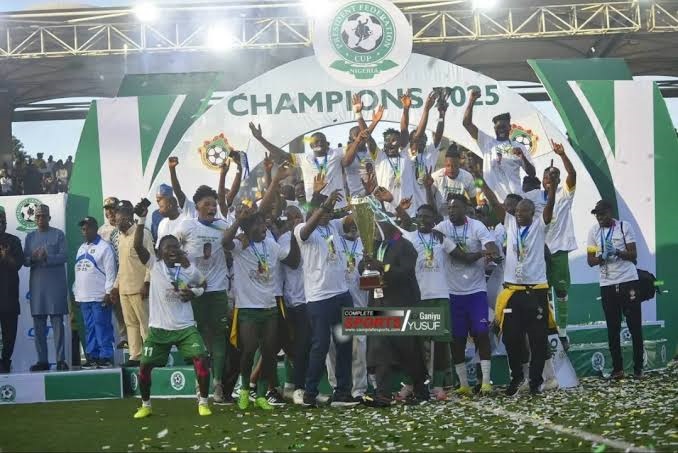
The 4-3 victory sparked scenes of unbridled joy among the Kwara United players, staff, and supporters. Goalkeeper Suraju Ayeleso, whose saves during the shootout earned him the tournament’s Best Goalkeeper award, was mobbed by teammates. Coach Sanni, usually composed on the touchline, allowed himself a moment of pure emotion as the reality of achievement sank in.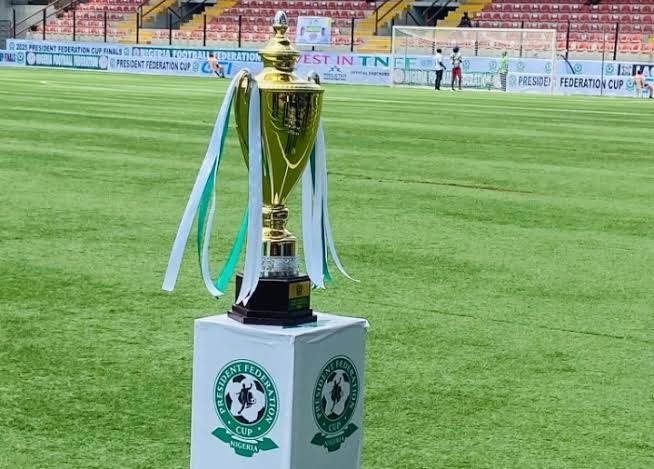
Among the dignitaries witnessing this historic moment was Kwara State Governor Abdulrahman Abdulrazaq, whose presence underscored the significance of the victory for the entire state. His support throughout the campaign had demonstrated the connection between the club and the broader community they represented. Lagos State Governor Babajide Sanwo-Olu and Nigeria Football Federation president Ibrahim Gusau also bore witness to this landmark achievement.
For the individual players, recognition followed swiftly. Victor Okoye was named the tournament’s Most Valuable Player, acknowledging his influence throughout Kwara United’s cup run. The contributions of players like Isa Gatta, Wasiu Jimoh, and the defensive quartet of Jimoh Gbadamosi, Ibrahim Yahaya, Saheed Olaniyi, and Victor had been crucial in reaching this moment. Each had played their part in ending the long wait for silverware.
The victory’s significance extended far beyond the trophy itself. Qualification for the 2025/2026 CAF Confederation Cup represented Kwara United’s first continental appearance since 2000, offering the club a platform to test themselves against opposition from across Africa. This prospect excited supporters who had waited so long for meaningful success, but it also presented new challenges for a squad that would need to balance domestic and continental commitments.
Abakaliki FC departed Lagos with their heads held high, their remarkable journey having captured hearts across Nigeria. Their performance in reaching the final as a newly-formed club from the third tier demonstrated the democratic nature of cup competitions, where determination and tactical discipline can overcome superior resources and reputation. Their victories over established Premier League clubs had already ensured their place in Federation Cup folklore.
The President Federation Cup, contested since 1945 and involving 74 clubs from across Nigeria, had delivered another memorable final. Kwara United became the 33rd different club to claim the trophy, adding their name to a roll of honour that spans decades of Nigerian football history. The tournament’s continued relevance was demonstrated by the quality of teams involved and the drama of the concluding stages.
As celebrations continued into the night, thoughts inevitably turned to the future. Kwara United’s triumph had ended one long wait, but it also marked the beginning of new challenges and opportunities. The CAF Confederation Cup would test the squad’s depth and tactical flexibility, whilst maintaining domestic form would require careful squad management.
Coach Sanni faced the enviable problem of building on success whilst managing expectations. His tactical acumen and man-management skills had delivered this historic achievement, but continental competition would demand further evolution and possibly squad strengthening. The club’s supporters, energised by finally tasting success, would expect this to be the beginning rather than the pinnacle of their ambitions.
The ripple effects of victory would be felt across Kwara State, where football had suddenly provided a source of unity and pride. Governor Abdulrazaq’s vision of strategic investment in sports infrastructure appeared vindicated, whilst the connection between community support and on-field success had been powerfully demonstrated.
For Nigerian football more broadly, the final had showcased the unpredictable beauty of knockout competition. Two clubs experiencing their first taste of Federation Cup final action had delivered a match that, whilst goalless, never lacked for intensity or significance. The penalty shootout conclusion added another chapter to the competition’s rich history of dramatic endings.
As the Mobolaji Johnson Arena emptied and the trophy was presented, Kwara United could finally call themselves champions. The long journey from formation in 1997 to Federation Cup victory in 2025 had tested the patience of everyone connected with the club, but persistence had finally been rewarded.
The return to Ilorin would bring street celebrations and official receptions, but perhaps the greatest satisfaction came from knowing that a generation of supporters had finally witnessed their team achieve something truly special. After 28 years as a club and 49 years as a state waiting for this moment, Kwara United had delivered when it mattered most.
The stage was now set for continental competition and the chance to build upon this foundation. Whether this represented a breakthrough moment or simply the beginning of sustained success remained to be seen, but for now, the celebration was everything. History had been made, dreams fulfilled, and a trophy finally claimed.
The Afonja Warriors had roared their way to glory and Kwara State had its champions at last.

Jude Obafemi is a versatile senior Correspondent at THEWILL Newspapers, excelling in sourcing, researching, and delivering sports news stories for both print and digital publications.