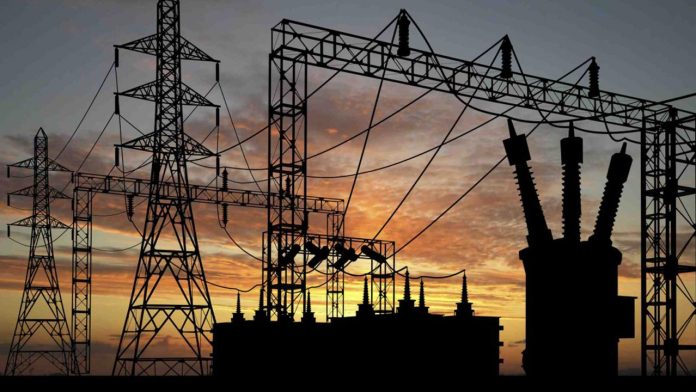
In recent time, Nigeria has been hit by power outages arising from the collapse of the national grid, which has occurred three times, at least, since the beginning of 2022. Businesses and average households are suffering the biting effects of the anomaly. The economic consequence is grave and far-reaching.
The persistent collapse of the national grid, which is traceable to low-gas power generation amid several challenges, is a national embarrassment. According to experts, the amount of gas that Nigeria pushes into the power sector to generate plants is not enough. At the national grid level, the plants need a maximum of 5,000MW, but on the average due to maintenance issues and the subsisting ageing grid, they can typically fire between 3500MW and slightly over 4,000MW.
The power generated and made available on the grid, which was put at between 3,500 MW and 3,834 MW in November 2013, has remained at an average of 4,089 MW. Data from the Nigerian Electricity System Operator (NESO) showed that generation sent on the grid as of November 2021 stood at 3,844 MW.

The DisCos have failed to inject the required funds to boost their working capital and lift the needed infrastructure for the nation’s power distribution network. The DisCos are also accused of diverting their bill revenues to personal vaults instead of settling their debts and improving their working capital. They are said to be holding on to decaying assets, which sink their performance, while they feed fat on their helpless consumers through the notorious estimated billing system.
The system needs to have a balance.
Lack of the needed balance is the cause of the occasional grid collapse. The distribution companies resort to rationing power when they are not getting enough from the transmission end to deliver to the distribution end. There are also cases of pipeline vandalisation.
As we have argued in our previous comments, it is a shame that Nigeria, a major producer of oil and gas, is still grappling with electricity supply at this level of our national development. More disturbing is the fact that the Federal Government’s huge budgets for infrastructure have shown little effects on electricity.
Six years into the life of the present administration and eight years after the unbundling of the state-owned electricity company, Power Holding Company of Nigeria (PHCN), Nigerians are still unable to enjoy regular electricity supply.
Sadly, no meaningful achievement has been recorded in the eight years that the power sector has been under private ownership (since November 2013). Several policy measures by the government have failed to yield the desired results as the corrupt system has succeeded in generating more cash for the players than electricity for consumers.
Electricity is the bedrock of modern industrialisation. Its production and consumption have a direct relationship with wealth creation in every economy. No economy has made progress without adequate and uninterrupted supply of electricity.
The Federal Government should consolidate and fast-track measures to resolve the challenges in the electricity sub-sector. These include restoring the gas pipelines affected by the act of vandalism. There is also negotiation with Nigeria Agip Oil Company (NAOC) on an interim energy sales agreement, to bring the new Okpai II power plant off the grid, thereby contributing additional 400MW of generation capacity. ‘Pigging’ the gas pipeline supplying gas to the Odukpani power plant is scheduled for completion in the first quarter of 2022 thus ramping up generation by about 400MV.
There is also the Nigeria and Siemens power sector deal signed in 2019, which provides a blueprint on improving power generation and fixing the archaic transmission and distribution infrastructure in the sector.
Notably, President Muhammadu Buhari set a goal of achieving 7,000MW and 11,000MW of reliable power supply by 2021 and 2023. In the medium-term, the Nigeria Gas and Power Investment Company (NGPIC) , a subsidiary of NNPC on the framework for the overhaul of the Okoloma gas processing plant in River State is being pursued. It is aimed at restoring the full capacity of the 650MW Afam VI in Port-Harcourt combined cycle power plant.
Government should fast-track the move to amend the Electricity Sector Power Reform Act, the law upon which the 2013 privatisation was based. This will eliminate the ugly activities of the GenCos and DisCos. With the full withdrawal of the electricity subsidy, the government should partner with Labour towards achieving the desired economic objectives.
The National Assembly recently passed a bill to enable state governments to engage in Nigeria power industry chain. The bill will empower the states to embark on the generation, transmission and distribution of electricity in areas covered by the national grid and for related matters. State governments should take advantage of this development to boost power supply in their respective territo