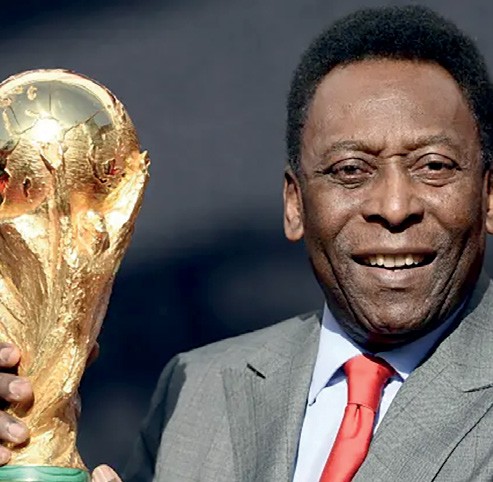
Edson Arantes do Nascimento, popularly known as Pele, died on Thursday, December 29, after his frail body conceded to the impact of colon cancer with renal and cardiac dysfunctions.
Yet, as football players from Lionel Messi to Cristiano Ronaldo, Kylian Mbappe to Gareth Bale, Erling Haaland to Samuel Eto’o Fils and other personalities from Barack Obama to Gordon Brown, from the Guinness Book of World Records to the American National Space Agency (NASA) paid their tributes to the legend of Pele, one fact remained obvious: his name will be etched in the annals of football history forever.
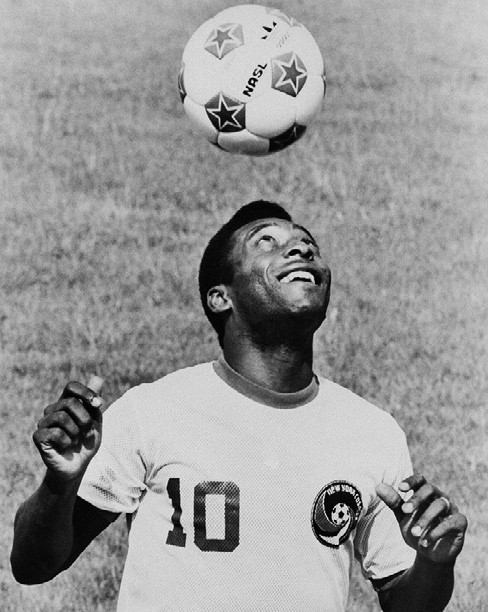
Born on October 23, 1940 in Três Corações, Brazil, Pele began his professional career at the age of 16 with Santos FC and quickly became one of the most promising young players in the world, helping the team from 1956 to 1974 to a string of titles and his country to a trio of World Cup trophies. His football artistry was recognisable from the beginning and in a single league season, after he turned 17, he scored an impressive 66 goals in 46 matches.

His talent was so inimitable that even the Brazilian government tried to prevent him from leaving the country, despite numerous offers from European clubs. As a result, once he turned 18, Pele was called up for mandatory military service, which allowed him to continue playing for Santos FC in Brazil.
Pele’s skills on the field brought joy and hope to the Brazilian people and even caught the attention of President Jânio da Silva Quadros, who named him an “Official National Treasure” in 1961. This further made it difficult for Pele to leave the country without Government authorisation, but it also meant that he could continue to share his love of the game with fans in Brazil and around the world.
By 1963, just eight years into his career, Pele had already won multiple Copa Libertadores, Intercontinental Cups, Brazilian Cups, Paulista Championships, and World Cups. He went on to win another World Cup in 1970.
Despite the interest from European clubs, Pele never played professionally in Europe. However, he did travel with Santos on tour to play against European teams, where, in all, he scored an impressive 144 goals in about 130 matches. He faced grueling schedules, including once playing 19 matches in 39 days, but consistently delivered for fans who came to watch him embody the sport of soccer.
He was such a force on the field that he broke the 100-goal season record three times in his career. Pele’s talent, charisma, and dedication to the game cemented his place as a true legend of soccer and a symbol of excellence in sportsmanship.
Pele’s career achievements are truly staggering. He won three FIFA World Cups with the Brazilian national team (1958, 1962, and 1970), a feat that has never been matched by any other player in the history of the sport. He also won numerous individual accolades, including a Guinness World Record for scoring 1,279 goals in 1,363 games across his career, was inducted into the United States National Soccer Hall of Fame in 1993, for the time he played three seasons with the Cosmos, won an NASL championship in 1977 and was named as a first-team NASL all-star in all three seasons he as in America, sparking a new love for the game in North America.
He was also given a special Ballon d’Or at the award ceremony in 2014, the first ever Ballon d’Or Prix d’Honneur. Pele was named Athlete of the Century by the International Olympic Committee in 1999 and Football’s highest authority also designated the player nicknamed “O Rei” – the King – as FIFA Player of the Century, an honour he shared with Argentina’s Diego Maradona.
Pele’s impact on the game of soccer was immeasurable. His technical ability, vision, and flair for the dramatic made him a joy to watch, and he inspired countless young players around the world to pick up a ball and start playing. He was a prolific goalscorer, as the World Record he holds testifies to, and was known for his creative playmaking and tireless work ethic on the pitch.
Off the field, Pele was also just popular for his graciousness and humility. Despite his incredible success and fame, he remained a down-to-earth and approachable individual, and used his platform to promote the sport he loved and to make a positive impact in the world.
This demonstrates that Pele’s legacy extended far beyond the football pitch. He is considered one of the greatest athletes of all time and his contributions to the sport coupled with his larger-than-life persona have been recognised by numerous organizations and institutions around the world. He has received a plethora of honours, including the American Presidential Medal of Freedom and the Congressional Gold Medal.
There is a legend that Pele played a role in bringing about a temporary ceasefire during Nigeria’s Civil War in the late 1960s. According to the story, when Pele and his team, Santos, arrived in Lagos to play a match on January 26, the guns fell silent for 48 hours. During that time, Santos played to a 2-2 draw against the Super Eagles, with Pele scoring both goals and receiving a standing ovation from the home fans. However, other accounts place the ceasefire in Benin City two weeks later, and recent research has called the veracity of these stories into question.
Nigerian blogger Oloajo Aiyegbayo has scoured contemporary newspaper accounts of the period and found no mention of a ceasefire during Santos’ stay in Nigeria. It is possible that the Benin City bridge was opened for the match, but this was a standard practice on match days and not a specific effort to allow Biafrans into the stadium during a time of high tensions and recent atrocities. While Pele’s legend and charisma may have brought some temporary joy and respite to the people of Nigeria during this difficult time, it appears that his role in the ceasefire may be more myth than reality.
THEWILL remembers his incredible career and the joy he brought to millions of fans around the world. He will always be remembered as a true legend of the game, and his contributions to football will be remembered for generations to come. Pele’s legacy will live on forever as a symbol of excellence, sportsmanship, and dedication to the beautiful game. It was a blessing that he was able to finish life surrounded by the love of his family and the gratitude of football fans around the world.
A date has been announced for Pele’s funeral and the Brazilian President Jair Bolsonaro has declared a three-day period of national mourning in Pele’s honour. His former team Santos released a statement on the burial that read: “The body of the greatest football player of all time will be laid to rest at Estadio Urbano Caldeira, in Vila Belmiro, where he enchanted the world. The body will go straight from the Albert Einstein Hospital to the Stadium at dawn on Monday [January 2] and the coffin will be placed in the centre of the lawn. The public wake is expected to begin at 10am.”
Meanwhile, President Bolsonaro, whose presidency ends on January 1, issued a decree that read: “Official mourning is declared throughout the country, for a period of three days, counted from the date of publication of this Decree, as a sign of regret for the death of Edson Arantes do Nascimento, Pele, a former football player.”
It will be the end of earthly time of an icon who rose from barefoot poverty to become one of the greatest and best-known athletes in modern history, and whose legacy will live on.

Jude Obafemi is a versatile senior Correspondent at THEWILL Newspapers, excelling in sourcing, researching, and delivering sports news stories for both print and digital publications.