August 31, (THEWILL) — AC Milan withdrew from their pursuit of Victor Boniface last week after the Nigerian striker failed a comprehensive medical examination, with the Serie A club citing serious concerns over his injury-prone right knee and its implications for a potential €25 million investment.
The proposed transfer, structured at a €5 million loan with an obligation to purchase for €24-25 million, collapsed following four days of intensive medical testing at Milan’s Milanello training facility. The decision constitutes a significant setback for both club and player, illustrating the increasingly rigorous medical standards applied to high-value transfers in modern football.
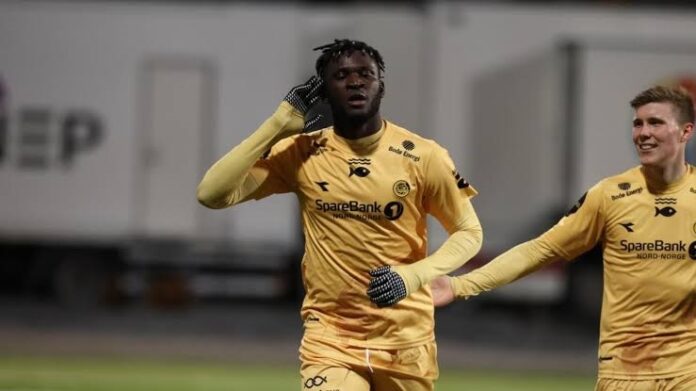
Boniface’s extensive injury record ultimately proved insurmountable for Milan’s medical team. The 24-year-old has endured two anterior cruciate ligament ruptures to his right knee, the first occurring in March 2019 during his tenure with Norwegian side Bodø/Glimt, which sidelined him for 179 days. A second, more severe ACL tear in November 2020 kept him out of action for 358 days, effectively derailing his progress during a crucial developmental period.

Beyond the major knee injuries, Boniface has battled recurring muscle problems throughout his career. An adductor strain in 2024 cost him 85 playing days, while various other muscular issues have contributed to a total of 127 missed matches across six different injury types since turning professional. Speaking candidly about the medical setback during a live stream, Boniface acknowledged the role his injury history played in the transfer’s collapse. “The transfer did not work out because of my past injuries,” he stated. “I had two injuries to my right knee, and that is it.”
Milan’s decision demonstrates broader shifts in how elite clubs approach player recruitment amid tightening financial regulations. The club’s medical team conducted exhaustive examinations including advanced imaging of Boniface’s knee joint and comprehensive fitness assessments designed to evaluate long-term durability.
Medical research indicates that players who have suffered multiple ACL injuries face a 20-30% likelihood of recurrence, with each subsequent tear potentially more severe than the last. Such statistics have become central to transfer decision-making processes, particularly for clubs operating under UEFA’s Financial Fair Play regulations, which limit spending relative to revenue streams. The financial implications of injury-prone signings extend far beyond transfer fees. The English Premier League analysis suggests clubs lose an average of £45 million annually due to injury-related costs, including wages for unavailable players, rehabilitation expenses, and reduced prize money from poor performances. For Milan, recent ownership changes under RedBird Capital Partners have emphasised fiscal responsibility and sustainable growth strategies.
The Milan collapse constitutes the second major transfer failure for Boniface within eight months. In January, a lucrative move to Saudi Pro League powerhouse Al Nassr fell through under remarkably similar circumstances, with medical concerns over his knee conditioning proving decisive in a deal reportedly worth €60 million.
Boniface later revealed the psychological impact of that setback, admitting he had “packed his bags and was ready to go” before receiving news of the medical rejection. The repeated pattern suggests that while the striker has successfully returned to competitive action, concerns about his long-term physical sustainability continue to deter potential suitors willing to make substantial financial commitments.
The situation mirrors broader trends in international football, where clubs increasingly view medical examinations through the lens of crucial risk-mitigation tools rather than routine formalities. Advanced diagnostic techniques now allow medical teams to identify potential future problems that might not manifest for months or years, fundamentally altering how transfers are evaluated.
Despite his injury troubles, Boniface has shown remarkable determination and quality when available for selection. His journey from Nigerian youth football to European prominence began with a move to Bodø/Glimt in 2019, where he established himself in a promising forward before transferring to Belgian side Union Saint-Gilloise.
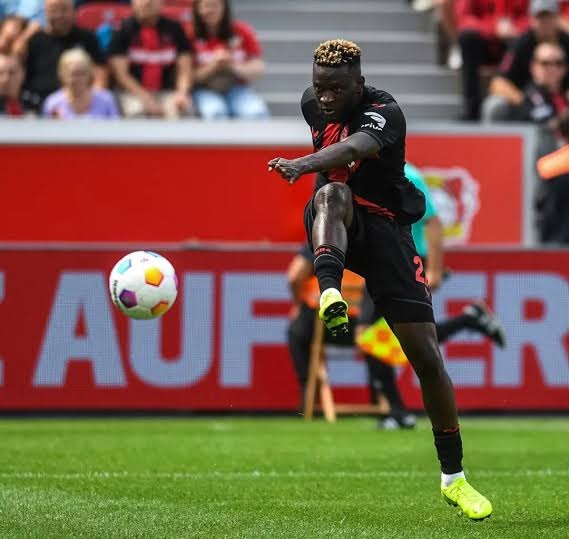
His breakthrough came following a 2023 move to Bayer Leverkusen, where he played a crucial role in the club’s historic Bundesliga triumph. Boniface scored 21 goals during the 2024/2025 campaign, demonstrating the pace, power, and clinical finishing that initially attracted Milan’s interest. His physical style, combining explosive acceleration with robust hold-up play, made him an ideal candidate to address Milan’s striking deficiencies following recent departures.
The psychological toll of repeated injury setbacks has been considerable. Boniface previously revealed that after his second ACL tear, he seriously considered retirement due to the physical pain and mental strain of prolonged rehabilitation. His successful return to elite-level competition stands in testament to his determination and the quality of Leverkusen’s medical support systems.
Failed medical examinations have long been part of football folklore, with several high-profile cases showing how thorough health assessments can alter career trajectories. Loïc Rémy’s proposed 2014 transfer to Liverpool collapsed when medical staff identified heart irregularities, ultimately leading the French striker to Chelsea instead.
More recently, Nicolas Jackson’s 2023 move to Bournemouth was cancelled due to hamstring concerns, though he subsequently joined Chelsea successfully. Ruud van Nistelrooy’s initial Manchester United medical failure in 2000 over knee problems proved temporary, with the Dutch striker passing a second examination and enjoying a successful Old Trafford career. Milan’s pursuit of alternative targets following Boniface’s rejection has focused on Juventus forward Dušan Vlahović and Chelsea’s Christopher Nkunku. Ironically, Nkunku’s own injury record, including 420 days missed since 2020 compared to Boniface’s 165 days, has raised questions about consistency in medical evaluation standards across different clubs and circumstances.
Milan’s hesitation is not merely medical caution but strategic positioning within UEFA’s evolving regulatory framework, where clubs face sanctions for excessive spending relative to revenue generation. Under Financial Fair Play 2.0 regulations, clubs must demonstrate sustainable business models while competing for elite talent. This environment has elevated the importance of medical due diligence, with clubs increasingly unwilling to absorb the dual risk of substantial transfer fees and potential long-term injury costs. Injury-related losses extend beyond immediate medical expenses to encompass reduced match-day revenues, diminished commercial appeal, and compromised competitive performance. For Milan, operating under new ownership structures and strict budgetary constraints, the potential €25 million investment in an injury-prone player carried unacceptable financial risk.
Following the Milan rejection, Boniface returned to Leverkusen on August 25, where he remains under contract and committed to proving his fitness and form. Interest from other clubs persists, including West Ham United and potential renewed discussions with Al Nassr, though his recent omission from Nigeria’s national team squad due to fitness doubts adds further uncertainty to his immediate prospects. For players like Boniface, such setbacks test mental fortitude and professional focus while potentially limiting future opportunities. The challenge lies in maintaining peak performance levels while managing ongoing physical concerns that may influence career longevity and earning potential.
This case study in transfer risk assessment demonstrates how football’s commercial evolution has fundamentally altered recruitment practices. Where clubs once relied primarily on scouting reports and basic fitness checks, modern transfers involve sophisticated medical analysis comparable to insurance risk assessment procedures. The trend toward comprehensive health evaluation extends beyond individual cases to influence broader market dynamics. Players with extensive injury histories face reduced transfer values and limited options, while clubs invest increasingly in medical infrastructure to support thorough pre-signing assessments.
Looking ahead, Boniface’s situation serves to remind stakeholders that transfers involve complex calculations extending far beyond sporting considerations. In an industry where single injuries can derail entire seasons, decisions like Milan’s aim to protect long-term institutional stability while maintaining competitive aspirations.
Talent alone no longer guarantees successful transfers at football’s highest levels, where long-term physical reliability has become equivalent in importance to technical ability in determining a player’s market value and career trajectory.
For Boniface, the path forward depends on sustained fitness and continued productivity at Leverkusen, where proving his durability could reopen doors that medical concerns have temporarily closed.

Jude Obafemi is a versatile senior Correspondent at THEWILL Newspapers, excelling in sourcing, researching, and delivering sports news stories for both print and digital publications.