May 12, (THEWILL) – United Bank for Africa Plc (UBA) came top in digital banking revenue among 10 selected Nigerian deposit money banks (DMBs) according to data from their audited FY 2024 financial statements.
The e-banking income includes revenue from electronic platforms, such as mobile applications, USSD channels, internet banking, ATM, PoS as well as other debit and credit card transactions.
The selected banks include UBA which raked in N284.7 billion in e-banking income during the FY 2024 against N157.1 billion it recorded in the previous year, translating to an 85.9 percent increase.
It was followed by Access Bank with a total digital transaction fee of N178.61 billion which constitutes a 75.6 percent increase against N101.62 billion in FY 2023.
Zenith Bank pooled N80.05 billion in e-banking revenue in FY 2024 against N51.8 billion earned in the previous year which represents a 54.5 percent increase for the period.
FirstBank e-banking transaction income increased to N77.01 billion in FY 2024 from N66.34 billion in the previous year, representing a jump of 16.08 percent during the period.
Guaranty Trust Bank posted a total digital transaction revenue of N56.56 billion which represents a 38.5 percent increase from N40.82 billion it achieved in the previous year — ranking fifth among the Tier-1 banks, also referred to as the FUGAZ group (First Bank, UBA, GTB, Access and Zenith Bank).
The reports showed that Stanbic IBTC Bank posted a total e-banking revenue of N63 billion which is 11.1 percent higher than 56.7 billion it generated in the previous period.
Others are Wema Bank and Fidelity Bank which posted N14.1 billion and N7.02 billion against N7.3 billion and 4.02 billion in FY 2023, which translated to 93.2 percent and 72.9 percent respectively.
FCMB’s digital revenue declined by 22.83 percent from N17.69 billion in FY 2023 to N13.65 billion in the review period.
Sterling Bank’s N8.58 billion in FY 2023 was used for FY 2024 as it is yet to publish its FY 2024 results due to a transition in its core banking application, according to its parent company, Sterling Financial Holdings.
Further analysis of the results showed that UBA’s outstanding performance placed it ahead of the entire selected banks as its N284.7 billion e-banking revenue represents a 36.34 percent of the N783.29 billion earned by the 10 DMBs, while it constitutes a 41.89 percent of the N679.63 billion recorded by the FUGAZ group.
This development came on the heels of the financial services institutions in the country embarking on aggressive digital expansion ahead of the post-consolidation competition that would emerge after the March 31, 2026 deadline set by the Central Bank of Nigeria (CBN) to recapitalize.
The apex bank had on March 28, 2024 issued a circular announcing a new recapitalization policy for commercial, merchant and non-interest banks in Nigeria, effective from April 1, 2026.
For commercial banks, the requirement for international, national and regional operating licences was set at N500 billion, N200 billion and N50 billion respectively.
Going by available data, commercial banks in the country would require a combined N3.894 trillion to meet the new baseline capital requirements.
This will necessitate capital raising efforts to the combined tune of N3.894 trillion to meet the new baseline capital requirements. The capital raising would be from both domestic and international markets which the banks have already keyed into.
According to available data, under commercial banks with international authorization of N500 billion, in meeting with the new capital base, Access Bank, Fidelity Bank, FCMB, First Bank, Guaranty Trust Bank, Union Bank, United Bank for Africa and Zenith will be raising capital of N248.19 billion, N370.30 billion, N374.71 billion, N248.66 billion, N361.81 billion, N351.91 billion, N384.19 billion, and N229.25 billion respectively.
Also, CitiBank Nigeria Limited, Polaris Bank, Stanbic IBTC Bank, Standard Chartered Bank Limited, Sterling Bank, Titan Trust Bank, Unity Bank, and Wema Bank will be adding a new capital of N185.56 billion, N149.57 billion, N90.74 billion, N154.58 billion, N142.85 billion, N170.80 billion, N183.67 billion, and N184.87 billion respectively.
Consequently, the banks had engaged in systems upgrade in recent times which created service disruptions to the consternation of the customers and other banks’ services users.
During the period, the DMBs experienced system downtime that stretched beyond what the public had expected. However, despite the prolonged and severe service disruptions, the exercise did not result in the loss of customers’ deposits or other assets maintained by the banks – traced directly to it.
The push for migration to new core systems is driven by multiple factors, including security, cost management, and operational flexibility. Industry experts explained that security concerns are a major reason for the upgrade.
With cyber-attacks on the rise, banks are seeking more secure systems to protect customer data and financial information.
THEWILL recalls that Sterling Bank customers were among the first to experience severe disruptions when the bank began migrating its core system from T24 to SEABaaS, a new locally developed banking application. This migration caused multiple transaction failures, frustrating customers who were unable to use the bank’s services for days.
In a similar move, GTBank transitioned from its Basis/Banks software, provided by ICS Financial Services, to Finacle, an Indian banking technology solution. This switch was not without challenges, as customers also reported service interruptions during the transition period.
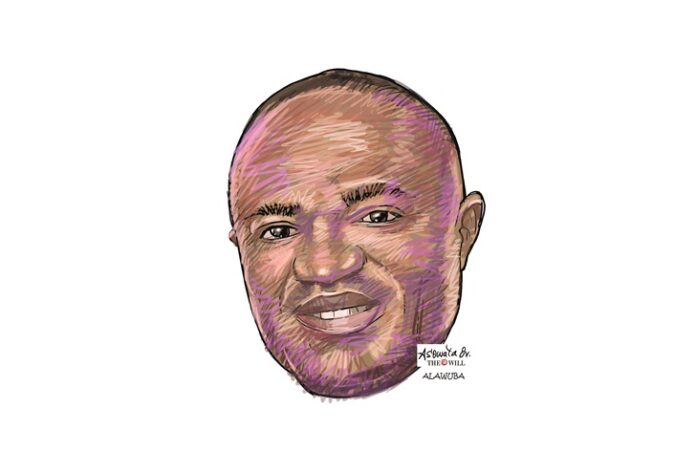
The Group Managing Director UBA, Oliver Alawuba, had stated, “Our continued investment in our highly diversified global network allows UBA to deliver high quality, consistent earnings. Our businesses have been able to grow product and service income and expand our deposit base, allowing the Group to increase earnings, while maintaining strong spreads and margins.”
UBA announced a pre-tax profit of N204.3 billion in Q1 2025 against N156.3 billion in the equivalent period of 2024, representing an increase of 31 percent.

Sam Diala is a Bloomberg Certified Financial Journalist with over a decade of experience in reporting Business and Economy. He is Business Editor at THEWILL Newspaper, and believes that work, not wishes, creates wealth.