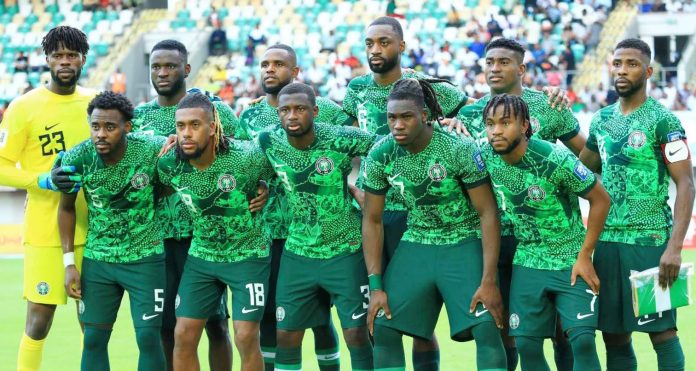
December 02, (THEWILL) – The recent FIFA rankings reveal a troubling development for Nigeria’s national football team, the Super Eagles. The team has suffered a significant drop in both global and continental standings. Falling eight places from 36th to 44th globally and slipping from 4th to 5th in Africa, this decline raises concerns about the current state of Nigerian football. The total points accrued by the team also fell from 1503 to 1482.23, underlining the scale of the setback. For a country with a rich footballing tradition, this development marks a sobering moment for fans and stakeholders alike.
The FIFA rankings are a widely recognised measure of a national team’s performance and reputation. Points are calculated based on match results, the importance of those matches, and the strength of the opposition. Victories in high-profile games, particularly competitive fixtures, earn teams valuable points, while losses or draws against lower-ranked opponents lead to significant deductions. These rankings serve as a barometer for global football, with Argentina currently leading the way, followed by France, Spain, England, and Brazil. Each of these teams has displayed consistency in performance and results, providing a stark contrast to the struggles of the Super Eagles.
Nigeria’s decline can largely be attributed to their underwhelming performances in the final stages of the 2025 Africa Cup of Nations qualifiers. The Super Eagles recorded a disappointing 1-1 draw against the Benin Republic, followed by a 2-1 home loss to Rwanda in Uyo. Both matches were seen as winnable, especially given the pedigree of Nigerian players called to camp. Instead, these results exposed weaknesses in the team’s consistency and tactics. The draw against Benin and the defeat to Rwanda not only cost Nigeria valuable points but also raised questions about their readiness for high-stakes matches especially as the country has had a dismal qualifying series for the World Cup.

Within the African context, Nigeria’s new position sees them trailing Morocco, Senegal, Algeria, and Egypt. Morocco remains the top-ranked team on the continent, a position earned through impressive performances at the 2022 FIFA World Cup and in subsequent competitions. Senegal, under the leadership of players like Sadio Mane and Kalidou Koulibaly, continues to assert their dominance in African football. Algeria, with a blend of experienced players and emerging talents, has remained consistent, while Egypt, driven by Mohamed Salah’s brilliance, has also maintained a strong position. For the Super Eagles, being ranked below these teams reflects the competitive nature of African football and the urgent need to address gaps in performance.
A closer examination of the team’s internal dynamics reveals multiple factors contributing to this decline. Coaching decisions have been a contentious issue, with critics pointing to tactical deficiencies and questionable player selections in interim manager Austin Eguaveon’s strategies. Some argue that the coach has failed to maximise the potential of Nigeria’s deep talent pool, which includes players performing well in top European leagues. Injuries and inconsistent form among key players have also played a role, weakening the team’s ability to deliver in crucial moments.
The implications of this ranking decline are far-reaching. A lower FIFA ranking could negatively affect Nigeria’s seeding in upcoming tournaments, including the Africa Cup of Nations and FIFA World Cup qualifiers. Poor seeding often results in tougher group stage draws, making qualification for these competitions more challenging. Additionally, the drop in rankings could impact the team’s reputation on the global stage, potentially affecting their ability to attract high-profile opponents for friendly matches and other engagements.
Psychologically, the decline poses challenges for both the players and the fans. For the players, the pressure to perform will undoubtedly increase, as they seek to restore the team’s standing. Fans, on the other hand, may find it harder to maintain confidence in the Super Eagles, especially after a string of disappointing results. The passion and expectations of Nigerian football supporters are well known, and the current situation has only heightened calls for accountability and change within the team and its management. The Nigeria Football Federation’s dithering in the selection of a substantive coach for the squad is a sore point in this debate.
Despite these challenges, the road to redemption is not beyond reach. The 2025 Africa Cup of Nations offers the Super Eagles a chance to redeem themselves. With proper preparation, a clear strategy, and tactical adjustments, the team can begin to rebuild its reputation and improve its FIFA ranking. Friendly matches and qualifiers in the lead-up to the tournament will be crucial opportunities to regain form and confidence. It is imperative that a substantive coach and talented coaching staff are put in place and that players treat these matches with the seriousness they deserve.
Beyond immediate concerns, there is a need for long-term investment in Nigerian football. Grassroots development must become a priority to ensure a steady pipeline of talent for the national team. The establishment of robust training programmes, better scouting networks, and partnerships with local clubs can help build a foundation for sustained success. At the administrative level, the NFF must adopt a more strategic approach, prioritising the needs of the team and creating an environment conducive to success.
The reactions to the Super Eagles’ decline have been swift and varied. Fans have expressed frustration, with many calling for changes in leadership and management. Analysts and former players have also weighed in, offering critical assessments of the team’s performance and suggesting ways forward. Comparisons have been drawn to previous periods of struggle in Nigerian football, with some noting that the Super Eagles have a history of bouncing back from adversity. These reflections underscore the resilience and potential of Nigerian football, even in the face of challenges.
The ranking drop serves as both a warning and an opportunity. It highlights the areas where the team must improve while also providing a chance to reflect and rebuild. Nigerian football has a storied history, and the Super Eagles remain one of the most iconic teams on the continent. To reclaim their position among Africa’s and the world’s elite, the team must rise to the occasion, addressing weaknesses and building on their strengths.
The next few international breaks will be critical for the Super Eagles. With the right approach and a renewed commitment to excellence, Nigerian football can look forward to a brighter future. For now, the focus must be on laying the groundwork for a successful comeback, getting a proper and well versed coach for the men’s team and ensuring that the Super Eagles not only regain their standing but also reclaim their place as a force to be reckoned with in both African and global football.

Jude Obafemi is a versatile senior Correspondent at THEWILL Newspapers, excelling in sourcing, researching, and delivering sports news stories for both print and digital publications.