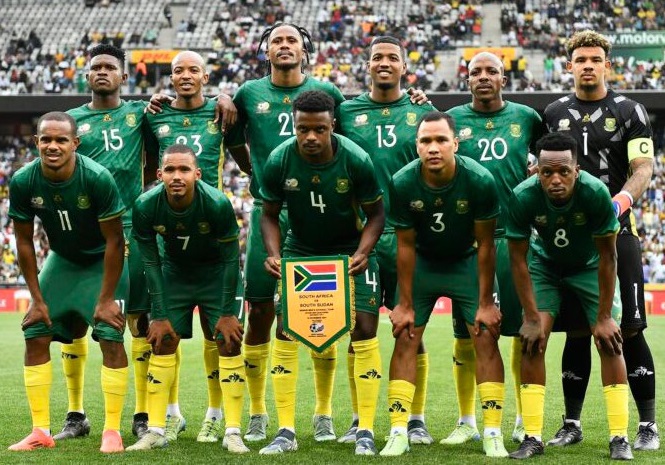
September 22, (THEWILL) — FIFA’s disciplinary proceedings against the South African Football Association have cast a shadow over Bafana Bafana’s lead in Group C of the Confederation of African Football qualifiers for the 2026 World Cup. The case involves midfielder Teboho Mokoena, who appeared in a match against Lesotho on March 21 despite serving a suspension. This development, confirmed by FIFA on September 15, could lead to a points deduction for South Africa and open a path for Nigeria’s Super Eagles to challenge for direct qualification.
The match in question took place at Peter Mokaba Stadium in Polokwane. South Africa secured a 2-0 victory with goals from Themba Zwane and Iqraam Rayners. Mokoena, a 28-year-old player for SuperSport United, started and completed the full 90 minutes in midfield. His involvement went unchallenged at the time, but questions arose later when records showed he had accumulated two yellow cards in previous qualifiers. The first came against Benin in November 2023, and the second against Zimbabwe in June 2024. Under Article 18 of FIFA’s Disciplinary Code, two cautions in the same competition trigger an automatic one-match ban. Mokoena missed no games immediately after the second booking, which should have sidelined him for the Lesotho fixture.
Lesotho’s Football Association raised the issue with FIFA after the match, though formal protests must occur within 24 hours under FIFA regulations. The governing body proceeded independently, citing clear evidence of ineligibility. On September 15, FIFA notified the South African Football Association and charged both the organisation and Mokoena with violations of Articles 4 and related provisions on player status and suspensions. The parties received a six-day deadline to submit defences, extending to around September 21. SAFA acknowledged the letter but declined detailed comment, stating it would examine the matter thoroughly. Bafana Bafana technical crew expressed no concern, describing the probe as routine and focusing on upcoming fixtures.

FIFA’s Disciplinary Committee will review submissions and evidence, including match reports and suspension records. Decisions in such cases often prioritise consistency with past rulings. If guilt is established, sanctions typically include forfeiture of the result, awarding a 3-0 win to the opponent, and a three-point deduction from the offending team. Fines range from 5,000 to 20,000 Swiss francs for associations, with possible additional suspensions for officials or the player involved. The process aims for swift resolution to avoid disrupting the qualifier schedule, with a verdict expected before the final matchday in October.
Historical cases provide context for likely outcomes. In 2017, during qualifiers for the 2018 World Cup, Nigeria forfeited a 1-1 draw against Algeria after fielding Shehu Abdullahi, who served an improper suspension status. The result changed to a 0-3 loss, costing three points but not derailing Nigeria’s qualification. More recently, Equatorial Guinea faced severe penalties for using Emilio Nsue, a player ineligible due to prior international commitments with Spain. In September 2025, FIFA and the Court of Arbitration for Sport upheld forfeits of two wins, deducting six points and eliminating Equatorial Guinea from contention. These examples demonstrate FIFA’s zero-tolerance approach to eligibility breaches, even if unintentional.
Group C consists of six teams: South Africa, Benin, Nigeria, Rwanda, Lesotho, and Zimbabwe. Each plays 10 matches in a home-and-away format. The winner qualifies directly for the expanded 48-team World Cup, with the runner-up entering a Confederation of African Football playoff. As of September 22, after eight rounds, South Africa tops the table with 17 points from five wins and two draws, goal difference plus eight. Benin sits second on 14 points, goal difference plus four. Nigeria and Rwanda share third on 11 points, Nigeria with goal difference plus two and Rwanda level. Lesotho has six points, goal difference minus eight, while Zimbabwe trails with four points, goal difference minus seven.
A forfeiture would adjust South Africa’s tally to 14 points and goal difference to plus three, tying them with Benin but placing second on tiebreakers. Lesotho would gain three points, rising to nine but remaining fifth. Nigeria, with two matches left, against Zimbabwe away on 9 October and Rwanda at home on 13 October, could reach 17 points with victories. Benin faces Lesotho away and Rwanda home, while South Africa meets Zimbabwe at home and Rwanda away. Rwanda plays Benin away and Nigeria away. A deduction would make the final rounds a tight contest, where Nigeria’s superior goal difference could prove decisive if points align.
Nigerian officials and media view the probe as a potential lifeline. The Nigeria Football Federation has monitored developments closely, fans at home in are calculating scenarios where two wins secure first place, provided South Africa stumbles. South African responses mix defiance and caution. Lesotho’s federation, though not leading the complaint, welcomes scrutiny, warning of implications if no action follows.
The broader implications extend to African football governance. The 2026 qualifiers mark the first under the expanded format, allocating nine direct spots to the Confederation of African Football. Probes like this one, including Eritrea’s ongoing case for a similar breach against Nigeria, signal heightened vigilance. FIFA’s actions aim to uphold integrity, but enforcement varies by association resources. Smaller nations like Lesotho benefit from such interventions, levelling the field against stronger opponents. For Nigeria, a nation with four World Cup appearances but none since 2018, the opportunity revives national discourse on the Super Eagles’ potential.
Qualification remains fluid. Nigeria’s recent form shows promise, unbeaten in eight but with five draws, bolstered by talents like Ademola Lookman and Osimhen. Yet, reliance on external rulings risks complacency. South Africa’s campaign, led by Zwane’s creativity, has been efficient, with only one loss. A deduction would test their depth against Rwanda’s disciplined setup and Zimbabwe’s resolve. FIFA’s verdict will shape narratives. If sanctions apply, Group C enters a scramble where every goal counts. Nigeria must capitalise through results, not hope alone. Until the committee rules, tension builds, with October’s fixtures poised to decide destinies.
Jude Obafemi is a versatile senior Correspondent at THEWILL Newspapers, excelling in sourcing, researching, and delivering sports news stories for both print and digital publications.