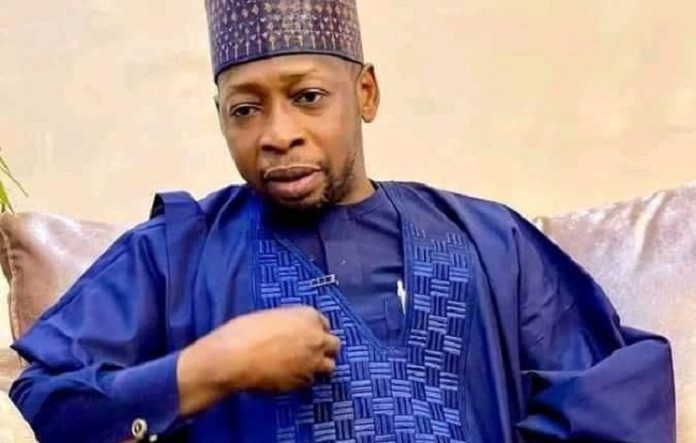
Only last week, THEWILL reported how Abdulsalam Abdulkarim Zaura, more popularly known as AA Zaura, the candidate of the All Progressives Congress (APC) for Kano Central District in the forthcoming senatorial election, has perfected the act of dodging charges of fraud leveled against him by cleverly evading court summons.
In 2020, the Economic and Financial Crimes Commission, (EFCC) accused Zaura of duping a Kuwaiti national, Jamman Al-Azmi, of the sum of $1.3 million under the pretext of procuring a real estate for him in Dubai. The Commission dragged him before a Federal High Court in Kano on a five-count charge. The court found him not guilty and discharged him on all counts.
Dissatisfied, the EFCC filed an appeal and a unanimous decision by a three-member panel of judges, which set aside the judgment of the high court and ordered Zaura to be tried afresh by a different judge. Each time the court convened to hear his case, Zaura or his counsel were never available together for various reasons, ranging from the frivolous to the very ridiculous.

This repeated absence from court was the main contention of the appeal when the judgement of the High Court was delivered. Citing some past Supreme Court judgements, it held that an accused person must always be present in court throughout his trial, including judgment, and Zaura was found wanting in this regard. It was on this basis that the Court of Appeal found merit in the appeal and upheld the same accordingly. His arraignment on three different occasions could not go ahead, prompting the EFCC to declare him wanted.
At Zaura’s next arraignment on January 30, EFCC made good on its promise, arrested him at his residence and brought him to court. This time, it was his counsel who was absent and expectedly, the arraignment could not take place.
Exasperated, the EFCC counsel pleaded with the court to proceed with the arraignment, citing Section 33 Sub-Section (a) of the constitution to argue that the law allowed a defendant to take his plea even in the absence of the counsel. She also urged the court to take judicial notice of the several adjournments that the case had suffered due to the absence of the defendants during previous hearing dates.
Ruling on the application, the judge adjourned the case to Monday, February 6, 2023 for the umpteenth time. And on the said day, Zaura’s case, not surprisingly, suffered another setback. This time around, he employed a different tactic by changing counsel. When the matter was called, a representative of his new counsel informed the court that they needed time to study the case and consequently asked for an adjournment. The EFCC’s counsel, who was already at her wits end objected to the application for an adjournment, but the court overruled her on the ground that the new counsel had a right under the law to study the case before diving into the matter.
Consequently, the case was adjourned till March 1, 2023, for arraignment, ironically after the general election for the National Assembly. For the sixth time the arraignment was pushed forward at the instance of the defence counsel and judging by his past antecedent, it doesn’t look like there is an end in sight for the trial to begin, not to talk of ending with a ruling.
Unless the EFCC decides to play smart and perhaps, employ the Senator Peter Nwaoboshi (he went into hiding after being convicted of fraud until the EFCC trailed, arrested him and sent him to jail) treatment on him, the case may end up being a wild goose chase. An ambitious man, Zaura had his eyes set on occupying Kano government house in 2019 on the platform of The Green Party of Nigeria (GPN). His expectations were however cut short when he lost out in the polls. He quickly changed strategy and defected to the ruling APC, exactly a year after he was arraigned for fraud, in the hope that it will enable him to escape conviction.
Ivory Ukonu is a versatile journalist with many years of experience, with entertainment and society reporting as her area of core competence.