SAN FRANCISCO, December 13, (THEWILL) – Recent events in the world of Boxing has turned the world’s attention to the pugilistic sport once again.
Most notable of these events was the much-anticipated return of “Iron Mike” Mike Tyson to the ring that brought him fame and renown after 15 years of absence, in an exhibition bout against a former fellow world heavyweight champion Roy Jones Jr.
Their exhibition bout was a much-hyped event that gave boxing fans nostalgic feelings of the good old days and made many recall boxing spectacles from years gone, when Tyson was nicknamed the “Baddest Man in the Planet” for his deadly hook and wicked uppercut, which brought many of his fights to an early end even as some spectators who wear not early enough were still trying to make their way to their seats.

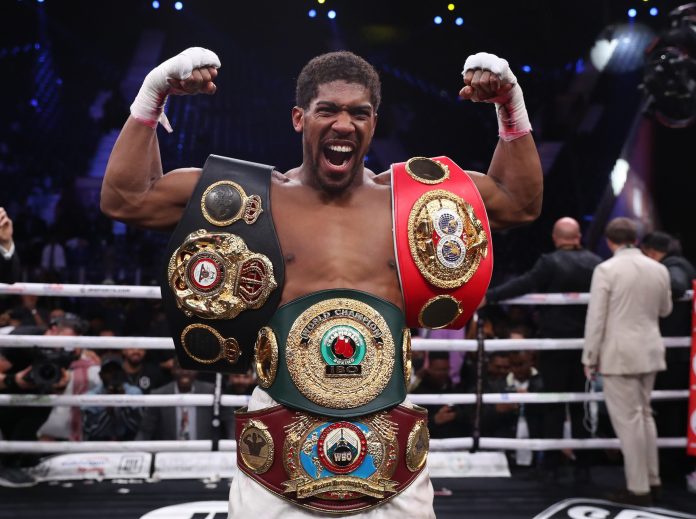
Apart from Tyson, Anthony Joshua, the British professional boxer and heavyweight champion with a trio of boxing titles such as the World Boxing Organisation (WBO), World Boxing Association (WBA) and International Boxing Federation (IBF) to his name, has been whipping up a storm in the press ahead of his title defence against Bulgarian challenger Kubrat Pulev. The fight is scheduled for the SSE Arena on Saturday, December 12 in front of a small number of boxing fans due to Coronavirus restrictions.
The implications of Joshua’s fight has made it a crucial event. Should Joshua win, it clears the path for another much-anticipated boxing bout, the chance for a unification fight for the emergence of an undisputed Heavyweight Champion of the World as Joshua’s belts will be on the line against Tyson Fury, the British heavyweight champion who will also have his World Boxing Council (WBC) title on the line as well so that the winner is expected to unite all the heavyweight titles.
With all these receiving constant, regular press coverage, boxing is getting plenty attention and all for positive reasons.
Although Joshua has some Nigerian heritage, he fights under the British flag and identifies as a Brit. ; What immediately comes to mind, is a recollection that they used to be a time when Nigerian boxers held their own among heavyweights and in other weight categories of boxers around the world.
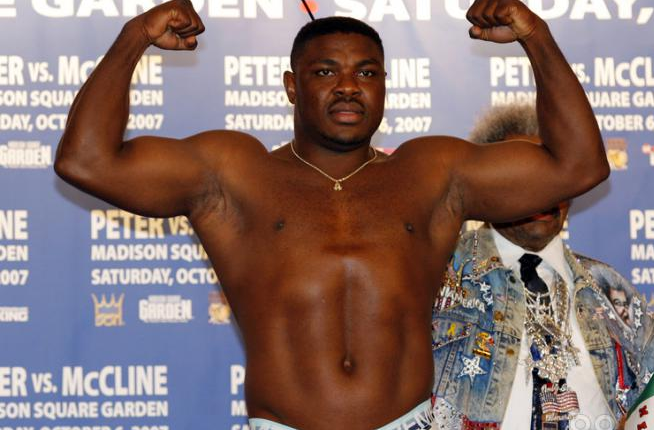
Samuel Peter, for instance, put Nigeria on the global stage for boxing-related honour when he conquered his heavyweight category with victory over Russian-American Maskayev for one of the country’s last great triumphs in the sport.
However, not much can be said of Nigerian boxers today, as it appears an entire generation of pugilistic talents was swept away after showing much promise and having attained the summit of boxing glory, like Peter, only to be gone without as much as a whimper.
It is opposite to see how well Nigeria fared historically in the sport and trace a trajectory of past glory to the present absence of the country at the highest levels of the competition.
As difficult as it may be to believe it today, there was a time in Nigeria’s storied history where Boxing was more popular than football. It was an age of boxing legend for the country that produced talents of prolific boxing skills the likes of which we can no longer boast of today.
In the 50s and 60s Nigeria produced two enterprising boxers of renown. One of the most popular at the time was Hogan Bassey. The late pugilist, nicknamed “Kid”, was the first boxer of Nigerian descent to be boxing champion. In a remarkably impressive boxing career of 74 bouts, Bassey won 59 of them with 21 knockouts included. He had 13 losses and three draws.
His spectacular professional career began within the Featherweight division where he won the Empire Featherweight championship and he fought his way up to victory to win the World Featherweight crown in 1957, beating Cherif Hamia in Paris. Such remarkable achievements were rewarded with the highest royal honour as he became a Member of the British Empire (MBE) with Nigeria still under colonial rule at the time.
Where Bassey stopped, Richard Ihetu picked up from. Popularly called “Tiger”, he had two Middleweight boxing championship titles and one Light Heavyweight title to give evidence of the immensity of his boxing chops. In a career spanning 82 fights, he recorded 26 knockouts from 61 victories, losing 17 times and taking three draws.
For two years, 1962 and 1966, in his active period, the Boxing Writers Association of America (BWAA) voted him Fighter of the Year while the International Boxing Hall of Fame inducted him in 1991, 20 years after his death.
A few popular boxers have succeeded the pair of boxing juggernauts from Nigeria. Nigeria’s first Olympic medal belonged to a boxer of no small substance, Nojim Maiyegun. He brought home a bronze medal in the Light Middleweight category from the 1964 Olympics in Tokyo. 20 years after, Peter Konyewachie went one step better and took silver, Nigeria’s first boxing silver medal, in the featherweight division in Los Angeles.
Other notable boxers followed in the 80s and 90s as the country’s boxing pedigree continued. Boxers of calibre such as Hogan Jimoh, Davidson Andeh, Obisia Nwakpa, Joe Lasisi, Jeremiah Okorodudu, Charles Nwokolo and Bash Ali, who remains the only boxer in the world to win every cruiserweight title conceivable – the California title, United States Federation title, World Boxing International title twice and the World Boxing Federation title, which he won on September 9, 2000 knocking out the previous holder Terry Ray of the USA.
Then, came Samuel Okon Peter, nicknamed “the Nigerian Nightmare”, to make Nigerians proud again in 2008. For the brief time he held the WBC Heavyweight title he won when he knocked out Oleg Maskayev, the Russian-American who had held the title since 2006, Nigerians were the proudest boxing country fans in the world, and Peter was the poster boy of the resilience of the Nigerian spirit.
Vitali Volodymyrovich Klitschko was to dethrone him a few months later at the first defence of his title.
Since then, 2008 until now, the boxing pedigree of Nigeria has not kept up with the times. Apart from Joshua, who though British, tries to identify with Nigeria, there is no boxer of note of Nigerian heritage who is reckoned with today. It is true that the country still performs at Olympic events with the odd silver or bronze medal here and there and it still remains the fact that boxers of Nigerian ancestry have switched nationalities and have gone on to fight under the flags of the countries (Ikemefuna Ibeabuchi, Henry Akinwande and Herbert Maduagwu, for instance).
The question remains how did we let our generation of great boxing talent go without any tangible programme to continue that legacy, to keep the proud heritage alive, to continue to put the name of the country in the international map for boxing and to make boxing fans at home always proud to be Nigerians?
The Honourable Minister of Youth and Sports Development, Sunday Dare, has shown willingness to work for the growth and development of sports in the country in every facet as it makes for productive youth engagement and furthers the cause of his Ministry.
This call therefore goes out to him to remember the times boxing made Nigeria proud and to initiate policies that will groom home-grown talent, expose them to the best practices available, and ready them to once again do what their predecessors did in the sport – dominate, triumph and bring glory to themselves to the country and to the game of boxing.
It may no longer become more popular than football but it is worth giving it a shot.

Jude Obafemi is a versatile senior Correspondent at THEWILL Newspapers, excelling in sourcing, researching, and delivering sports news stories for both print and digital publications.