December 15, (THEWILL) — When Eric Chelle released the final squad list for the 2025 Africa Cup of Nations on December 11, the Nigeria head coach can scarcely have imagined that his selection decisions would be answered quite so swiftly or so emphatically. Within hours of the announcement, excluded players began delivering their responses, not through carefully worded statements or social media posts but in the most compelling manner available to professional footballers: goals, clean sheets and commanding performances for their clubs across Europe’s top leagues.
The timing proved particularly striking. With European fixtures scheduled for the weekend immediately following the squad announcement, several omitted players found themselves thrust into the spotlight at precisely the moment when debate over their exclusion reached fever pitch. For Chelle, who faces mounting pressure after Nigeria’s failure to qualify for the 2026 World Cup, the situation has created an uncomfortable narrative in which his judgement is being tested in real time, match by match, before his tournament squad has even assembled.
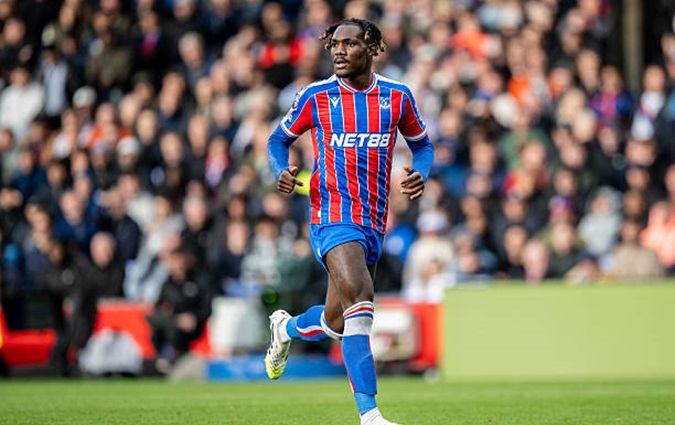
Christantus Uche offered perhaps the most immediate rebuttal. The Crystal Palace midfielder scored for his club within hours of learning he would not be travelling to Morocco, a goal that felt like a direct message to the national team hierarchy. Days later, Tolu Arokodare followed suit, netting his first English Premier League goal for Wolverhampton Wanderers in stoppage time against Arsenal on December 13. The striker had been considered a promising alternative to Victor Osimhen up front, yet Chelle opted for other forwards, including recalls for Cyril Dessers and Paul Onuachu. Arokodare’s celebration and body language suggested a player determined to prove a point through performance rather than protest.

Yet it is the omission of Maduka Okoye that has generated the fiercest criticism. The Udinese goalkeeper has been a regular presence in Serie A this season, keeping several clean sheets and demonstrating the consistency one might expect from a player operating in one of Europe’s elite leagues. It is therefore puzzling to fathom the logic of excluding a goalkeeper playing at such a level, particularly given the alternatives selected. Chelle recalled Francis Uzoho, who had not featured for the national team for an entire year and whose club minutes in Cyprus hardly compare to top-flight Italian football. Stanley Nwabali, meanwhile, plays for Chippa United and has faced recent injury challenges, whilst Amas Obasogie features in Tanzania’s domestic league.
The contrast has proved difficult for many observers to reconcile. Okoye’s continued dependable performances for Udinese since the announcement constitute a quiet but powerful professional response, proving week after week that he possesses both competence and temperament. For a nation preparing for the continent’s premier competition, the decision to overlook a goalkeeper playing regularly in Serie A in favour of those operating at demonstrably lower levels represents an unnecessary strategic gamble.
Indeed, Chelle’s selection process unfolded against challenging constraints. FIFA regulations delayed player release until December 15, leaving minimal time for team preparation before the opening fixture against Tanzania on December 23. A member of the coaching staff explained that these circumstances favoured players the team already knew and trusted, rather than integrating too many newcomers during a compressed buildup. The coach himself cited the lack of training sessions as justification for sticking with established names, even when form at club level might have suggested alternatives.
This reasoning, however, sits uneasily alongside the inclusion of five uncapped players: Ryan Alebiosu, Ebenezer Akinsanmiro, Usman Muhammed, Salim Fago Lawal and Tochukwu Nnadi. If familiarity and cohesion were paramount, the introduction of multiple debutants appears contradictory. Alebiosu, a Blackburn Rovers defender who switched allegiance from England, has been selected to fill the gap left by Ola Aina, whose absence relates primarily to injury rehabilitation at Nottingham Forest rather than form. One uncapped player chosen for the squad currently features in Israel’s second division, a questionable selection given that a domestic league player might have been a more preferable option.
The Nigeria Football Federation has maintained that selection decisions rest entirely with the coaching staff, with president Ibrahim Gusau affirming Chelle’s authority and dismissing suggestions of external interference. Yet such appeals to authority ring hollow when the excluded players continue to demonstrate their quality so convincingly at club level.
The wider significance extends beyond individual grievances. Nigeria enters the tournament in Group C alongside Tanzania, Tunisia and Uganda, aiming for a fourth continental title having finished runners-up in the previous edition. The retirement of former captain William Troost-Ekong compounds defensive concerns, whilst injuries to other key defenders further complicate Chelle’s task. These unavoidable absences make the exclusion of in-form players in other positions harder to justify, particularly when the selected alternatives lack comparable competitive pedigree.
The determination displayed by the omitted players reflects a singular professional focus, transforming disappointment into motivation. Every goal scored by Uche or Arokodare, every assured performance by Okoye, functions as an additional line of testimony in an accumulating case file. This ongoing demonstration of form creates pressure not only on the coaching staff but on the selected squad members themselves, who must now justify their inclusion through results in Morocco.
This is crucial because, ultimately, the success of Chelle’s choices will be determined not by initial media reaction but by performance in Morocco. Should Nigeria lift the trophy, the debate over omissions will dissipate into footnote status. Should the team falter, particularly if selected players struggle in positions where others demonstrated superior form, the narrative will shift immediately. The question will become not whether Chelle was justified, but how he could have overlooked such demonstrable quality. For now, the excluded players continue building their case, match by match, ensuring that scrutiny of the coach’s judgement will persist until the final whistle sounds on Nigeria’s tournament campaign.

Jude Obafemi is a versatile senior Correspondent at THEWILL Newspapers, excelling in sourcing, researching, and delivering sports news stories for both print and digital publications.