November 17, (THEWILL) — Nigeria’s hopes of reaching the 2026 FIFA World Cup came to a devastating end in Rabat on Sunday night, when the Super Eagles fell to DR Congo in a penalty shootout following a tense 1-1 draw that stretched through 120 minutes of football. The defeat marks the third consecutive World Cup the three-time African champions will miss, whilst the Leopards advance to March’s intercontinental playoffs and edge closer to their first World Cup appearance since 1974.
The match, played at the Stade Prince Moulay Abdellah on neutral ground, served as the final of the Confederation of African Football playoffs, with the victor earning a place amongst six teams competing for remaining berths at the expanded 48-team tournament in the United States, Canada and Mexico. What unfolded over those two hours captured the brutal arithmetic of knockout football, where fine margins separate triumph from despair and where a nation’s ambitions can pivot on a single moment.
The contrasting paths to Sunday’s showdown told their own story. Nigeria had needed extra time to overcome Gabon 4-1 in their semi-final just four days earlier, recovering from a late equaliser before Chidera Ejuke and Victor Osimhen struck in the additional period. DR Congo, ranked 60th in the world and entering as underdogs, had edged Cameroon 1-0 through a stoppage-time header from captain Chancel Mbemba. Those divergent routes shaped the narrative that followed, with Nigeria arriving as favourites yet carrying the weight of fatigue and recent turbulence, whilst the Leopards brought discipline and the freedom of lowered expectations.

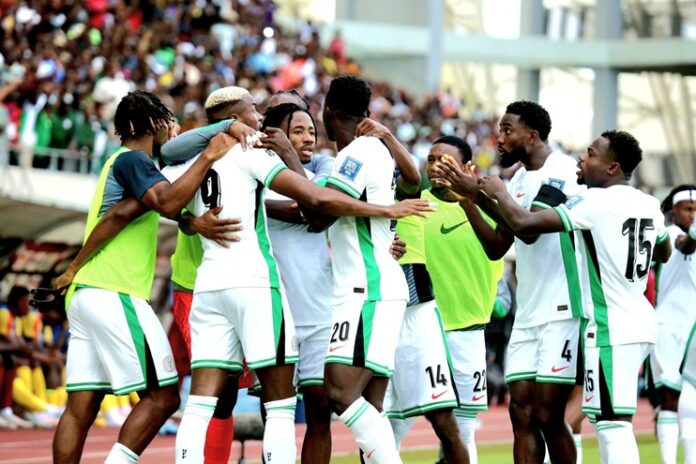
From the opening whistle, Nigeria signalled their intent with urgency. Within three minutes, Frank Onyeka had given them the lead following a corner from the right. The midfielder controlled the ball on the edge of the area before unleashing a powerful shot that took a slight deflection off Axel Tuanzebe and looped beyond goalkeeper Lionel Mpasi. The early breakthrough suggested Nigeria might seize control, and for a spell they dominated possession, building patiently through Alex Iwobi and Wilfred Ndidi whilst creating half-chances that failed to materialise into decisive opportunities.
Yet DR Congo, under coach Sébastien Desabre, had not travelled to Morocco to capitulate. Their response demonstrated the resilience that has characterised their campaign. In the ninth minute, Nigerian goalkeeper Stanley Nwabali flapped at a high ball, leaving Ngal’ayel Mukau with a clear sight of goal, though the forward lifted his effort over the crossbar. That warning went unheeded, and in the 32nd minute the Leopards struck. Iwobi lost possession in the Congolese half under pressure from Noah Sadiki, allowing Cedric Bakambu to seize the ball and drive forward before squaring to Meschack Elia. The forward’s finish past Nwabali, despite Ndidi’s desperate lunge, restored parity and fundamentally altered the match’s complexion.
What followed was a war of attrition rather than artistry. Nigeria blunted the superiority of their squad front line, substituting Osimhen at half-time due to what reports claimed to be that the striker was nursing an injury that limited his effectiveness. They registered 18 shots overall, maintaining 60 per cent possession, yet lacked the precision required to break down a compact defensive structure marshalled by Mbemba. DR Congo, completing just 52 per cent of their passes, focused on absorbing pressure and striking on the counter, with Bakambu and Fiston Mayele providing occasional outlets. Neither side could forge a breakthrough, and tactical caution increasingly dominated as both coaches recognised the cost of a late mistake.
Extra time brought renewed effort but little clarity. Substitute Tolu Arokodare headed over for Nigeria in the opening period, whilst Mayele had two goals disallowed for fouls in the build-up. With seconds remaining, Mbemba rose for a corner and directed a looping header goalward, only for Nwabali to stop it at great risk to himself. The referee’s whistle confirmed what both sets of players had feared: penalties would decide which nation’s World Cup dream survived.
In that decisive moment, DR Congo made a bold substitution, replacing Mpasi with Timothy Fayulu specifically for the shootout. The gamble proved inspired. Calvin Bassey missed Nigeria’s opening penalty, whilst Samuel Moutoussamy responded in kind for Congo. Moses Simon then blazed over for Nigeria, but Noah Sadiki converted to give the Leopards a crucial advantage. Akor Adams scored for Nigeria to level matters before Axel Tuanzebe missed for Congo. Bruno Onyemaechi converted to put Nigeria ahead, only for Fiston Mayele to equalise. Chidera Ejuke scored Nigeria’s fourth, matched by Michel-Ange Balikwisha for Congo. When Semi Ajayi stepped up for Nigeria’s fifth penalty, Fayulu dived right to save, leaving Mbemba to slam home the decisive spot-kick and spark wild celebrations amongst the Congolese contingent.
For Nigeria, the defeat raises profound questions about a campaign that began poorly and ended in heartbreak. The Super Eagles finished second in their qualifying group behind South Africa, an outcome that forced them into these playoffs. Shortly before the semi-final against Gabon, players went on strike over unpaid bonuses, a distraction that highlighted deeper structural issues within Nigerian football administration. Coach Eric Chelle had spoken confidently before the final about avoiding errors and learning from recent missteps, yet those words now carry hollow resonance. The Federation must conduct a sober review of their processes, from player welfare to match preparation, if they are to arrest a decline that has seen them miss two consecutive World Cups for the first time since the period between 2006 and 2010.
The emotional toll for Nigerian supporters, who have watched their team reach six World Cups previously, cannot be understated. Ours is a nation with a rich football heritage, and the manner of defeat, decided by the narrowest of margins in a shootout, feels particularly cruel. Yet such is the unforgiving nature of knockout football, where months of preparation can unravel in a matter of minutes.
For DR Congo, Sunday night’s triumph represents something far greater than progression to the next round. Their only previous World Cup appearance came in 1974, when the country competed as Zaire and suffered heavy defeats. This victory, built on defensive discipline, strategic nous and decisive leadership from Mbemba, signals their intent to compete on the global stage once more. The intercontinental playoffs in March will present a different challenge entirely, pitting them against teams from Asia, Oceania, CONCACAF or South America for one of two remaining places. Success there would mark a historic return to football’s grandest tournament and provide a source of immense pride for a football-mad nation.
The match in Rabat served as a stark reminder of how slender threads connect ambition to reality in international football. A goal in the opening minutes, an equaliser born from a defensive lapse, and a goalkeeper substituted solely for a shootout combined to determine the fate of two nations. Nigeria must now regroup and rebuild, channeling their disappointment into the forthcoming African Cup of Nations whilst addressing the systemic issues that contributed to their downfall. For DR Congo, the journey continues, and with it the belief that they can achieve what once seemed impossible. Sunday night was more than a match; it was a moment that captured the drama, hope and fragility inherent in the pursuit of World Cup qualification. It will be remembered with sighs in much the same way that Nigerians nursed the anguish of missing out the last time.

Jude Obafemi is a versatile senior Correspondent at THEWILL Newspapers, excelling in sourcing, researching, and delivering sports news stories for both print and digital publications.